Around the Summer Solstice in June 2022, an incredible human, Ranger Reuben, a dear cousin and fellow Bloomington, Ind., native, led me on a mind-blowing adventure around some of the stunning natural treasures of Yosemite National Park.
These days were laced with life highlights at a mind-bending rate and I have here tried to catalog and preserve an overwhelming media load collected during five jam-packed days of excursion, expedition and excitement in one of the most magnificent natural regions of The Americas.
June, 19, 2022 — Yosemite Day One
From the sights out of my plane windows from Indy to Fresno via Arizona on to my first steps into the world of Yosemite National Park, the sights were blowing my mind in an endless barrage. Because I’d delayed packing, I’d hit the airport in the wee hours of the morning on one hour of sleep, but the excitement of the scenery kept me buzzing like an Italian espresso stand.
June, 20, 2022 — Yosemite Day Two,Orientation Continues
June, 20, 2022 — Yosemite Day Two, Part Two: Appreciating the Native Ahwahnechee Roots of Yosemite
June, 20, 2022 — Yosemite Day Two, Part Three: Cook’s Meadow. Behold the magnificence Yosemite Falls and its environs!
June, 20, 2022 — Yosemite Day Two, Part Four: The Ahwahnee Wows!
June, 20, 2022 —Yosemite Day Two, Part Five: Olmstead Point Lizard Hunter 🙂
June, 20, 2022 — Yosemite Day Two, Part Six: Tioga Pass and High Country
June, 20, 2022 — Yosemite Day Two, Part Seven: Heaven on Earth, Olmstead Point at Sunset
June, 21, 2022 — Yosemite Day Three, Part One: The Hike Begins Up the Four-Mile Trail toward Glacier Point
June, 21, 2022 — Yosemite Day Three, Part Two: The Four-Mile Hike Becomes a 16-Mile Summer Solstice Spirit Quest
June, 22, 2022 — Yosemite Day Four, Part One: Recovery Day, Maxin’ and Relaxin’
June, 22, 2022 — Yosemite Day Four, Part Two: Recovery Continues: Swinging Bridge, Mirror Lake and El Capitan Climbers Camping on the Monolith
June 23, 2022 — Yosemite Day Five, Part One: Coffee & Rain (No action, just a moment of zen)
June 23, 2022 — Yosemite Day Five, Part Two: Lee’s Vining Latte and Mammoth Lake Trails
June 23, 2022 — Yosemite Day Five, Part Three: Devils Postpile, geologic geometry
June 23, 2022 — Yosemite Day Five, Part Four: Heaven for Lunch (Ohana’s at June Lake post postpile)
June 23, 2022 — Yosemite Day Five, Part Five: Mono Lake is Out Of This World!
June 23, 2022 — Yosemite Day Five, Part Six: Volcano, Bear, Coffee (and, to top it off) Waterfall
P.S.
A note to this post’s general audience:
Reuben (the son of my mother’s sister, Sarah) has one of the most motivating takes on life I’ve ever encountered. He has manifested an amazing will to live through a litany of life challenges that could seriously derail a person’s ability to carry on. For example: As a boy, his primary love was baseball, yet his playing career was cut short in high school when he was forced to endure a leg amputation to save his life from cancer. These days, this 44-year-old is dealing with organ failure. PEOPLE, PLEASE CONSIDER DONATING TO HELP SUPPORT THIS FABULOUS HUMAN WHO IS MONTH AFTER MONTH DOING HIS OWN DIALYSIS DAILY AS HE AWAITS A KIDNEY DONATION FOR TRANSPLANT. You can reach him by mail at P.O. Box 253, El Portal, CA, 95318. If you prefer Venmo, his handle is: @Reuben-Cochran-1. How you donate is up to you! He’d be happy to receive anything: words of support, cash … a kidney!
Any trip to the Stutz Arts and Business Center includes obligatory drool. Hoosier classic.
The New Year will bring some major changes
Christmas special presents free massage opportunity
By Rebecca Townsend
Big news in two parts:
First, I opened an office in the Stutz Arts and Business Center (1060 N. Capitol Ave.) to build my own private practice within a longstanding massage collective that has occupied the space for over a decade.
To express my excitement at being able to work at Stutz, one of the city’s great historical buildings which Indiana’s largest number of artists working under one roof, I created my first holiday gift certificate promotion and included a limited number of free massages as a reward for folks who are getting in with me at the ground level.
Second, the new Hand and Stone Massage and Facial Spa, which is set to open at Clearwater Strip Mall (8505 Keystone Crossing) in early 2019, this week extended me an offer of employment. I’d never previously aspired to work in a corporate spa environment, but the educational and advancement opportunities the company presented distinguished Hand and Stone from their competitors. They won me over — and I think it’s mutual: I’m the Keystone Hand and Stone’s first massage therapist!
The company’s director of massage therapy education and training, Nathan Nordstrom, was inducted into the 2018 Massage Therapy Hall of Fame at the World Massage Festival in Las Vegas this summer. His team will be arriving to train the Keystone massage therapists during the first week of January. Soon I’ll be fully indoctrinated into the ways of the Himalayan Salt Hot Stone Massage.
To help local owner Mark Roger prepare for opening day of his first Hand and Stone franchise is an exciting opportunity. From Modern Times Urban Truck Stop, the restaurant I opened at 54th and College 20 years ago, to the evolution of Lift over the past few years, I’ve enjoyed watching and helping local businesses grow.
Massage is so different from journalism. (For those of you who don’t know, I was a reporter for two decades before pursuing massage therapy after a local paper’s resource realignment eliminated my job and moved me straight into years of perilous cashflow.) I miss reporting because of my inquisitive and adventurous nature. However, practicing massage therapy and nurturing the skills of meditative silence and deep breathing while in session has probably saved the life of a hot-headed woman who may have lost her mind trying to reason with the crazy that has infected so many levels of political and social life today.
Guilt and/or Ego/Justice-Driven Temptation: I could make a career investigating all the contracts issued in support of Trump’s wall by government officials who espouse efficiency in government spending as a top priority.
Question: How can I let myself sit on journalism’s sidelines when so much insanity is running rampant?
Counterargument: Given the shifting sands of today’s media landscape and shrinking attention spans of possibly everyone, it is highly likely that I’m accomplishing the greatest possible good right now by helping people to slow down and breathe. Slowing down has been good for me, even as part of me will always remain a rolling stone. [Dan Rather is quoted as saying, “Fish gotta Swim. Birds gotta fly. Reporters gotta go.” Yep. It makes one feel alive to be on the go, always on the hunt for something important.]
Reflecting back on the four years since I returned from the 2014 Brazil World Cup is a dizzying exercise.
After losing my beloved local news job just a month after my return, and not able to see/find a viable/enticing local replacement, I entered the Indiana College of Sports and Medical Massage (now Indiana Massage College) and began coaching a high school girls soccer team (that I started from scratch). During this same time, I was living with my husband and then-12-year-old daughter in an RV in our backyard while a gut-job home remodel was working its way through hellish dimensions that ultimately took four years to complete. In May of 2015, I graduated from massage college and landed a job with Lift Therapeutic Massage in the Downtown Indianapolis Fletcher Place neighborhood.
Lift provided a nourishing, warm environment in which to unfold my wings as a massage therapist.
The Lift team supported me while I (barely) survived the RV days and the challenges of making a mid-life career transition without any assistance from unemployment, which included several days of folding sheets, putting on a happy face and not making a dime while waiting for clients to discover me. They supported me while I coached the inner-city rec team in the spring and the fall, plus the high school girls in the fall. They supported me when the school broke my heart by replacing me with a teacher to coach after three seasons leading the high school girl (despite my winning record). They supported me when I took time off to cover Indy Eleven and they were happy for me when the team hired me to be on the broadcast team. And they supported me when Indy Eleven broke my heart by eliminating me from the broadcast team.
This support probably kept me alive because these four years have capped a most challenging decade.
Massage therapist Tasha Blackman, who co-owns the business with artist Nicci Herren, sets a gold standard for client care and attending to a host of experience-enhancing details. I am forever grateful to her from teaching me so many lessons about the business. Her enduring influence on my approach to the work is unquestionable.
Nicci Rebecca and Tasha after I graduated massage college in the summer of 2015.
When I announced to Nicci and Tasha a few weeks ago that it was time to plan my exit strategy … they may have been in shock. After working for so long to build a solid book of business, I’m finally at a place where I’m booked most of the time. In fact, looking out over the seven shifts I have remaining at the business, I currently have just one more opening available. [Please consider trying to squeeze in with me before my time expires!] Having the end so near is bittersweet.
For clients who have come to know and rely on me with regularity at Lift, please know that I’ve been honored care for you. Lift clients are an astounding lot; my life is immeasurably enriched by thousands of experiences we’ve shared over the past three and a half years. Understand that I owe my relationship with you to Lift, so I must honor a customary no-contact period with Lift’s clients.
Meanwhile, you will be in capable hands on any of the studio’s tables. My co-workers are a wealth of talent and experience.
Lift sets the standard for client care, allowing a half hour between each session to allow for detailed intake/exit interviews and flexibility with session times to build in a little extra TLC when possible/necessary. Even when my time as an employee is finished, I will continue to recommend Lift as a destination massage therapy studio.
Moving forward, I will do my best to build business at the Stutz while I wait for Hand and Stone to open. Please visit the spa’s Facebook page to track its progress. I’m glad to give my clients both Downtown and Northside options.
One way friends and family could do me a huge solid is to help me meet my goal of getting 14 rebookings within Hand and Stone’s first 14 days open. Any of you people who help me achieve that goal will receive a gift certificate for a free 90-minute massage at my Stutz office, ok? That is a darn good deal for both of us!
Hopefully, some of you tired and weary souls will soon find your way to my table.
Maybe we can work together to accomplish health, happiness and good fortune in 2019!
This is me, Rebecca Townsend, in my library at home in Boone County, Missouri, a few miles south of Columbia, approximately 2010. (Photo credit to Clyde Townsend)
This timeline is a work in progress: I’m sorting through old files and papers, trying to create a visual map documenting my professional journey thus far. This is an evolving scrapbook.
As I have for well over a decade, I continue to enjoy coaching soccer in the inner-city. Here are some shots of my Tab Rec teams taken over the years, including one from the year I coached with my bro (also a true devotee of the game).
Though I still write and have a heart for journalism, after losing my full-time position as news editor at Indy’s local alt weekly in 2014, I became a professional massage therapist, working to help build Lift Therapeutic Massage, a well-respected, independent studio near the Eli Lilly headquarters in Downtown Indianapolis.
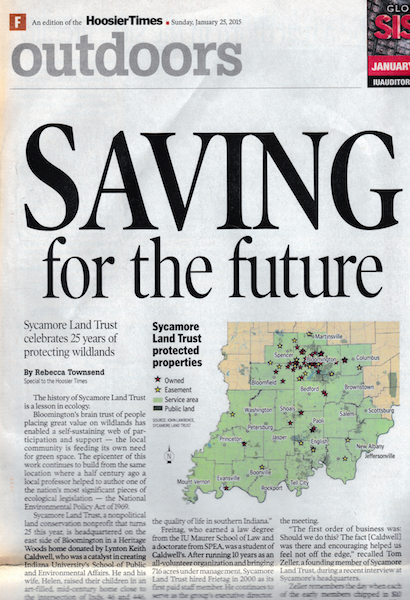
I do some freelance journalism (such as the Hoosier Times story shown here and the two examples offered below: the first from Sophisticated Living Indianapolis, the next from Farm Indiana), but most of my creative efforts are now focused on personal endeavors to be publicized later on.
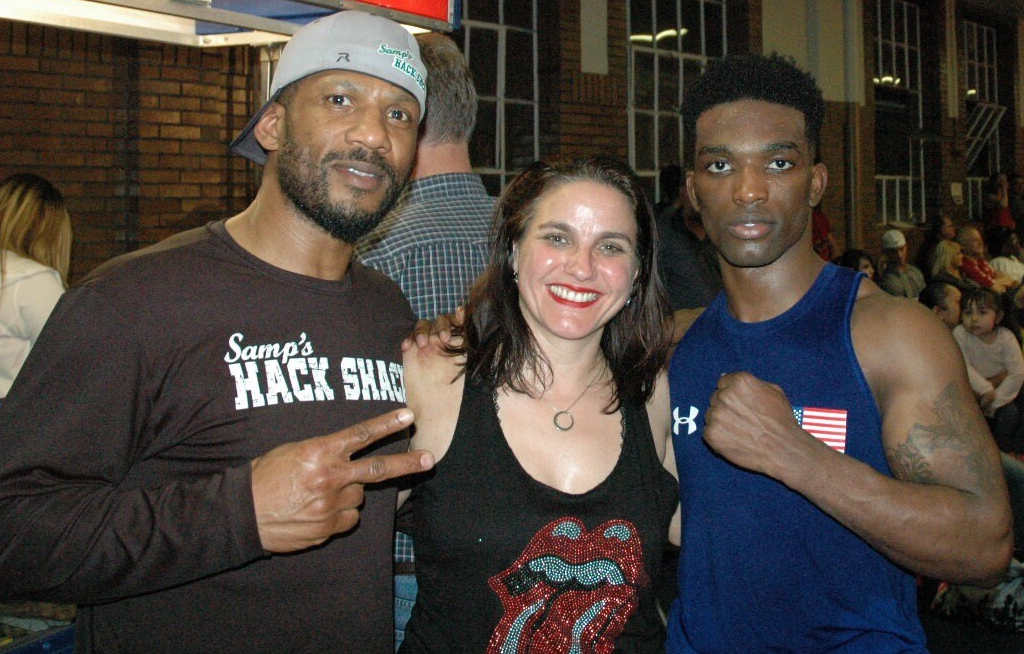
Also, a boxing story written in 2013 garnered the interest of John Bansch, a legendary Indianapolis Star sports reporter who also volunteered as publicity chair for the Indiana Golden Gloves. He knew he was going to die (which he did last spring, the day before the Gloves started) and he recruited me to take on his duties — essentially hitting up local media to support amateur boxing. So now I sit ringside during the tournament and publish the commemorative program for the championship, telling the stories of incredible athletes such as Frank Martin, the first Indiana fighter to win a National Golden Gloves title in 23 years. I’ve hyperlinked this photo of Martin to a digitized copy of the story I wrote for the 2017 Golden Gloves program:
From left: Ike Boyd, Rebecca Townsend and Frank Martin following Martin’s victory in the Indiana Golden Gloves in April 2017.
2015
In my one-year contract as sideline reporter for Indy Eleven broadcasts to local television and national streaming audiences, I covered one of my life’s greatest passions (soccer) from an intimate vantage point. Some of my favorite memories include witnessing the posturing between the opposing coaches and the refs that one can only truly appreciate from close range.
More clips to come, but for starters, here is my interview with the legendary Thomas Rongen, then coach of the North American Soccer League’s Tampa Bay Rowdies, in town for a May 30 match against Indy Eleven.
Here’s a brief clip from later in the season with Indy Eleven coach Tim Regan.
Also in 2015, while working toward my degree at the Indiana College of Sports and Medical Massage, I took the Myers-Briggs Type Indicator test. My answers placed me in the “supervisor” category: ESTJ. Here’s a brief summary of the characteristics associated with ESTJ personality types.
2014
A year of great highs and lows. 2014 took me to Brazil for the World Cup.
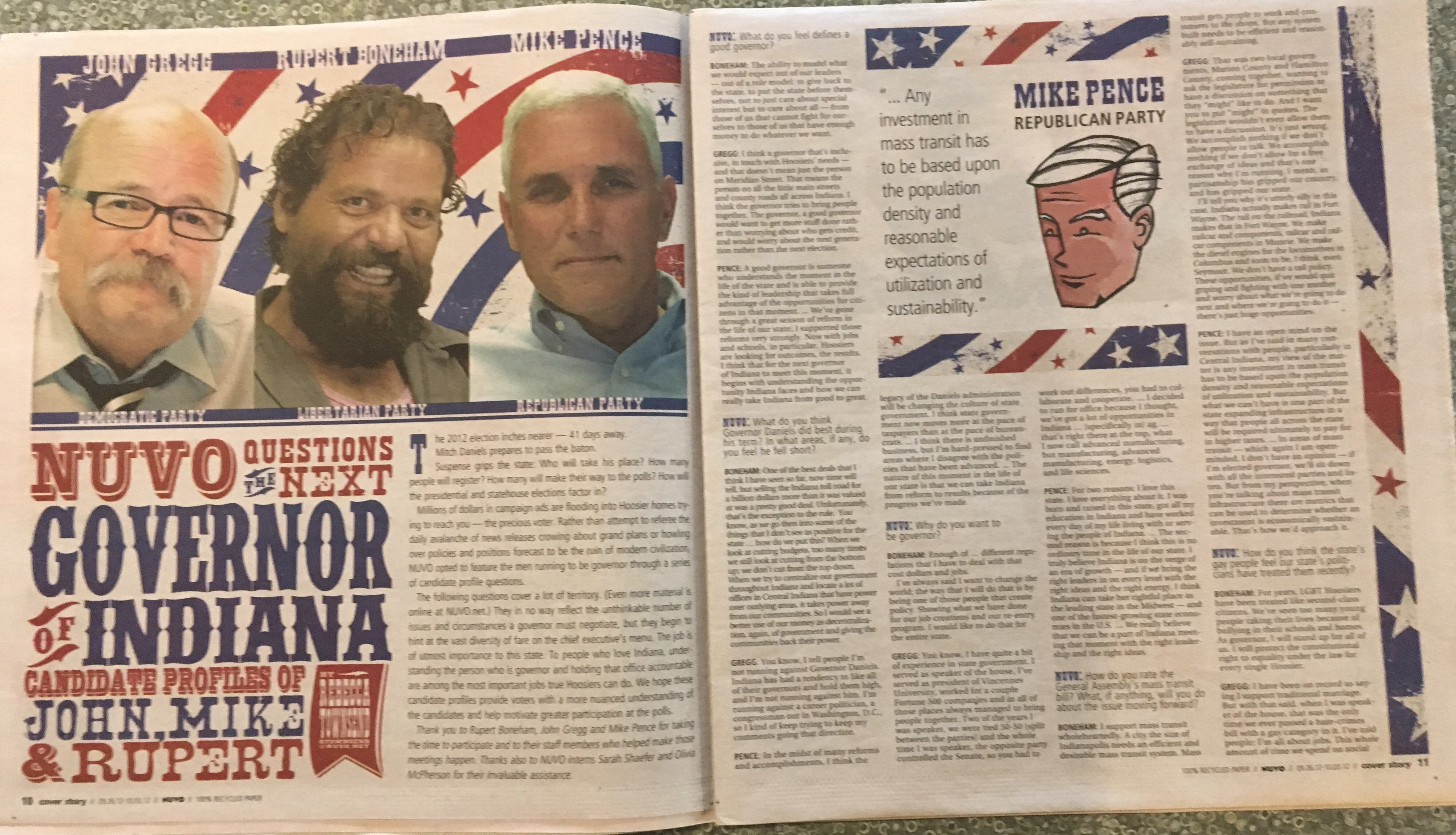
2014 also saw me lose my job at NUVO a month after returning home from the Cup. No, I did not lose my job because of my sabbatical at the Cup. At least not that anyone would admit to my face. I was told by the managing editor (who himself would quit a short time later), “NUVO is moving a new direction, we’re going to have to let you go. We feel you’d be happier at a place with more resources.” “Who wouldn’t be?” I thought. And the ironic thing is, aside from being heartbroken and feeling betrayed, I was happier as soon as I drove out of the parking lot and never had to check my NUVO email again. I had been a one-woman newsroom, unable to stick to just one beat. Keeping up with the avalanche of information dumped on me 24 hours a day was exhausting. [Also, I’d been through the personal wringer during this time: the loss of my mom (57) and grandma (93) in 2010, my dad (60) in 2011, a catastrophic flood at the cabin I grew up in Monroe County in 2012 and a four-year, total-gut-job home renovation project in Indianapolis that lasted from 2012-2016. One of those years we were commuting back and forth between Bloomington and Indy. The last year of that project (while in massage college), I lived in an RV in the back yard of our Indy house with my husband, then 12-year-old daughter, two dogs and a cat. Chaos.]
The afternoon after I lost my NUVO job, at my soccer coaching job on the International School of Indiana’s beautiful grass fields just across the White River from the Indianapolis Museum of Art, I thought, “Yeah, I’m happier already. Who is the loser here? Me, out on this glorious field inspiring the Lady Gryphons to greatness? Or the people who will likely die of heart attacks, cracked out on their laptops under fluorescent lights in partitioned cubicles?”
On more than one occasion in the newsroom, I’d been exhausted and overwhelmed, certain that I’d die at my desk and no one would care — that all the effort it took to be a committed journalist would be a waste.
So it came to be, following a blissful vision of health and balance that began to unfold to me one night under the stars near the lighthouse on the coast of Salvador, Brazil (just a few hours after the U.S. Men’s National Team conceded defeat to Belgium in the Round of 16), I entered the Indiana College of Sports and Medical Massage in Carmel (now Indiana Massage College). Downsized out of my alt weekly job after earning an SPJ award for my coverage of the shrinking Star newsroom (see the 2011 section), I figured I may need another trade to support myself as a journalist. Given the political headwinds blowing ever since, perhaps the temporary pause in active-duty, front-line journalism served as a blessing — an opportunity to breathe deeply and release stress during a period of intense national anxiety, compose my thoughts on “fake news,” “citizen journalism,” and the roles different forms of journalism can play in democratic society.
It invigorates me to look back and know I produced a solid body of work during my tenure. (And I know I have plenty more in the tank.)
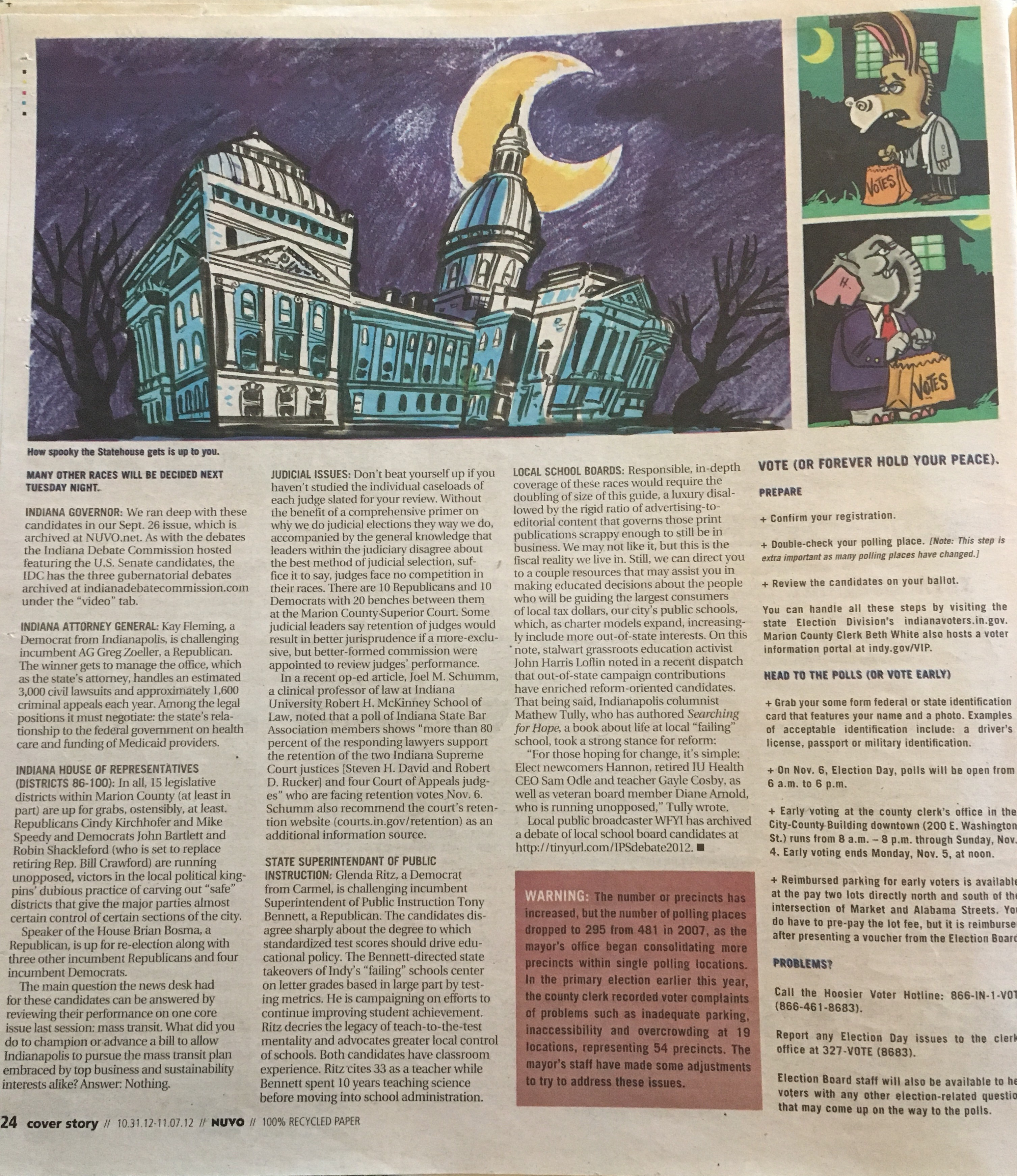
Consider the variety of topics my NUVO news desk covered…
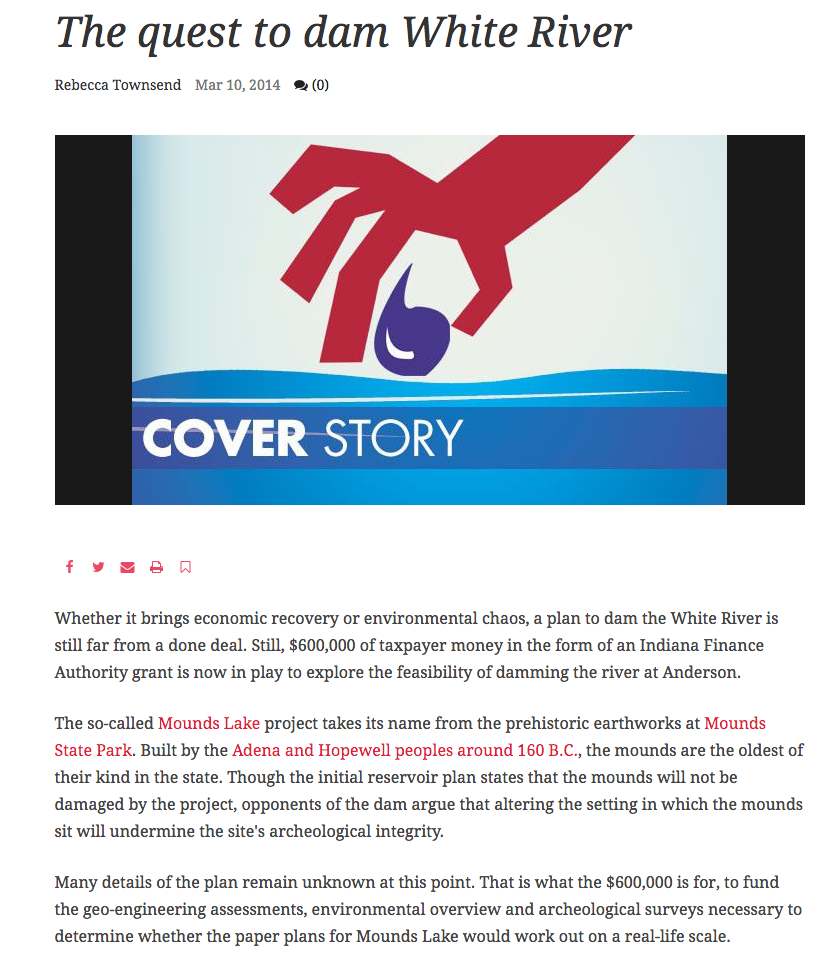
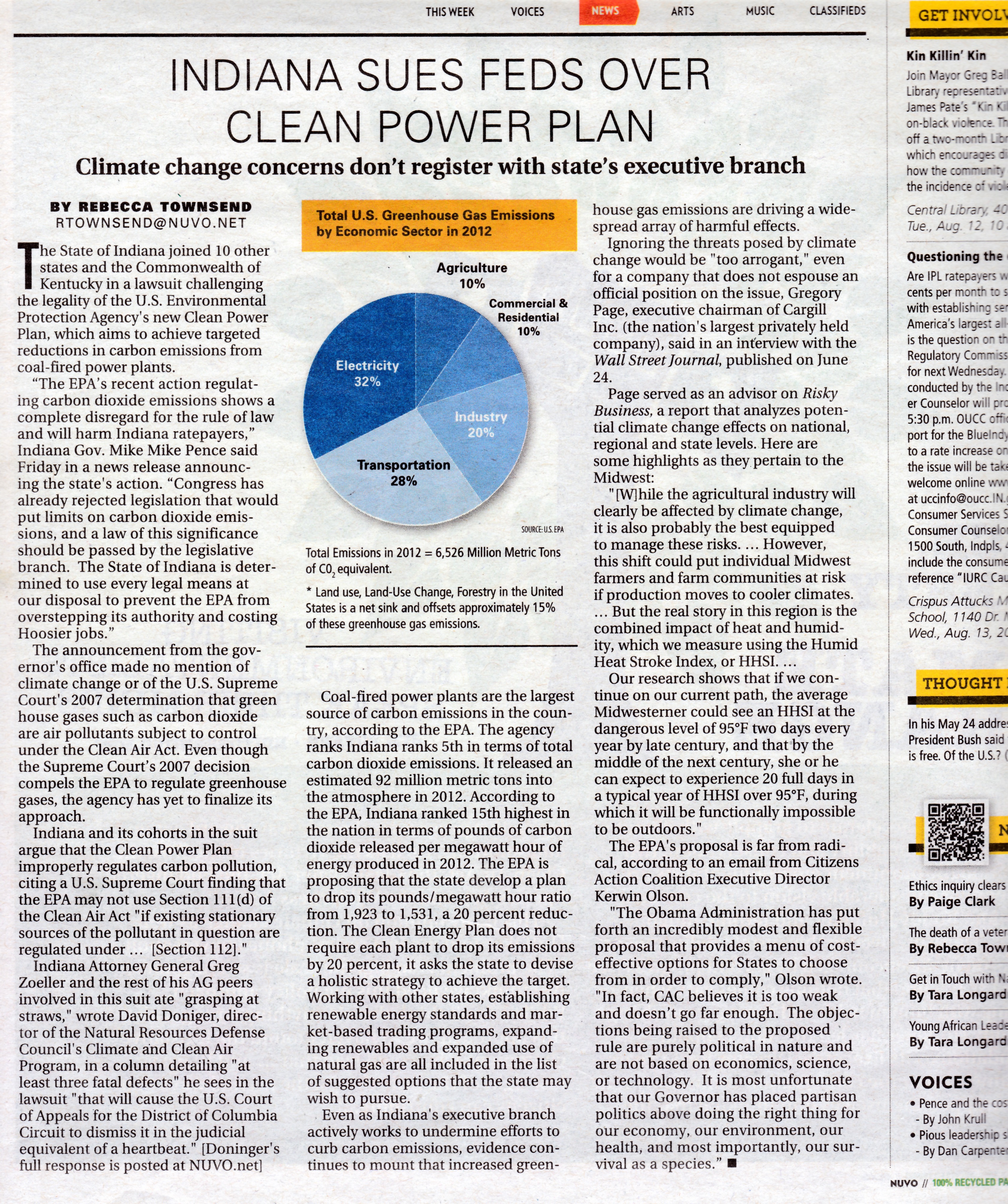
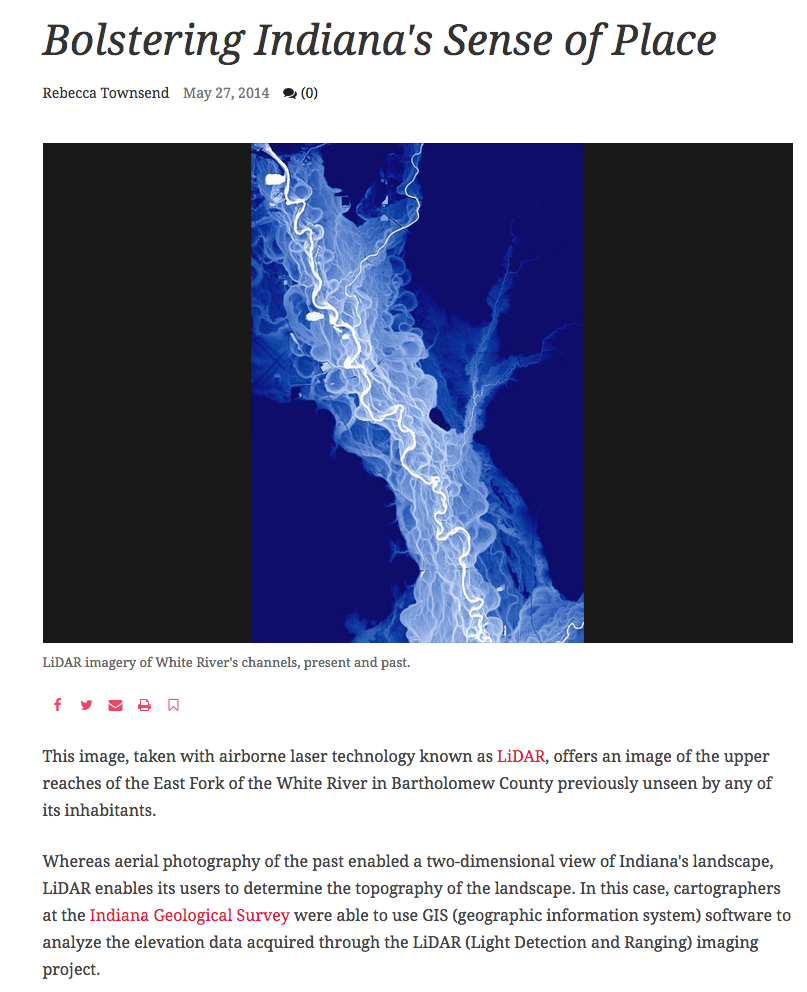
Keeping track of the State of Indiana’s activities on environmental issues occupied a good deal of my time. Here are some examples:
2013
Editing retired U.S. Congressman Andy Jacobs Jr.’s weekly Thought Bite columns led to a sweet but brief friendship. Jacobs, a 30-year member of the U.S. House of Representatives, prolific writer and a veteran of the Korean War, passed away in 2013, less than two years after I met him. I was honored to publish the following tribute (click the hyperlinked picture to read the full piece):
***
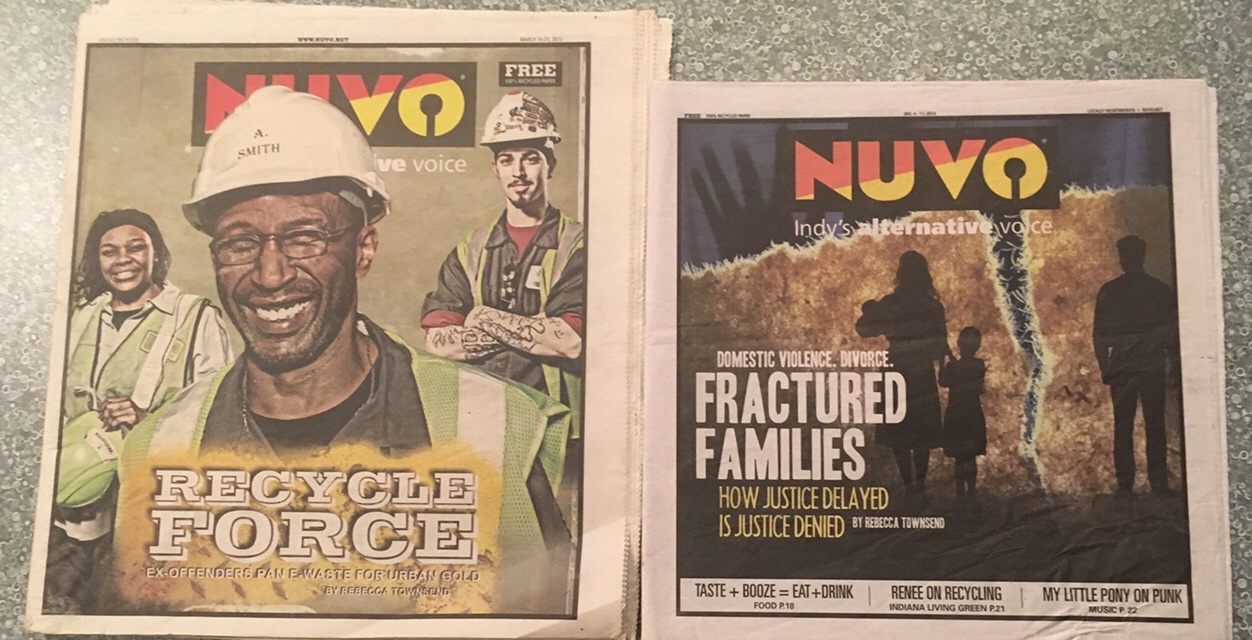
Here you can see two examples of my cover stories, as well as the results of a re-design the publisher carried out while I was working at NUVO. I received a promise that the news section would never drop below two pages. Months later, I was fighting off an attempt to cut it further.
The following story is among my favorites from the NUVO days. Randy was able to stay in school and graduate — and school officials were on the hot seat. This story also provided and example of how I would publish web packages using my photos, video and info graphics to complement my written stories.
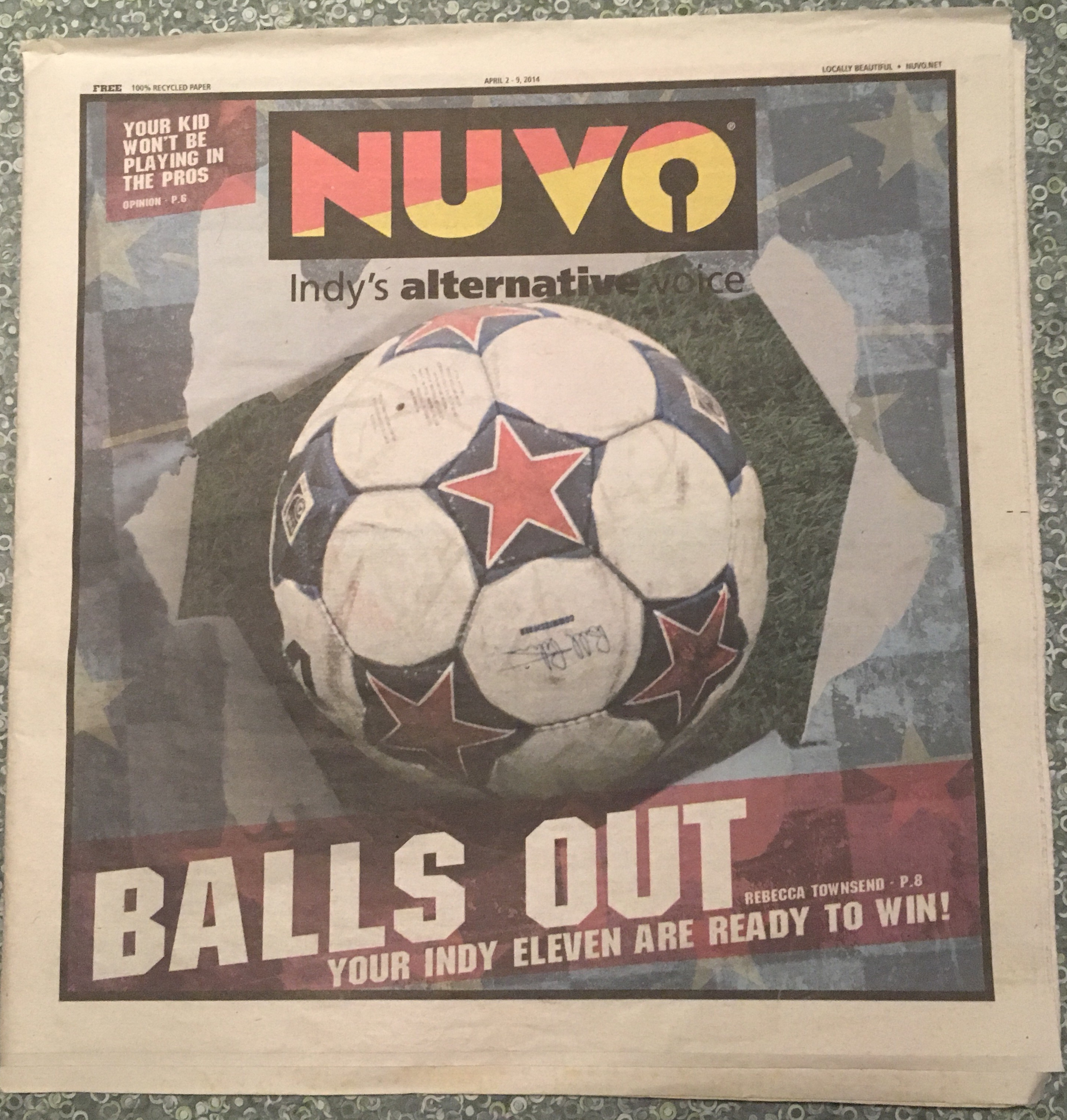
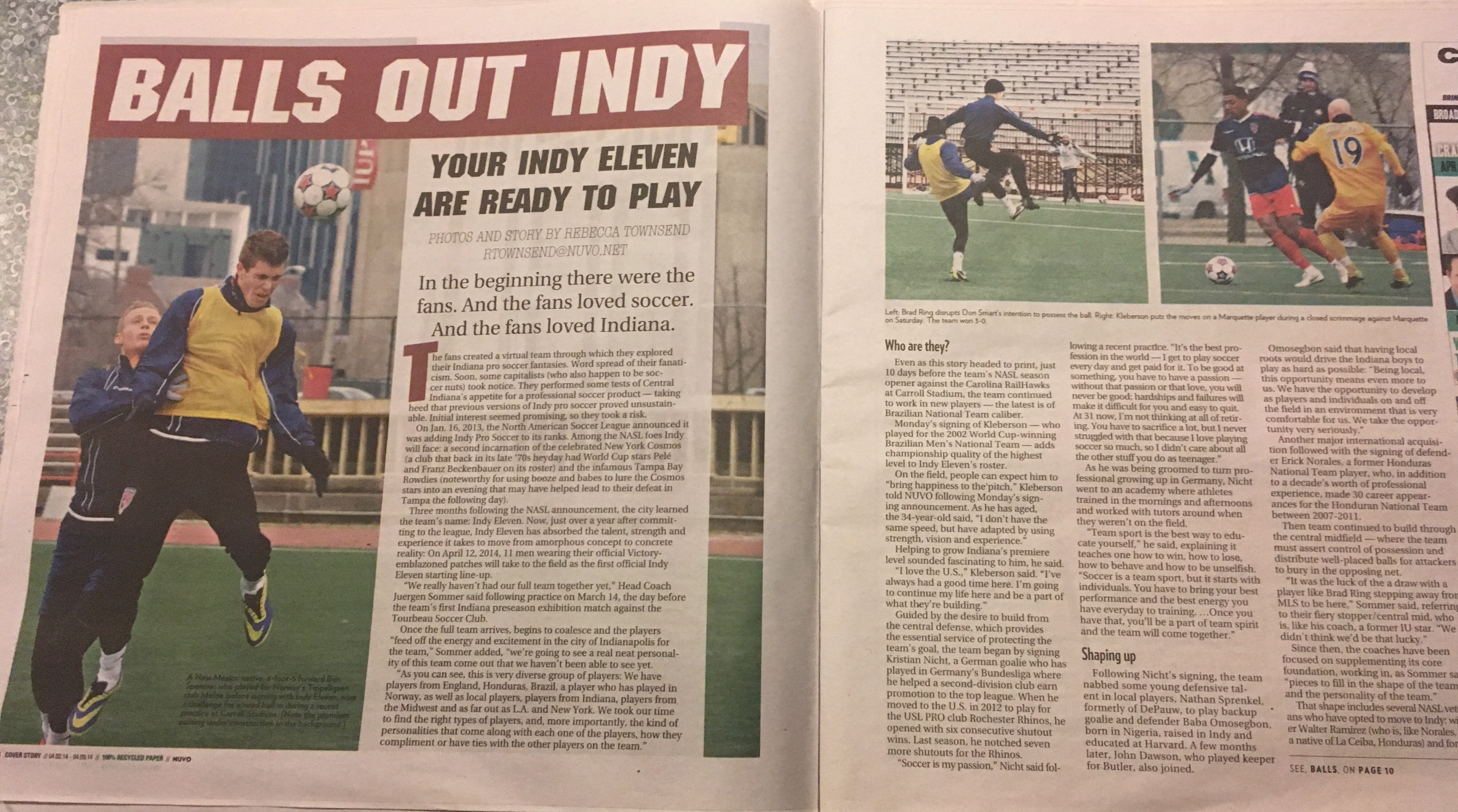
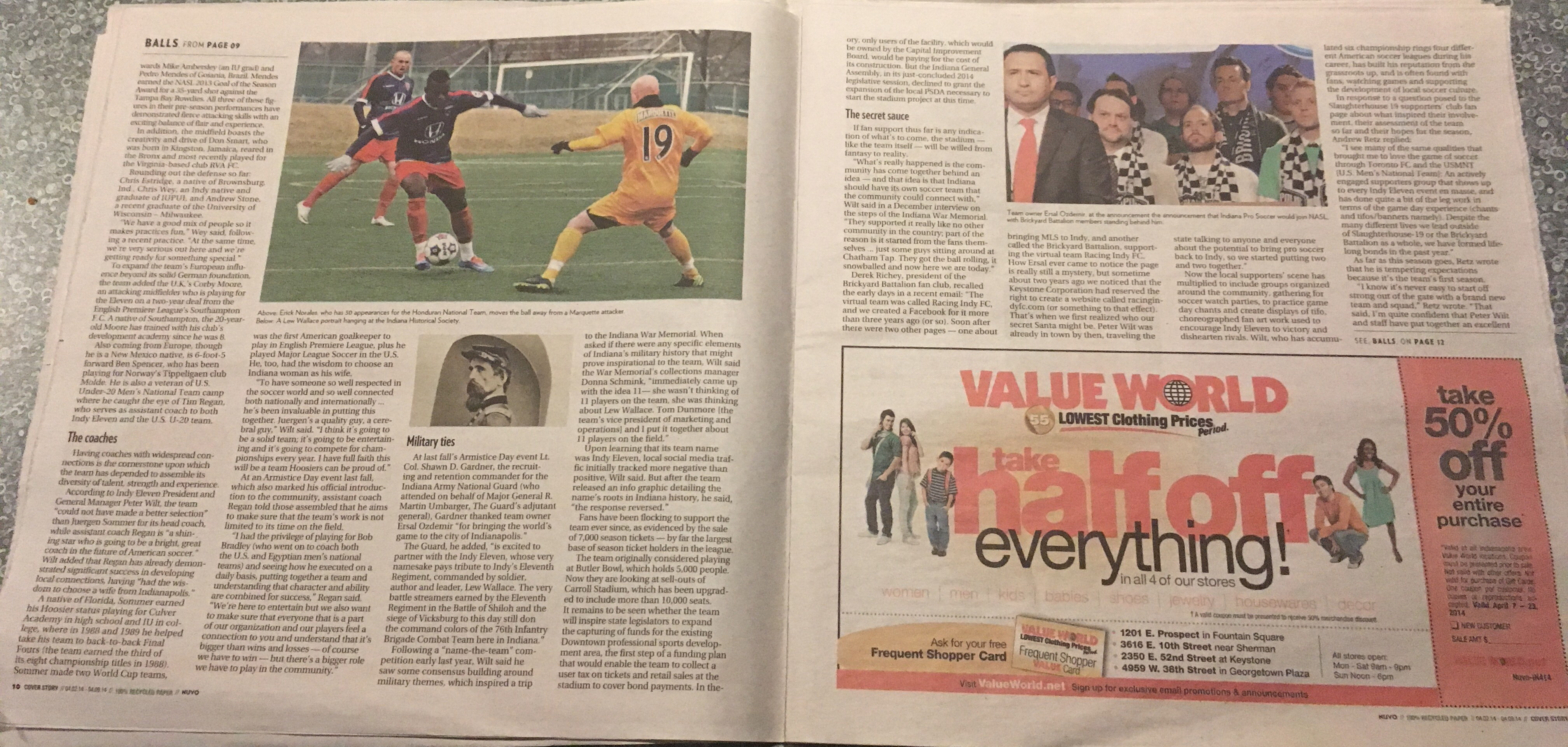
Also during this time, a professional soccer team developed in Indy from the ground up — and I had a front row seat. I produced many web exclusives as the team developed over the seasons, but I also may hold a state (possible national) record for most print real estate dedicated to soccer coverage. The feature pictured below was released just ahead of the team’s inaugural game. Anyone recall another Indiana soccer story that garnered a cover plus five whole pages inside?
The same week we ran my Indy Eleven story, I covered efforts to bolster inner-city quality of life (among other items) — and we ran an opinion piece by Dr. Louis Profeta. “Your Kid and My Kid Are Not Playing in the Pros” probably still holds the record for one of the most popular pieces we ever posted online. Dr. Profeta introduced himself to me at the gym one day after I finished boxing. He, too, boxed, if I remember correctly. That conversation led to him running his piece with me. Lucky NUVO!
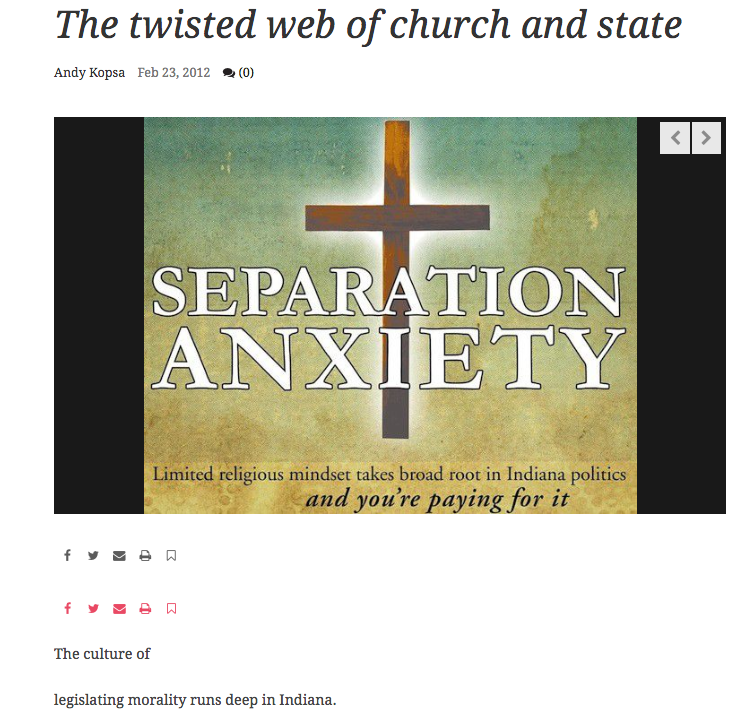
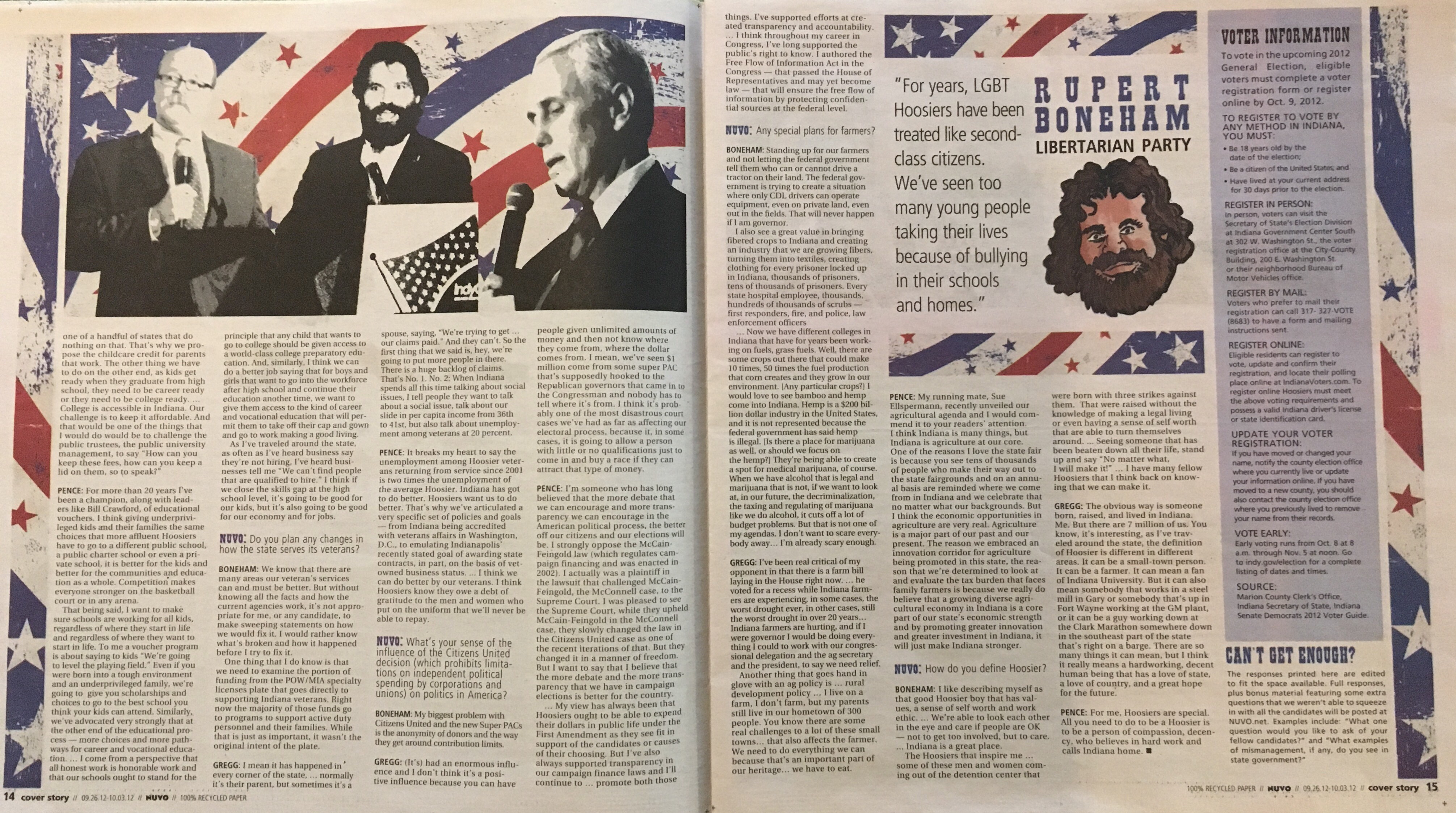
This year was an endurance test: a presidential AND a gubernatorial race, not to mention a slew of local offices up for grabs. (We’d just had a mayoral election in 2011!) But most importantly, a story I edited and contributed to with my data analysis and reporting skills, “Separation Anxiety: The Twisted Web of Church and State” earned SPJ Indiana Pro Chapter’s first place for investigative reporting in 2012.
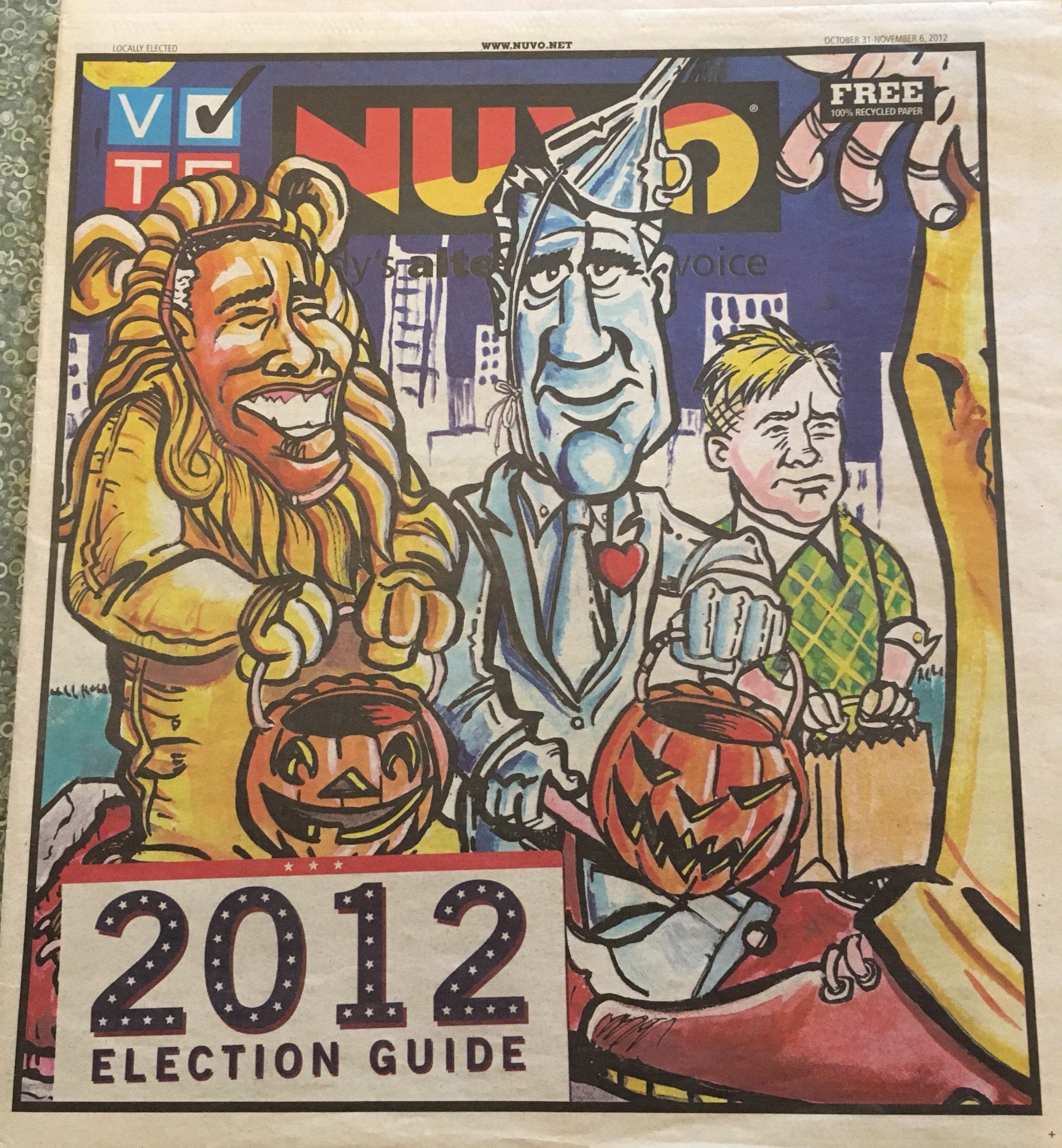
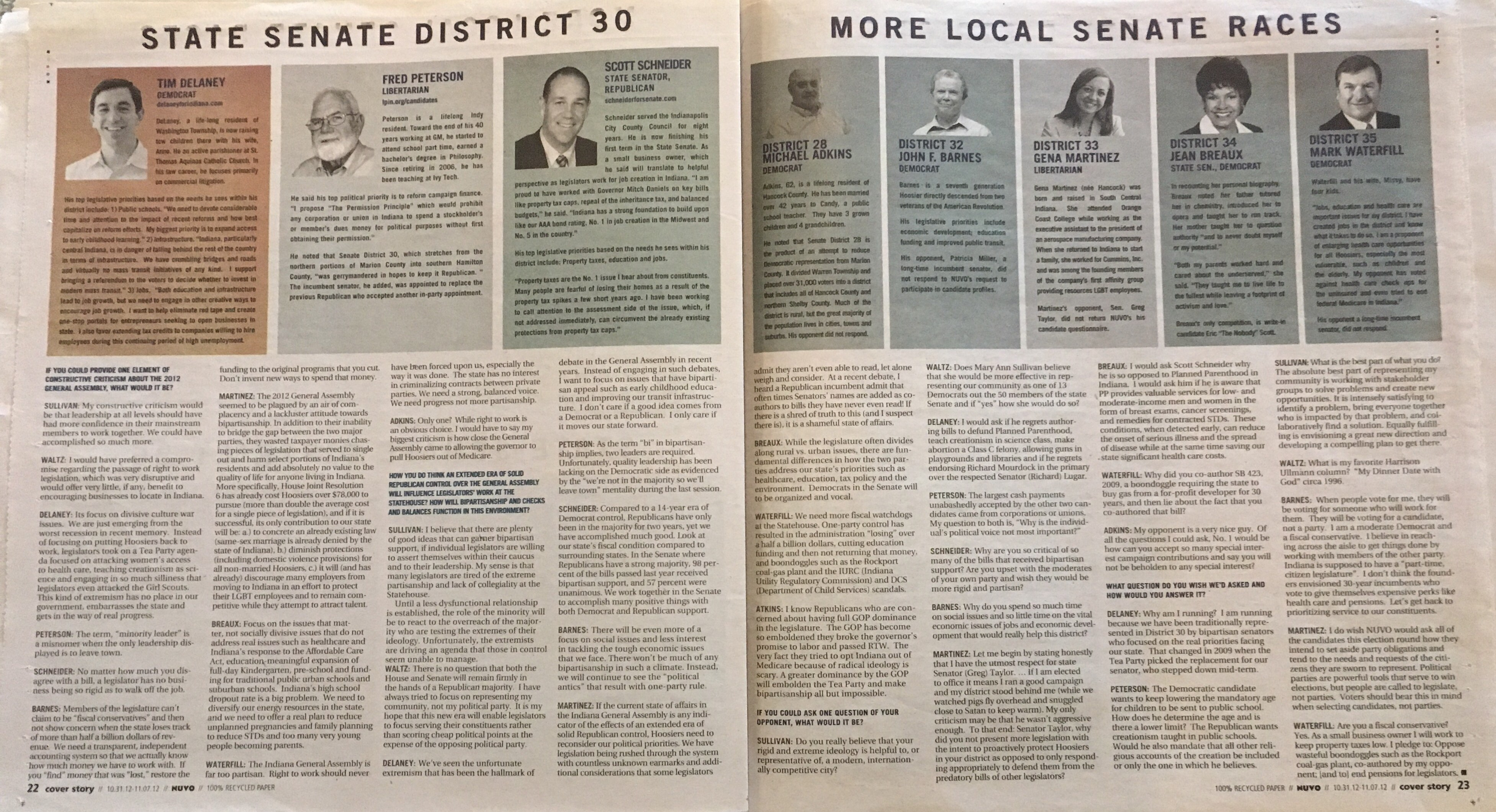
Here’s what my election guides looked like. (The latter won SPJ’s second best political coverage for a non-daily in 2012.)
2011
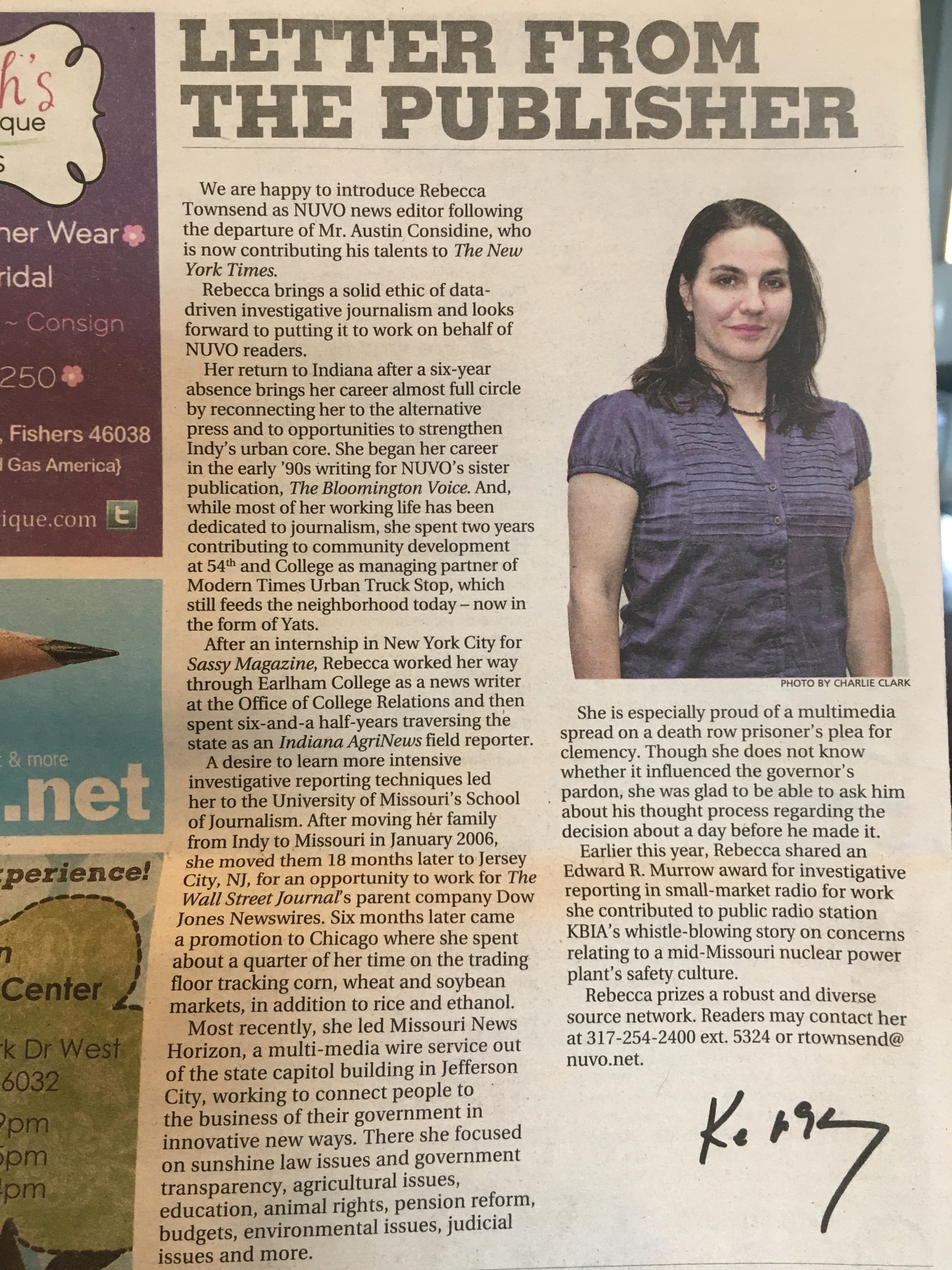
As soon as I returned to Indiana, I began winning awards for NUVO, including for my 2011 Election Guides. Within a year, SPJ’s Indiana Pro chapter asked me to be on their board and soon promoted me to vice president, a position I held until resigning in early 2017. (Please note the local reporting awards are judged by out-of-state chapters and our chapter reciprocates by serving other regions’ judging needs.)
On June 8, 2011, NUVO ran a letter from the publisher announcing my arrival as news editor:
Though I love traveling the world, it felt great to be welcomed home to Indiana in 2011.
2009
As I was wrapping up my thesis, my advisor and I distilled its core findings into an article for the peer-reviewed journal Literary Journalism Studies.
My authentic coffee-or-wine-stained cover of the issue of “Literary Journalism Studies” containing an article on my theory of writing culture.
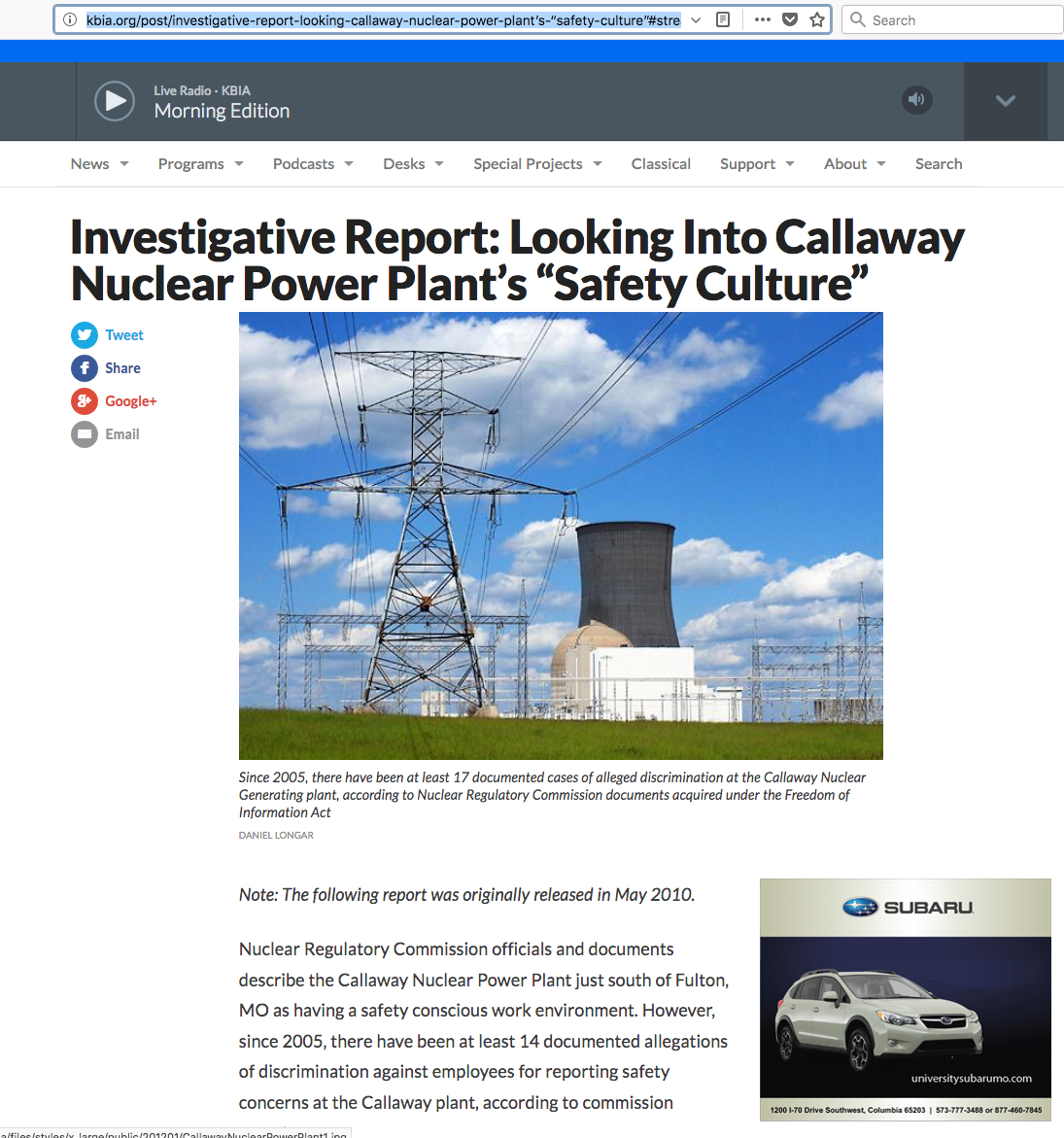
In the summer of 2009, for a number of reasons but driven chiefly by the financial burden of having an unsold house Missouri while we were paying to live in Downtown Chicago, I resigned from Dow Jones and the family returned to Missouri where I began volunteering at KBIA while I plotted my next career move. During that time, I helped bring the KBIA team a 2011 Edward R. Murrow investigative reporting award for a nuclear industry whistleblower’s chronicle, “Safety Culture at the Callaway Plant.”
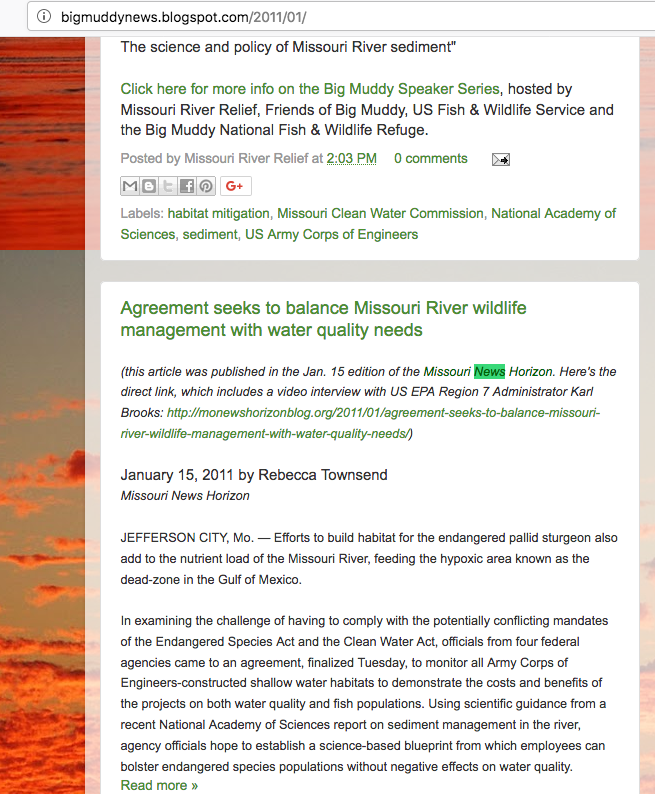
By the end of the year, the Missouri Broadcasters Association offered me an opportunity that presented one of the greatest challenges and triumphs of my career: the chance to build a multimedia newsroom from the ground up inside the magnificent Missouri State Capitol.
Newspapers, radio and television stations statewide would pick up my stories, video clips, photos and audio packages from Missouri News Horizon. Here are two examples pulled from the online archives of the Southeast Missourian and KOLR Springfield’s OzarksFirst.com.
Here is an example of a citizen environmental blog picking up a piece I wrote for statewide distribution:
2008
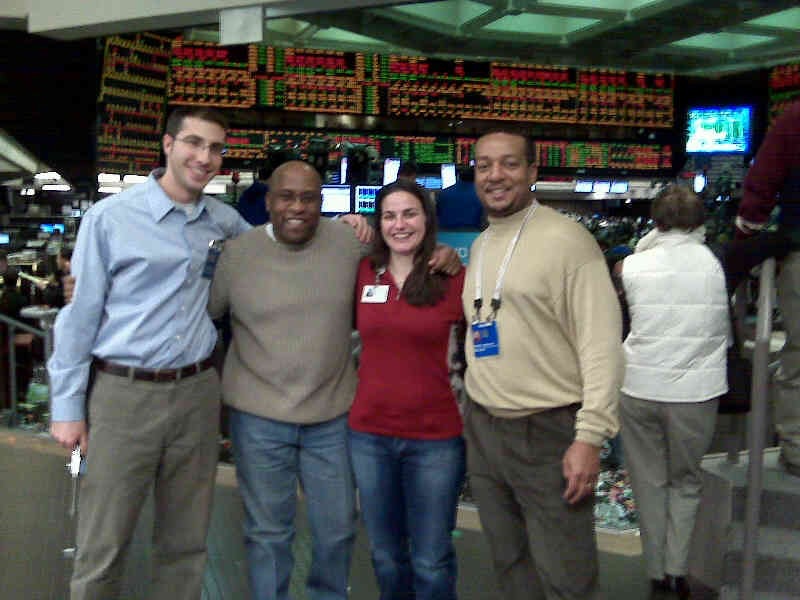
Working with these dudes (and Ian Berry, not pictured) was one of the highlights of my professional career thus far. From left: Tom Polansek, Theopolis Waters and Andrew Johnson with me at the Chicago Board of Trade, New Year’s Eve 2008.
Seven months after moving to Jersey City, I was given what the recruiting editor said was the fastest promotion in Dow Jones history when they sent me to Chicago to be a commodities reporter, which put me at the Chicago Board of Trade on the day during the financial crisis when the Dow Jones Industrial Average bottomed out.
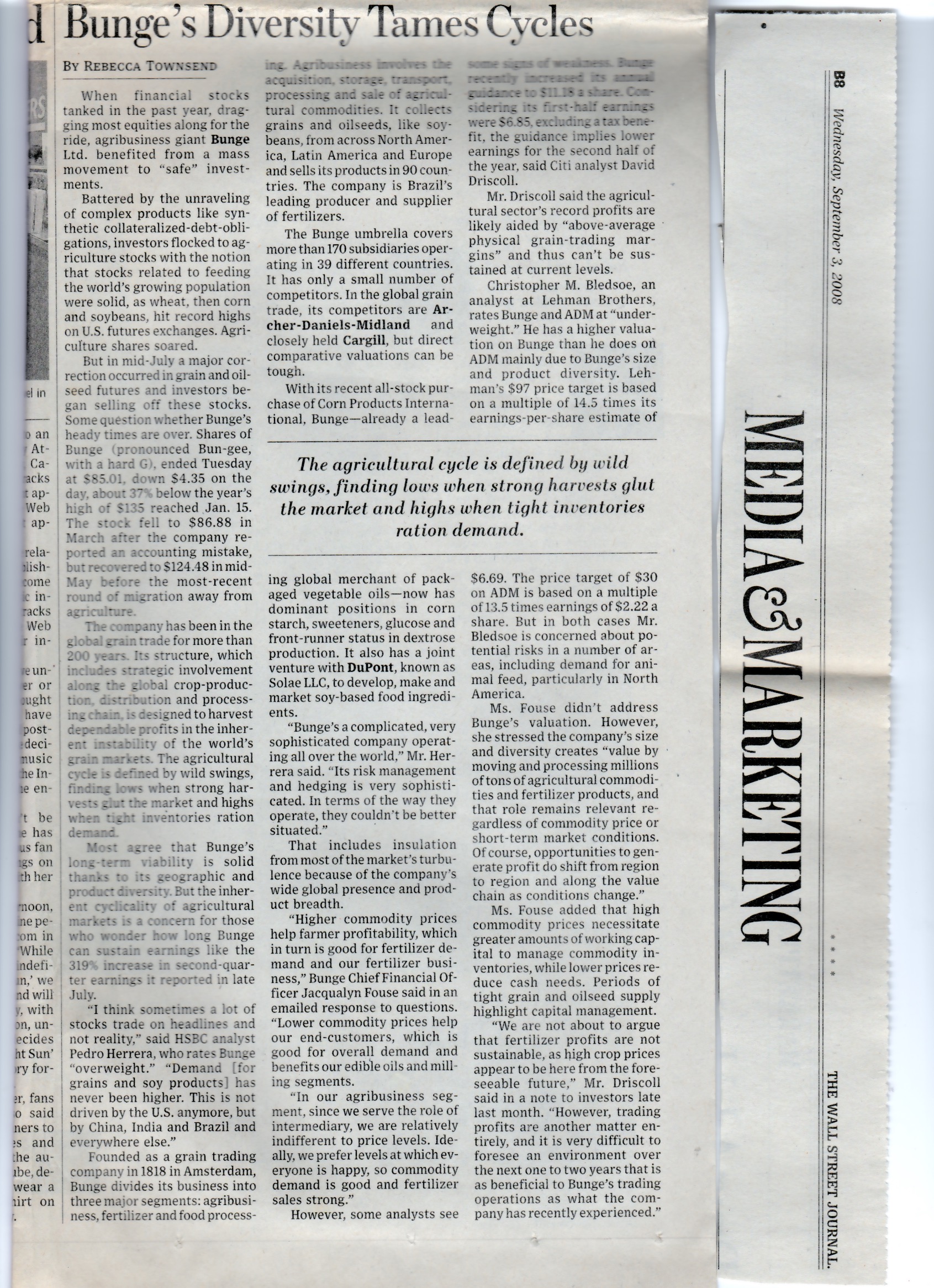
During the chaos, I achieved a career milestone: my bylines in the Wall Street Journal. Not the front page, and no major investigations, but still, I had arrived …
This picture of some of the pieces I wrote for Dow Jones Newswires and the Wall Street Journal shows the variety of headlines and issues I was handling during the Dow Jones days.
2007
The stack of papers is the total data requests I filled for newsrooms around the country the morning after the tragic I-35W bridge collapse in Minneapolis in which 13 people were killed and more than 100 injured. I was the sole employee on duty that morning at the National Institute for Computer-Assisted Reporting.
My investigative environmental work is featured in Mizzou’s alumni magazine.
Despite the tragic fashion decision I made by wearing those shoes, I was happy to be featured in MIZZOU Magazine. I especially like this quote the reporter used: “Environmental reporting isn’t just about the scare of the day,” Townsend says. “The journalist’s role should be to consistently assess the health of the environment and let people know what you find.”
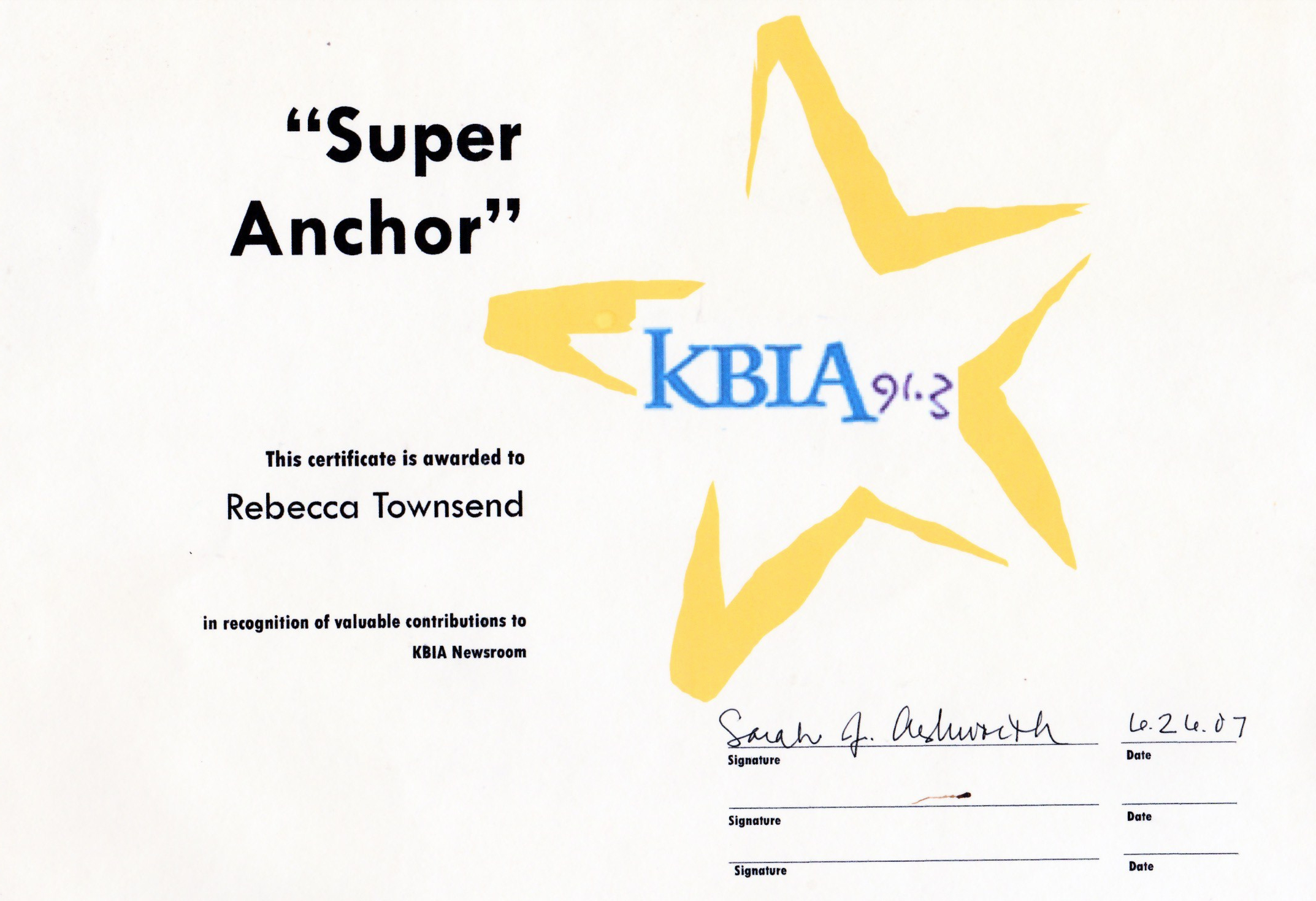
The public media outlet KBIA on campus allowed me to fulfill a lifelong dream of broadcasting the news on the radio. In recognition of my efforts, the news director Sarah Ashworth gave me a sweet certificate:
In addition to completing an independent mapping project with Professor David Herzog, I also earned a Mapping Boot Camp certificate with Professor Brant Houston.
By the fall of 2007, I had a full-time reporting gig at Dow Jones Newswires, relocating to Jersey City. My daily reporting focus shifted from the environment to the economy, which was on the verge of an epic meltdown.
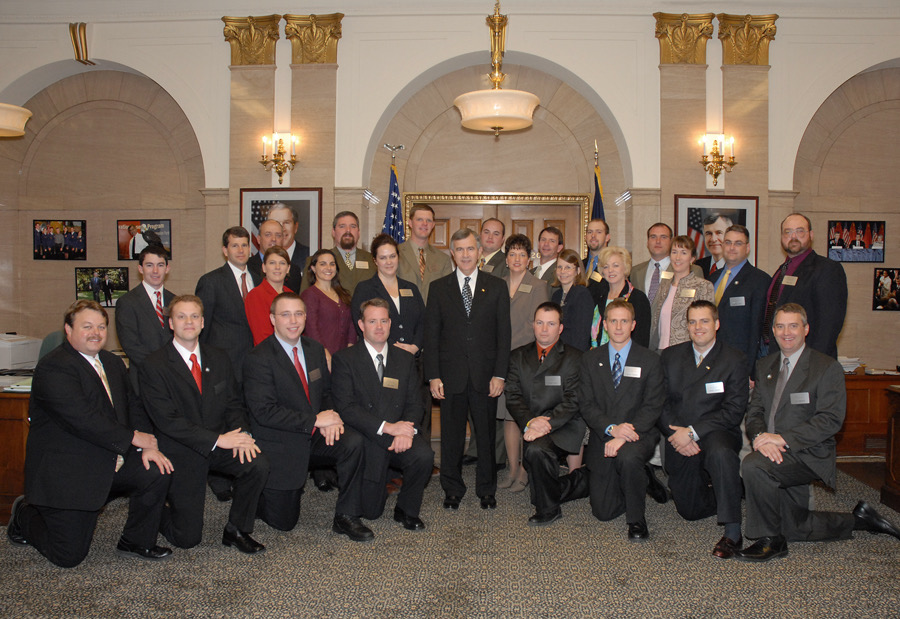
This is Missouri Agricultural Leaders of Tomorrow Class XII on its trip to DC in 2008. That’s me two to the left of Secretary of Agriculture Mike Johanns. We watched his staff at the National Agricultural Statistics Service release one of its top secret crop reports. (Yes, just like from “Trading Places”!) Together our ALOT class traveled to every corner of Missouri, plus DC, and our experience culminated on a two-week tour of France and the Czech Republic. This underscores why I love agriculture. It is a global beat that involves nearly everything.
2006
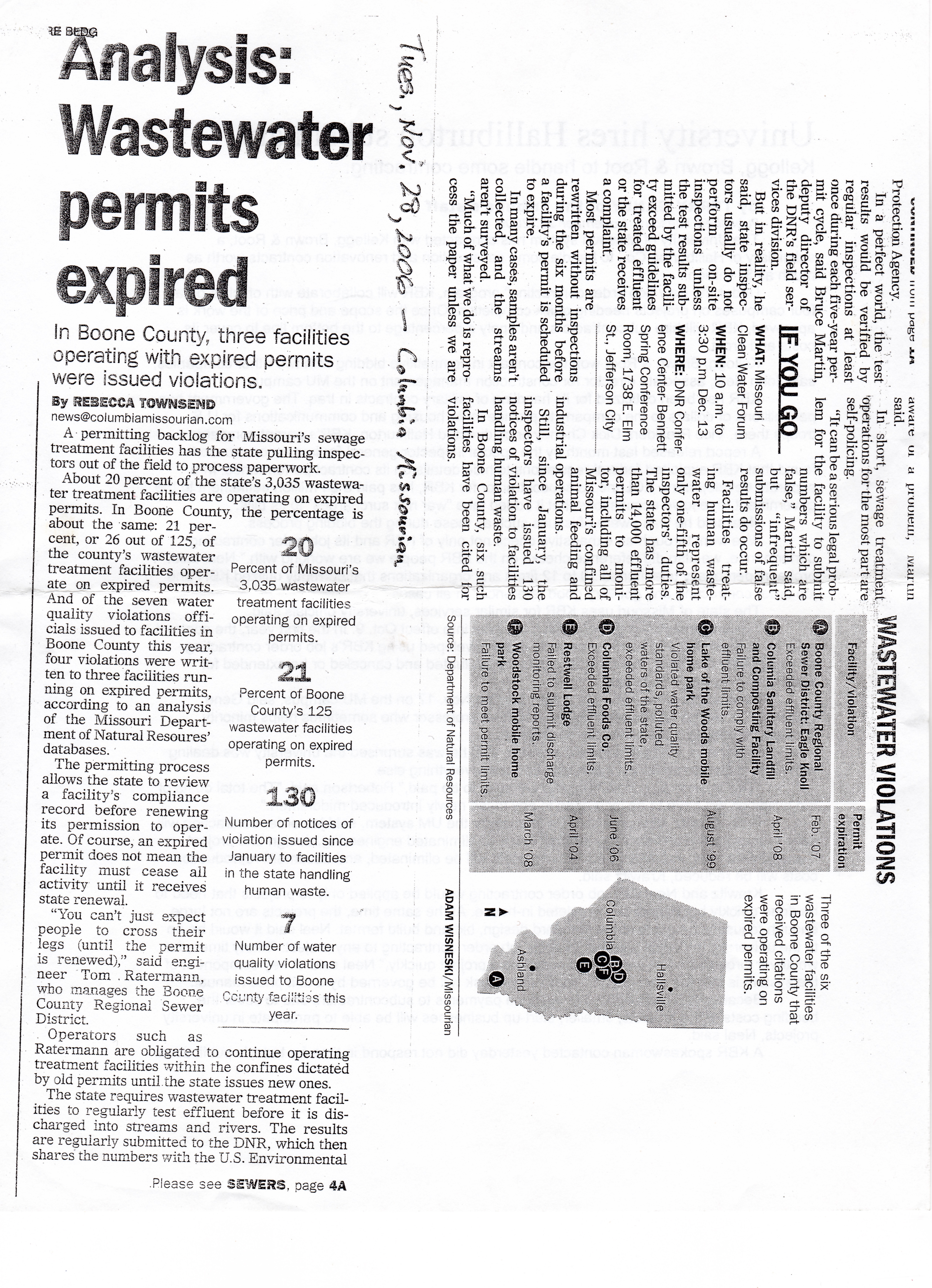
I earned an A in investigative journalism from Professor Brant Houston, former president of Investigative Reporters and Editors, for a story I did using computer-assisted reporting techniques (joining tables in two separate spreadsheets of public information) to illustrate the challenges the county sewer inspection team was having in keeping up with the demands of the job, allowing local water treatment providers to operate on expired permits. The story made the Missourian’s front page on November 28, 2006.
An “enterprise join” learned from the investigative journalists at the University of Missouri enabled me to write a front-page investigative story on the county’s sewage treatment inspection backlog.
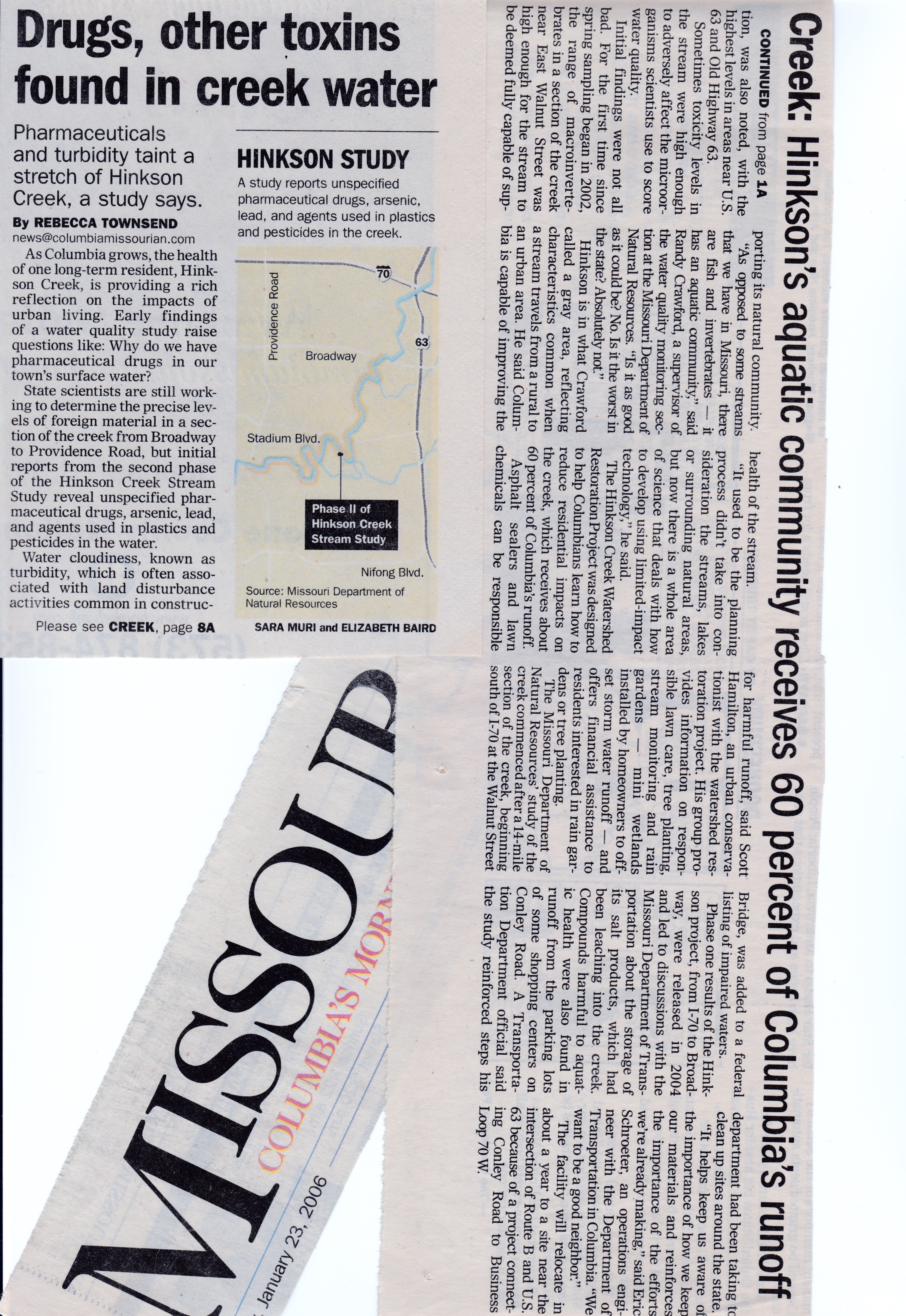
Less than one month after moving to Columbia, on Jan. 23, 2006, I made the Missourian front page for the first time — with another story about water quality.
The state environmental officials did not want to turn over the study that ended up leading to this headline, but my Missourian editor, John Schneller, encouraged me to stay on them. Persistence paid off!
2005
In my seventh year of covering the livestock industry, I’d spent a lot of time writing about animal welfare issues and interviewing some of the world’s leading researchers on the topic.
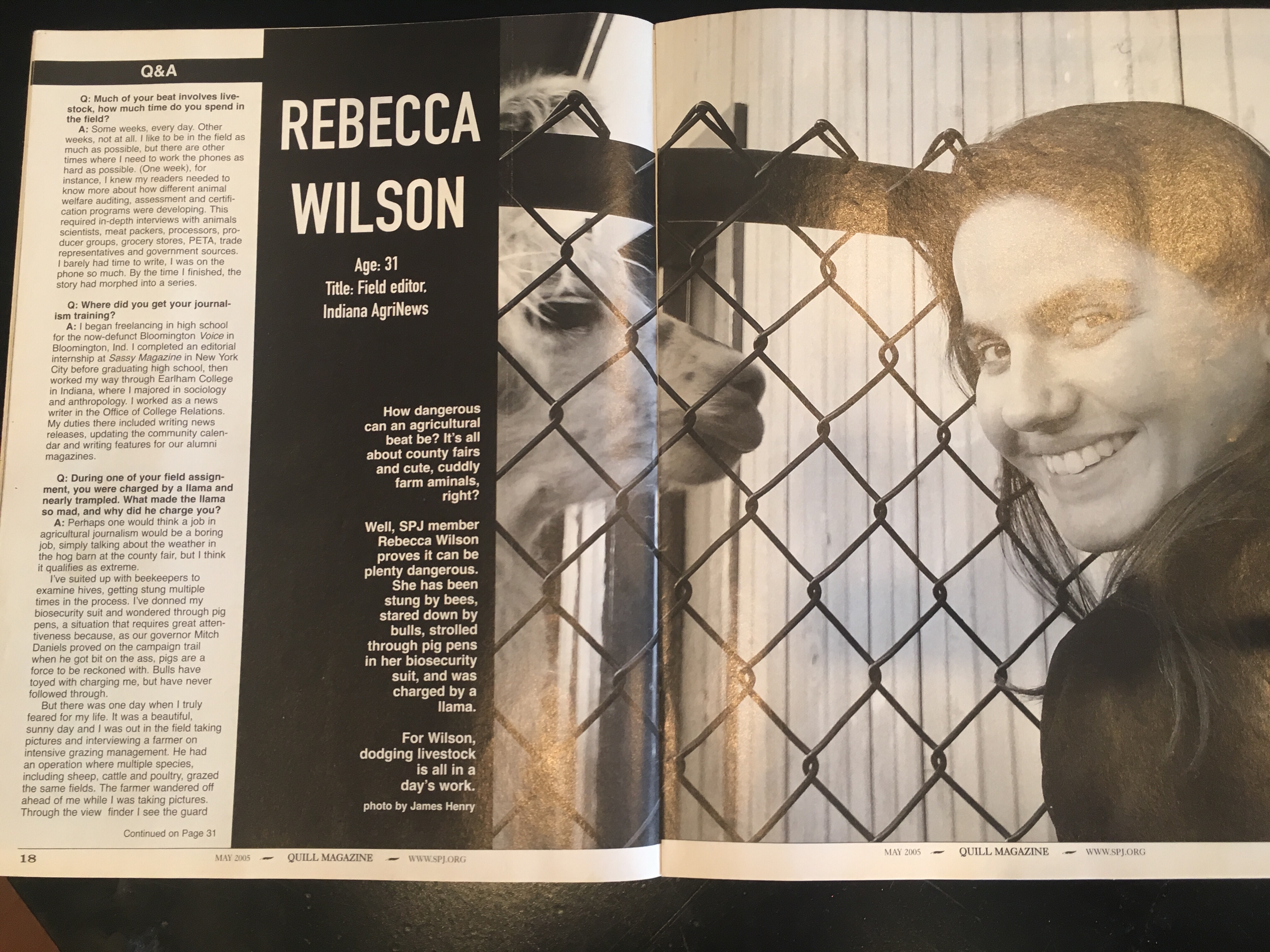
In 2005, SPJ’s national membership magazine put out a call, looking for “extreme journalists” to interview. I wrote and made a case for agriculture as an “extreme” beat. Quill agreed and sent a writer to interview me. They even gave me a shoutout on the cover.
I’m proud to report that while working for AgriNews, a publication taken almost exclusively by rural, white farmers, I was able to produce award-winning coverage about issues faced by migrant workers.
(Even though I’d been married for almost 5 years at this point, I still used my maiden name at AgriNews because I’d started with the company as Wilson and I wanted continuity in my byline. The award below came in 2006, while I was already at Mizzou, for a story written in 2005, so I switched to Townsend.)
The Society of Environmental Journalists includes some of the world’s finest journalists — enabling them to support each other in bolstering the media industry’s — and the public’s — understanding of some of the most complicated issues this planet faces. I’ve attended SEJ conferences in Texas, Montana, Florida, Wisconsin and Vermont.
During what would be my last year with Indiana AgriNews, I joined teachers from all over the world for a week in Bloomington as we explored worldwide food and resource issues. This undertaking foreshadowed a continued interest in food systems, the environment and world economy, which I continued to build on the commodities desk at Dow Jones and as a member of Class 12 of Missouri’s Agricultural Leadership of Tomorrow (ALOT) educational/leadership development program.
2004
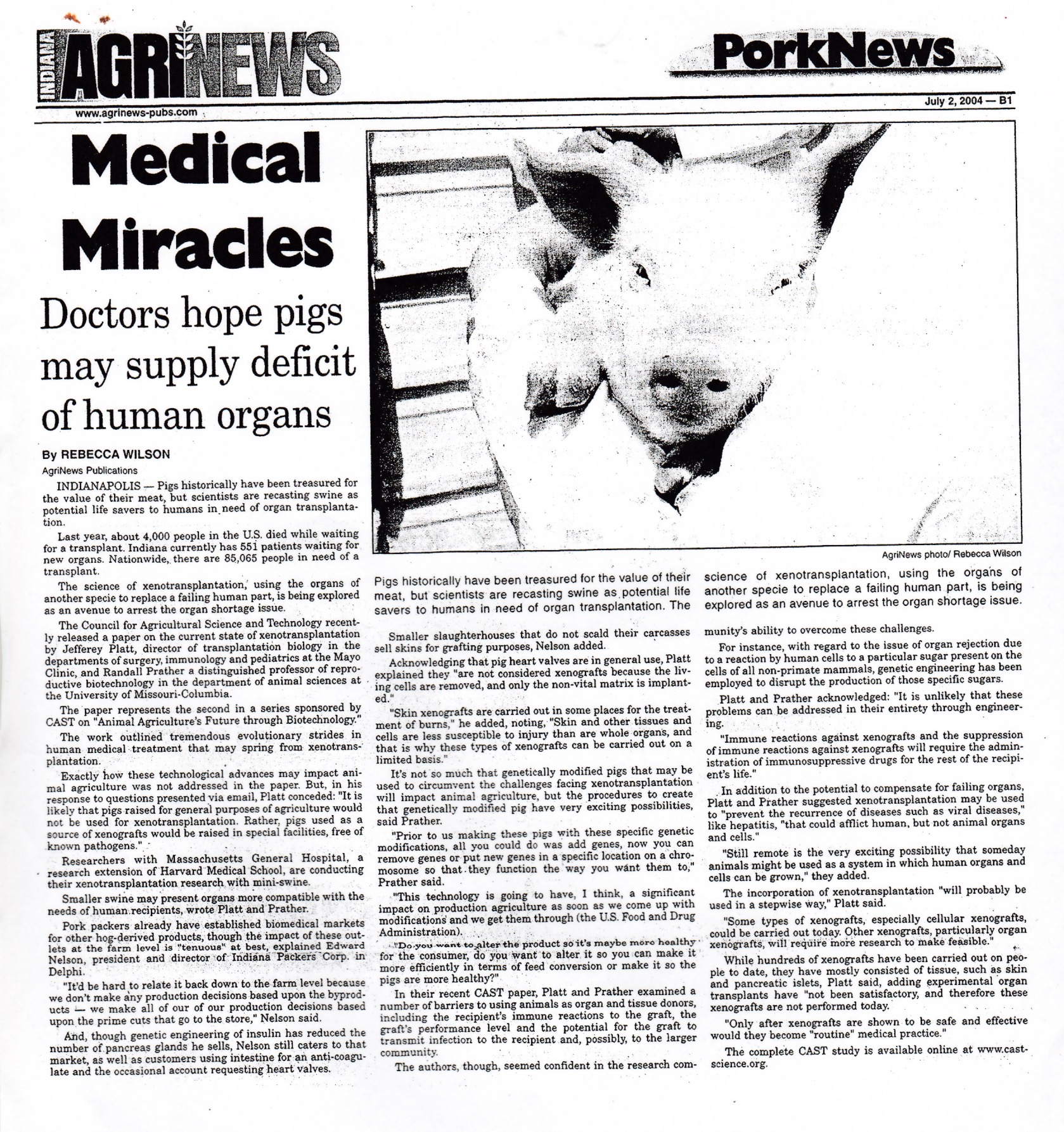
My job at Indiana AgriNews offered the opportunity to write many articles about the intersections of the biomedical and agricultural industries. Here’s an example (that’s my picture, too):
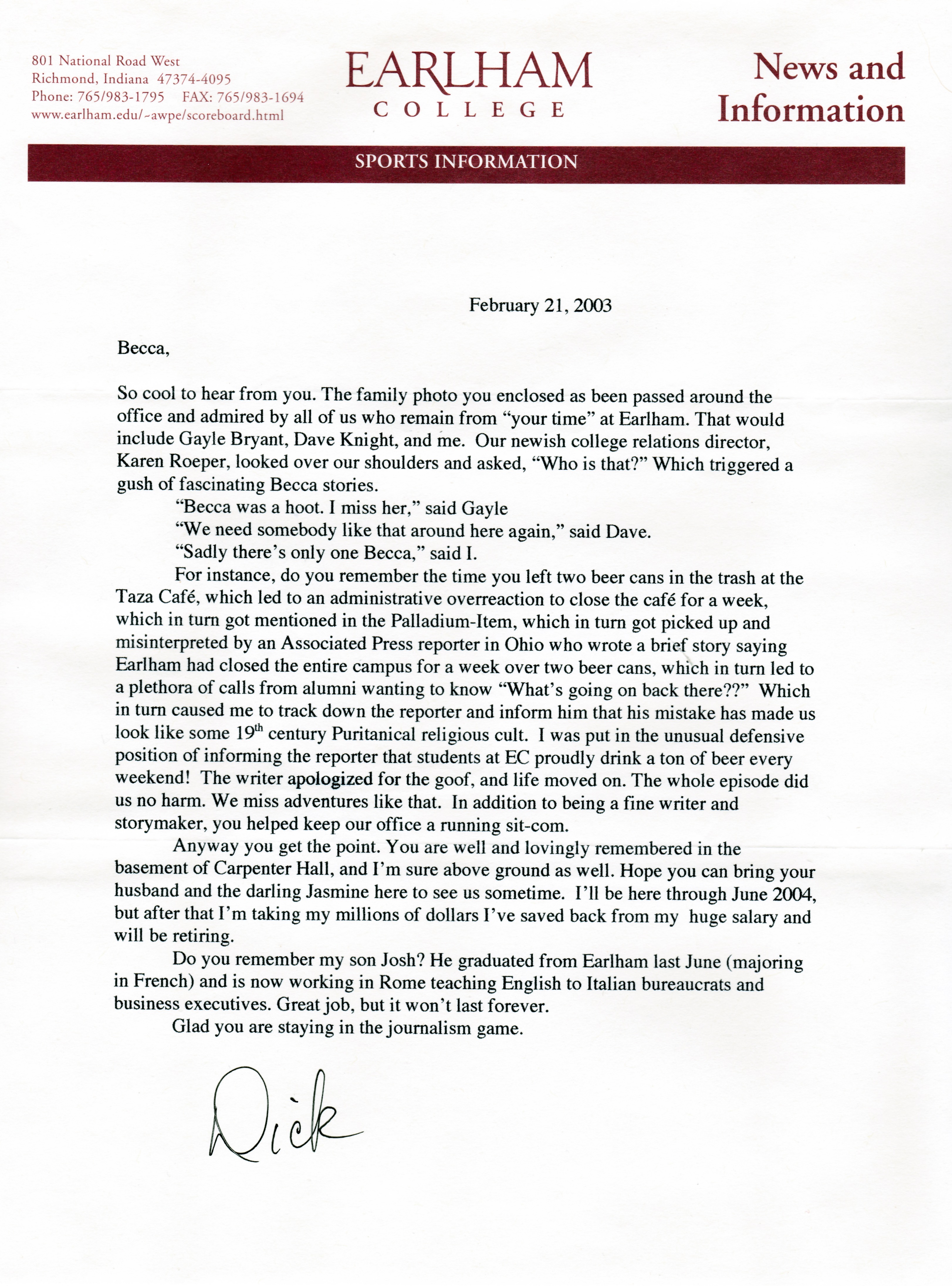
Dick Holden was my editor from 1992-1996 at the work study job I held at Earlham’s Office of College Relations all four years of my undergraduate career. He wrote this letter to me in 2003. As you can see, he was a solid writer. As you may imagine, I learned a lot from him.
1998
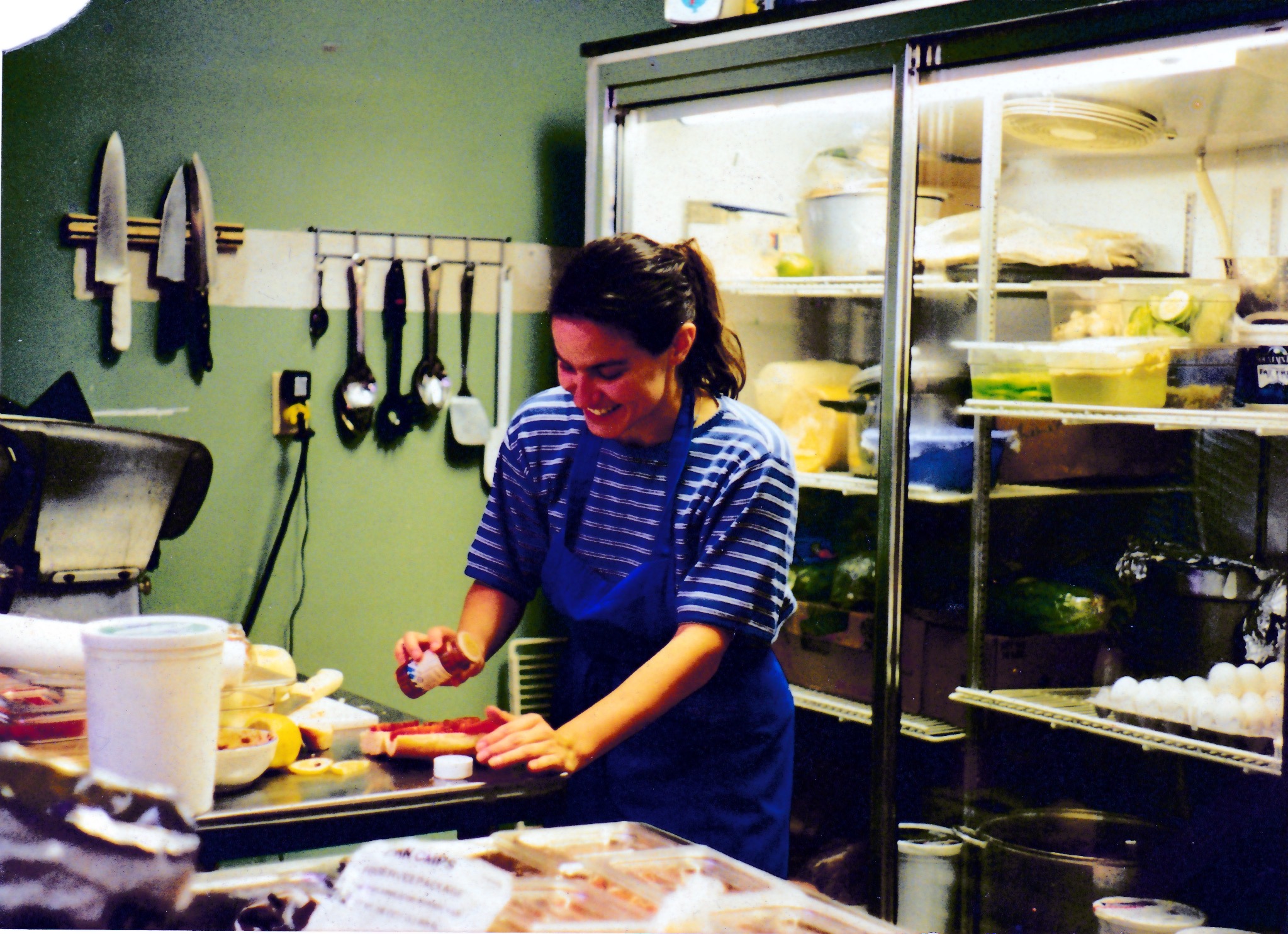
In late 1997, I received an invitation and a challenge to start a restaurant at the corner of 54th and College (in the same location Yat’s occupies now). I accepted the invitation, wrote a business plan, secured a $20,000 private investment and a $100,000 SBA loan and managed to have Modern Times Urban Truck Stop and Bookstore open in less than 6 months. Though I closed a year and half later, I count several victories for this project: 1) Most restaurants close in less than a year. We did better. And a lot of people loved us. We grossed more than $250,000 during our time of operation. 2) We did not have to claim bankruptcy. 3) We are still remembered for our legendary style.
Me in 1998 making a Chicago dog in the Modern Times kitchen. And a snippet of the menu:
1997
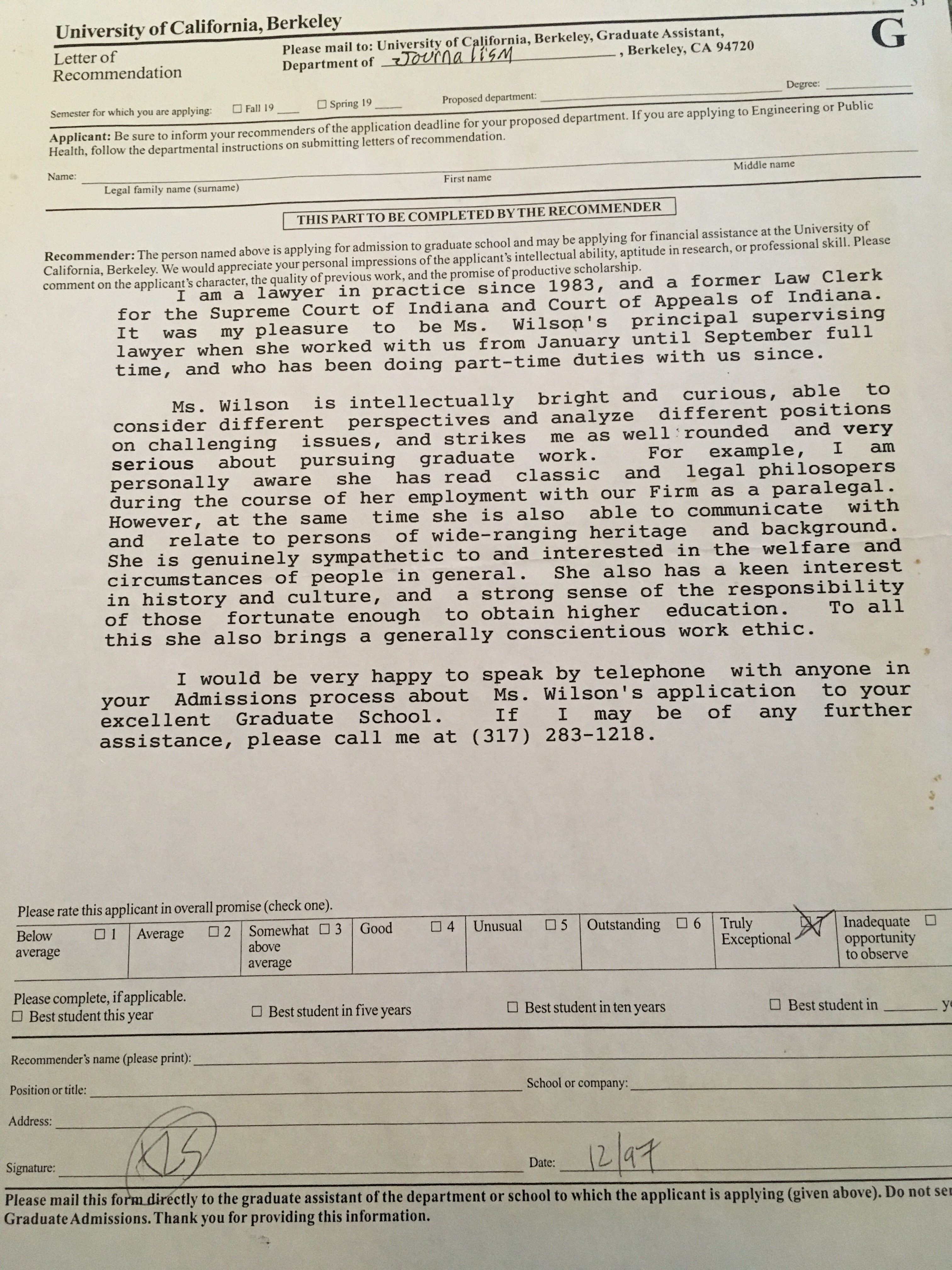
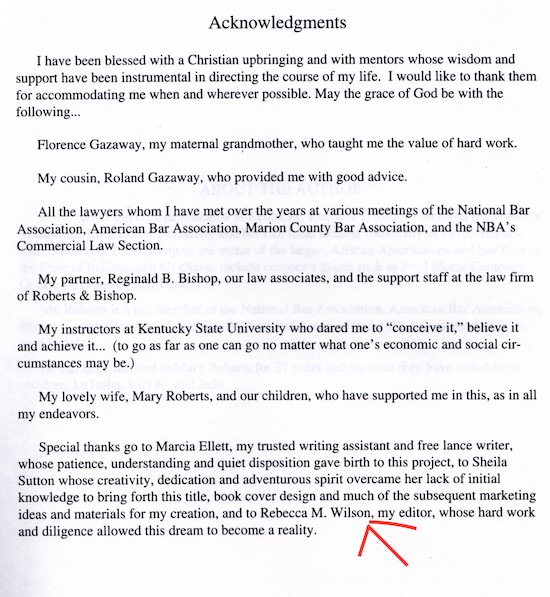
This letter from my supervising attorney at Roberts & Bishop, Kevin S. (RIP), is among my most treasured endorsements. Berkley rejected my application, but a decade later the University of Missouri offered me a free ride, so everything worked out as it should. During my time at Roberts & Bishop, I interviewed new clients and filed initial paperwork in personal injury and discrimination cases. Also, I solicited new corporate clients and helped a senior partner organize, edit and publish a book on practice management.
1996
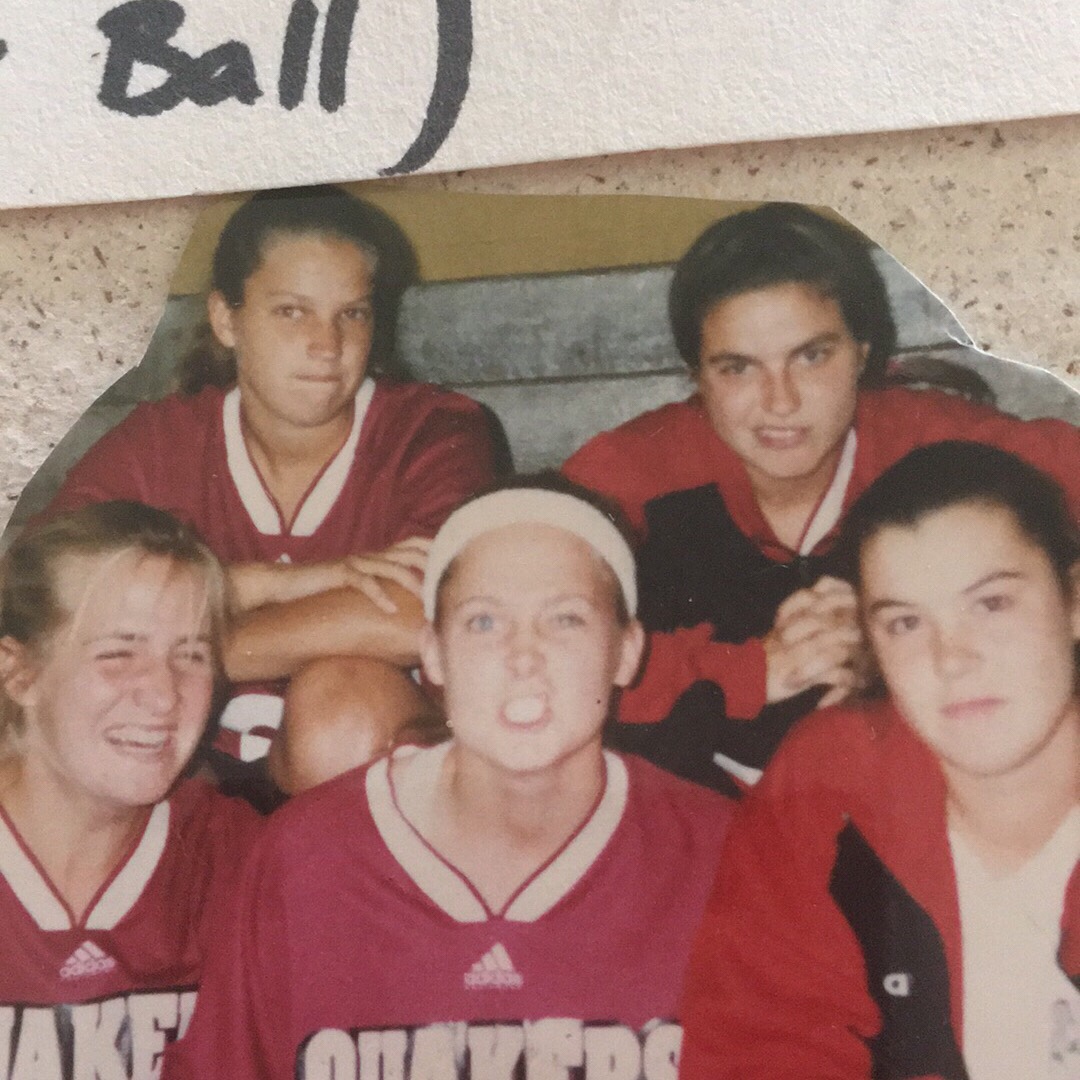
Me with my hustlin’ Quakers defensive line getting our game faces on ahead of a 1995 match at Kenyon. We earned a program win record during this year, my senior season.
In the summer of 1995, I enjoyed taking classes at IU and my co-ed soccer team (read: three girls and 14 guys), Hoosier Outdoor, beat Pegasus, a team led by IU soccer alums, in Bloomington’s recreational soccer tournament, a highlight in my three-decade soccer career!
1992
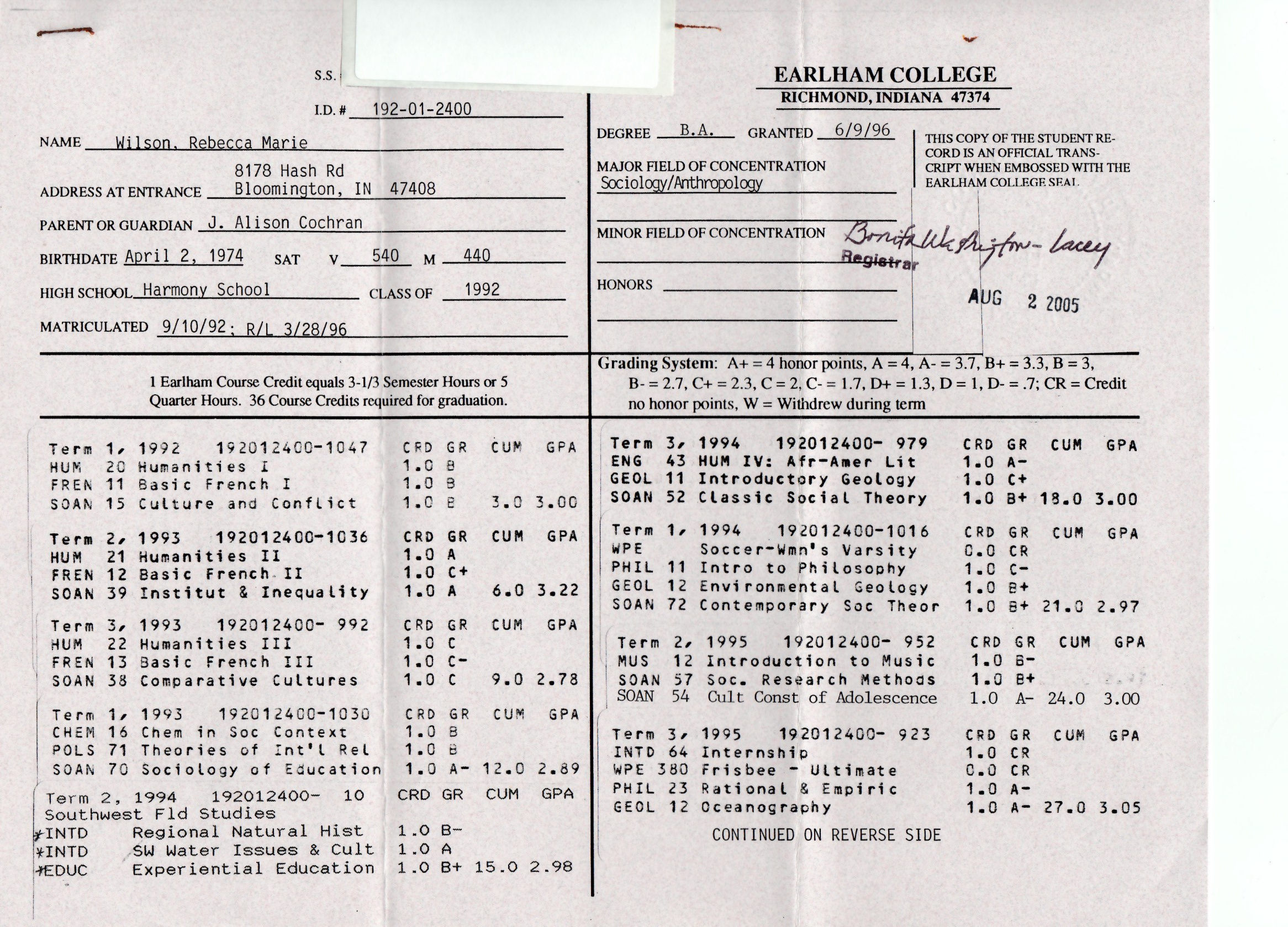
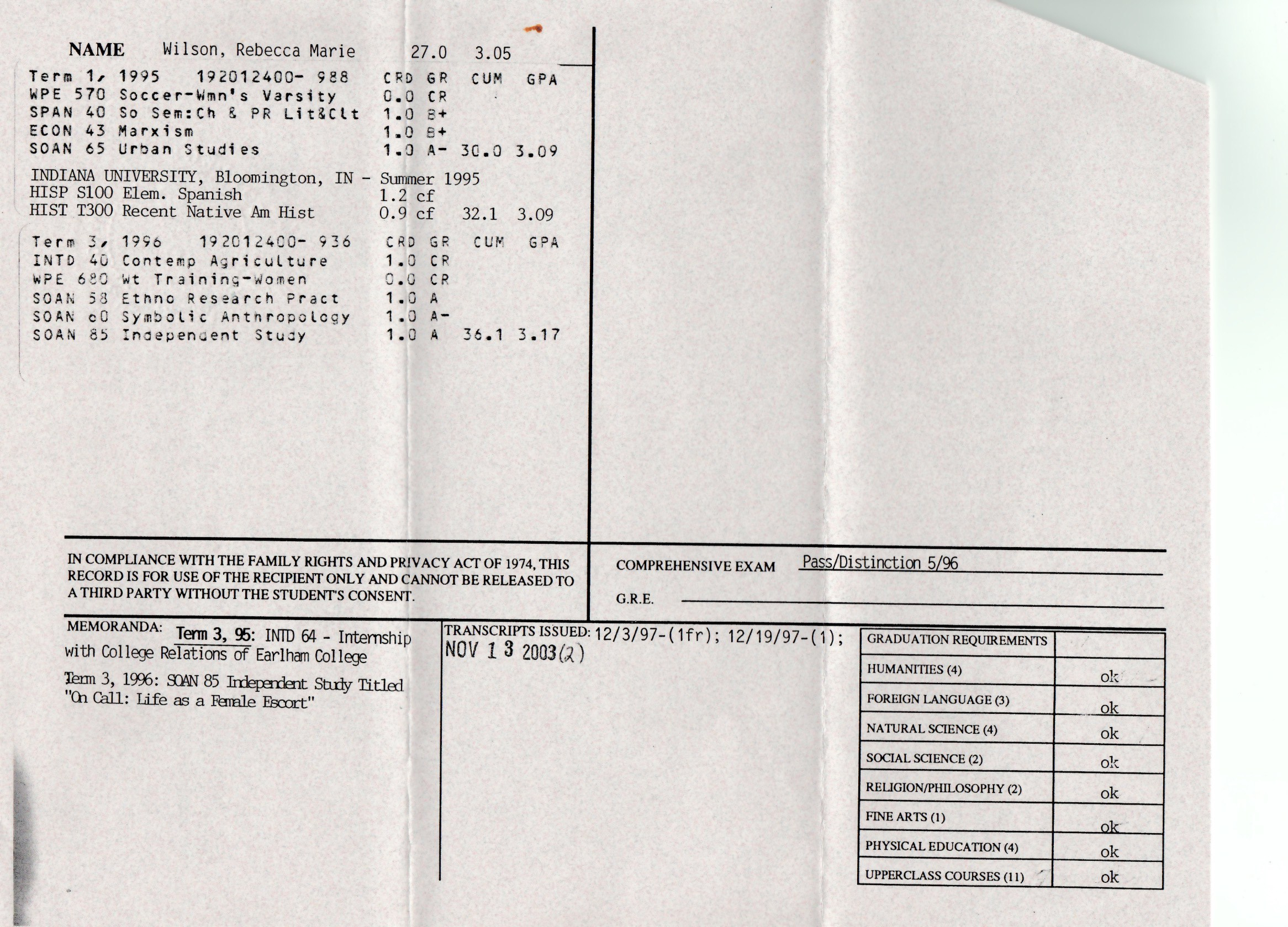
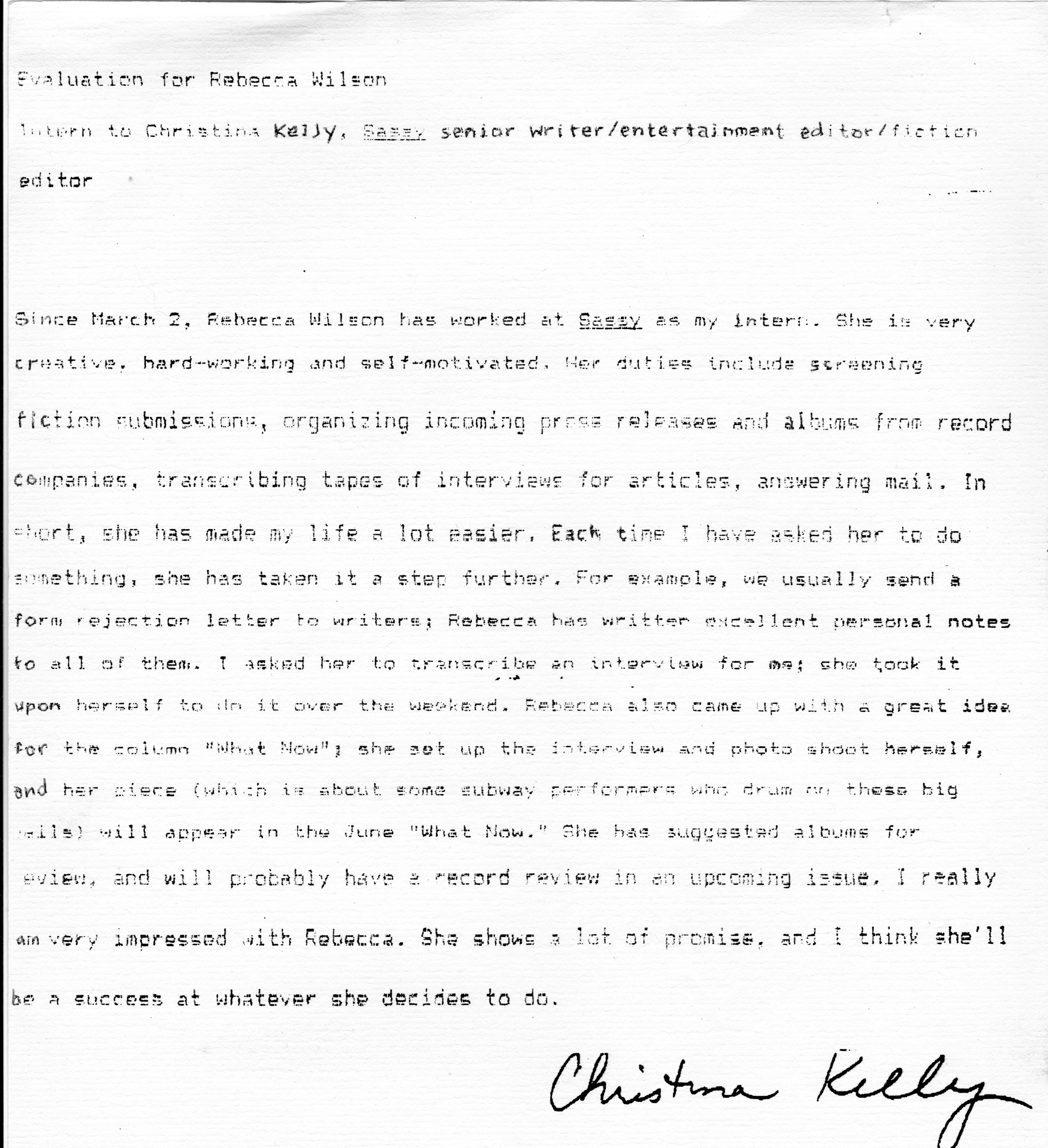
My graduation project from Bloomington’s Harmony School required me to relocate to New York City, where I worked an editorial internship for Sassy Magazine, a national publication for teen girls.
This is the evaluation of my supervisor, Christina Kelly, a senior writer and editor. I particularly like this part: “I really am very impressed with Rebecca. She shows a lot of promise, and I think she’ll be a success at whatever she decides to do.”
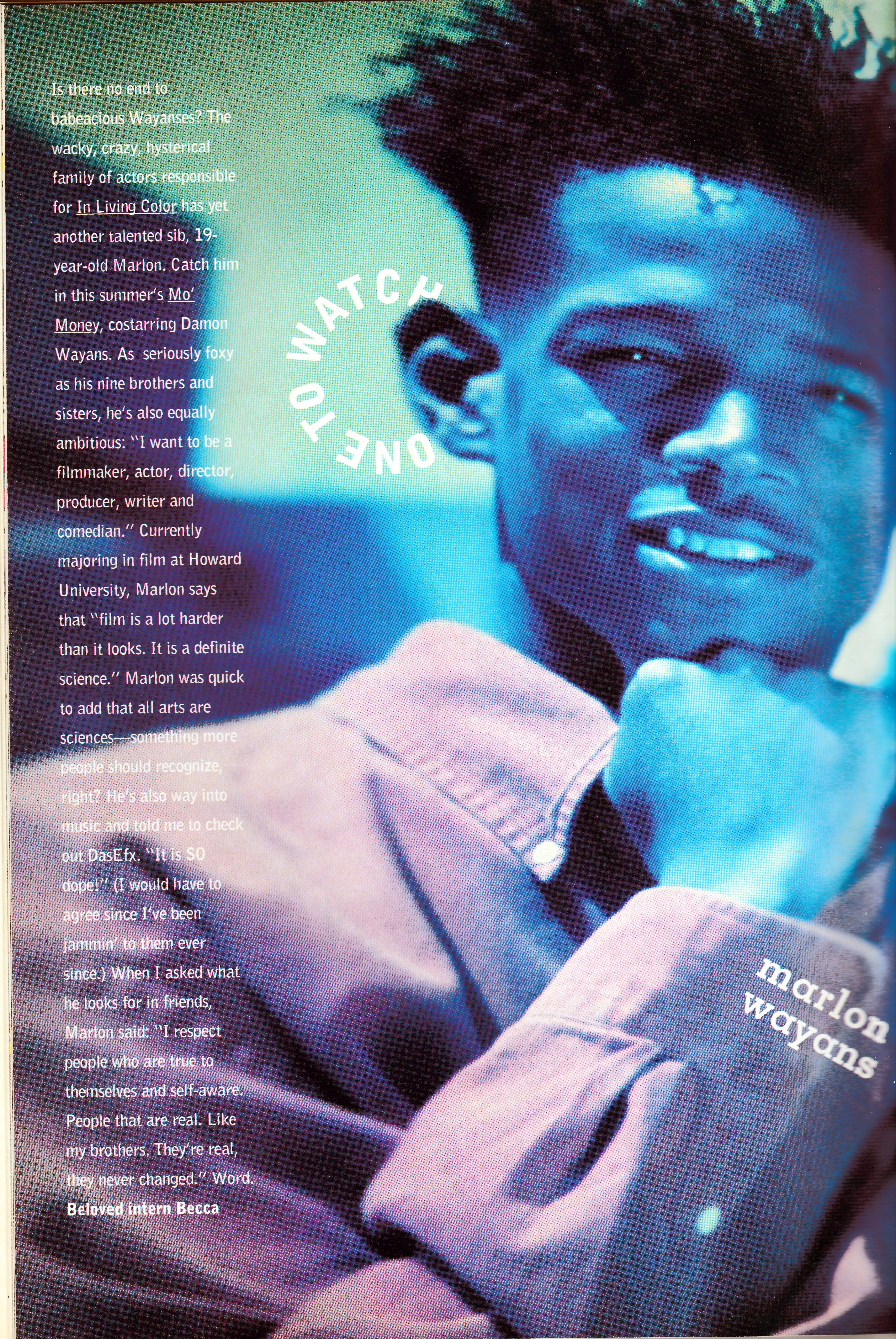
I enjoyed talking to Marlon Wayans. This interview happened before I had real training in professional boundaries, so before I prepared to leave the office where I was speaking to Marlon and one of his friends — and driven by a fluster of hormones and ambition, I used the strongest pickup line I knew: “Has anyone ever told you that you are a total babe?” It must have been hard for a comedian not to laugh in my face as his assistant kindly moved me toward to he door. Still, It looks like that theme inspired me as I wrote …
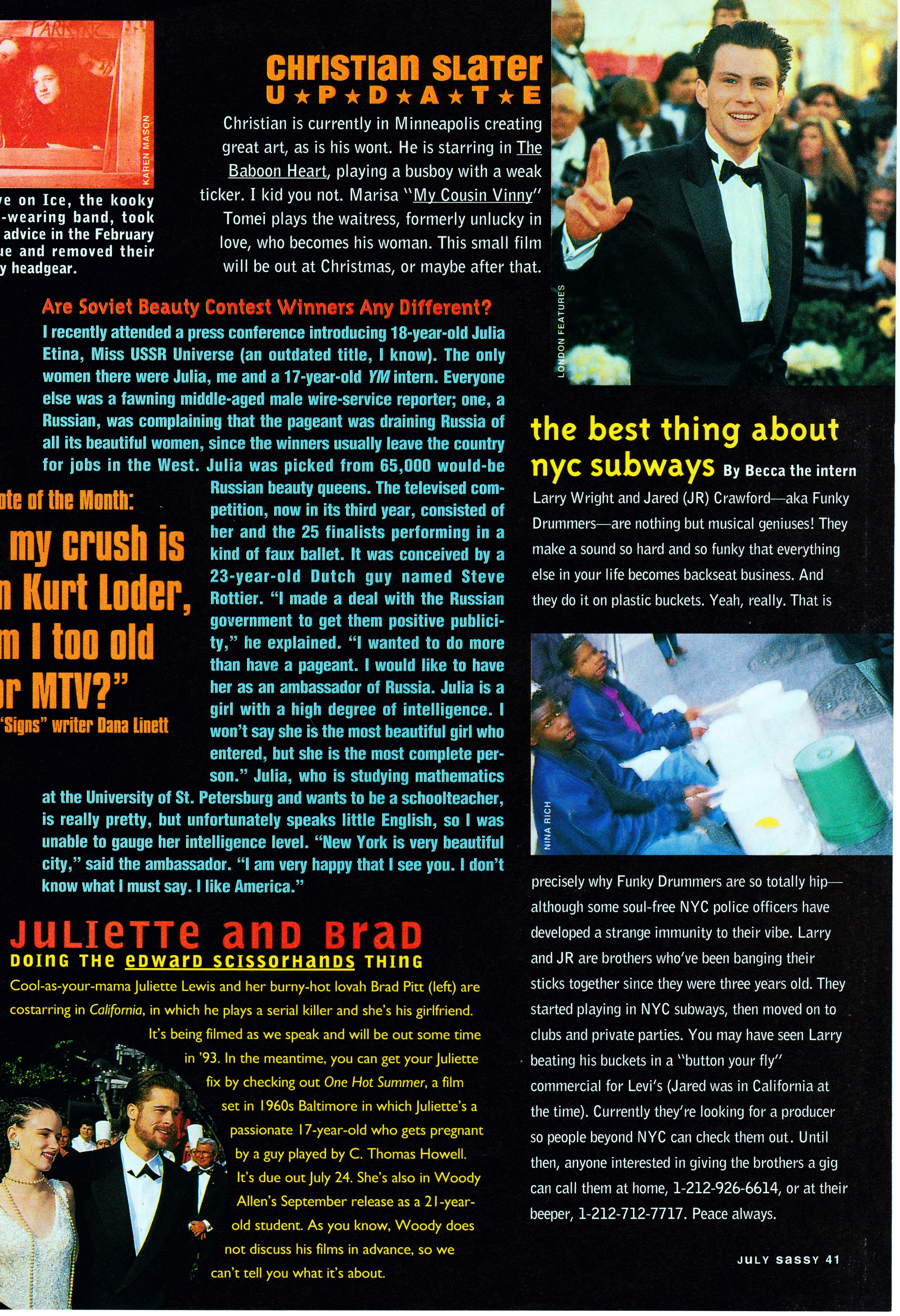
Observing street life in the city and talking to some of the characters I met presented the opportunity for me to slip “The Best Thing About NYC Subways” into the magazine:
Here’s a feature Steve Hinnefeld wrote for the Herald Times wrote upon my return:
Upon returning from NYC, I did some freelancing before leaving Bloomington for Earlham College in the fall.
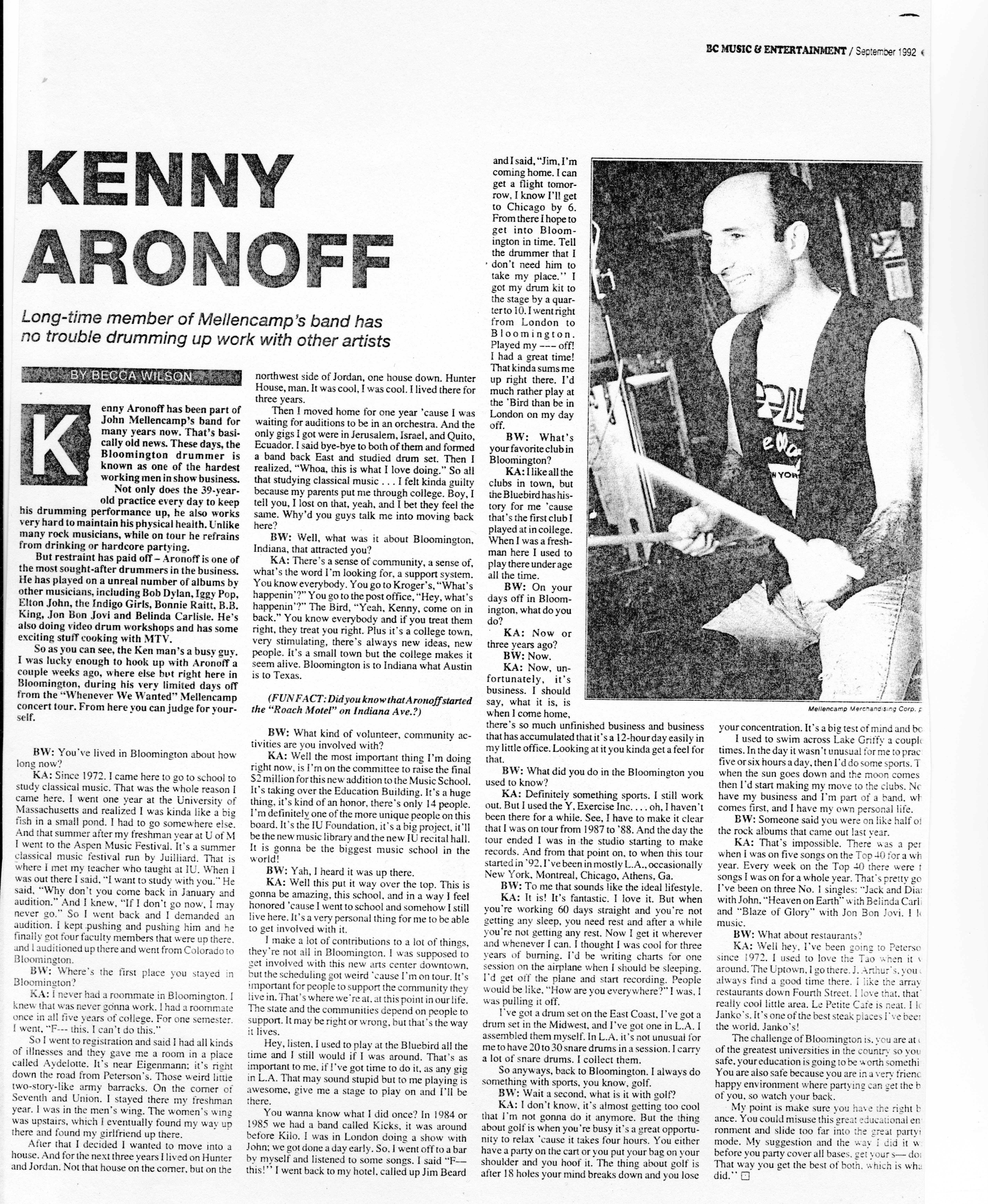
Here’s a feature I wrote on storied drummer Kenny Aronoff:
Did you know that Kenny Aronoff started the famous Roach Motel across Indiana Avenue from IU’s Dunn Meadow?
1991
At 17 years old, I moved out of my mother’s house and began living in Downtown Bloomington, supporting myself by working at the Red Chair Bakery on Kirkwood. When I resigned that job before moving to New York City, the bakery’s owner wrote a recommendation for me.
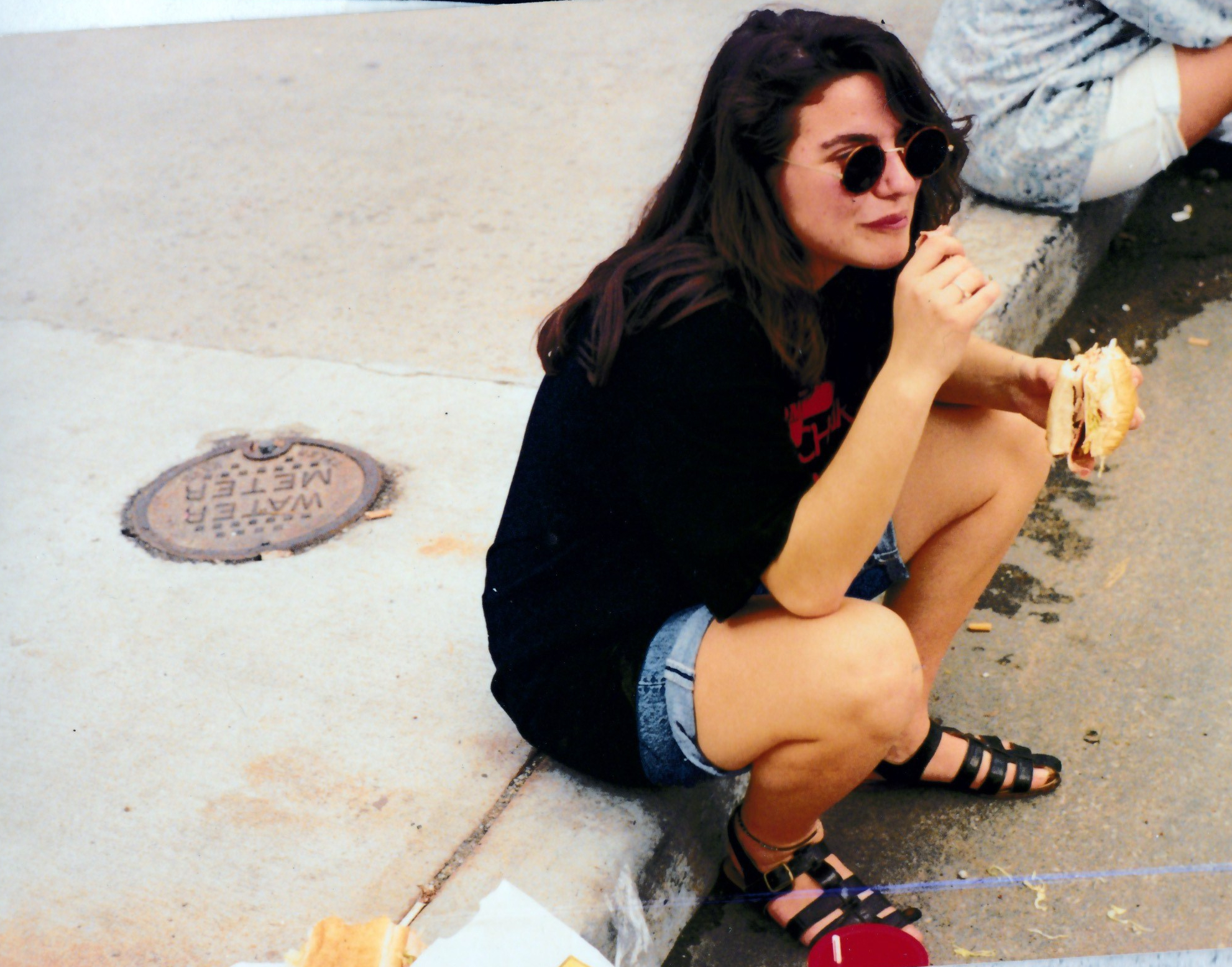
Me on break in the summer of 1991, enjoying a Dagwood’s sub on the Kirkwood Avenue curb in front of the Red Chair Bakery (now absorbed into the Village Deli).
Visit me at Lift and try Shiatsu Stretching, which blends elements of Thai massage with Shiatsu techniques. Or choose Swedish Bliss, which blends classic Swedish technique with trigger point therapy, acupressure and assisted stretching. (Photo “Thai massage” by Pyonko Omeyama via Flickr Creative Commons)
Everyone should visit the fabulous massage studio, Lift Therapeutic Massage, in Downtown Indy’s Fletcher Place, at least once in their lifetimes.
Better yet, get on a monthly or quarterly wellness schedule. It’s high-class, first-rate service. I’m honored to work with a very talented group of people.
Beautiful irony that we still fix bodies in a refurbished auto garage. The acclaimed diner Milktooth occupies 75% of the building we share. Book with me at LiftIndy.com or call us at 317/964-0788.
If you’d prefer in-home massage service, contact me directly.
My technique ranges in pressure depending on a client’s needs and can include acupressure, targeted deep work, trigger point therapy, assisted stretching and sports massage.
And remember this holiday season: You can put me under the tree — with a massage gift certificate. Would monthly massage enrich your life and the lives of the people you love? Yep. Guaranteed.
Hope to see you on my table soon.
— Rebecca Townsend, licensed massage therapist, sports and medical massage
Indy Eleven President and GM joined Townsend last August in her hometown of Bloomington, Indiana, to catch Indiana University host Wilt’s alma mater Marquette University. The match went 1-0 in the Hoosier’s favor, though the Golden Eagles pitched a hard-fought battle and were, in Townsend’s opinion denied a penalty kick when the ref missed a last-minute Hoosiers error in the penalty box.
Though it’s taken mainstream media some time to really “get” the story, reporter (and lifelong soccer junkie) Rebecca Townsend has been on Peter Wilt and the Indy Eleven since the beginning. She and Wilt first met in November 2012 and taped their first interview on the steps of the Indiana War Memorial in December of 2012, discussing his intention to help start a pro soccer team in Indianapolis.
In December 2014 at the Elbow Room, a pub just steps away from the memorial, Townsend and Wilt reconnected to reflect on all that’s happened since their last 2013 December debriefing: Dozens of amazing soccer games in Downtown Indianapolis, the best fan attendance in the North American Soccer League — better, even, than many larger-market Major League Soccer Teams, the league’s longest-running shutout record (in terms of minutes played without a goal scored) and two huge wins to wind out the season. [Now comes the huge roster shakeup and less than 100 days till the opening of spring season.]
The following is edited for clarity and length [though it is still massive, especially by today’s standards]:
Rebecca: I love this time of year because it reminds me of when you first came to town.
Peter: Two years and two months.
Rebecca: What are some of the things you learned in 2014?
Peter: In a way it’s like opening a present and finding out what’s inside it. But it’s more than that because that would be a total unknown. We knew we were building something. We spent a year working with so many partners to create something, not quite knowing what it would be, having some expectations. This year has been an amazing unveiling of … I apologize for the triteness, but it’s the fruits of the labor. Not just of the front office, but of everyone we’ve partnered with.
The success results from the contributions of everyone involved. The easy part is looking at the numbers and selling out the game, and how many tickets sold and how many people went to the game. But really the success to me is the depth of emotional connection, of the passion that people in the community have for this team. …It wasn’t necessarily work, it was just working with people, talking to people, negotiating and then promoting.. getting people excited.
Seeing that people did get excited, that to me is the ultimate result of it.
It wasn’t just that 10,000 people bought tickets to every game. It’s that the people that did come to the games loved it and they cared about it.
If we lost it hurt them. It’s weird to say, but: That’s good. It’s good they were pained; that means they cared. The worst thing is apathy. I don’t I think there was much apathy for this team and this organization and that bodes well for the future.
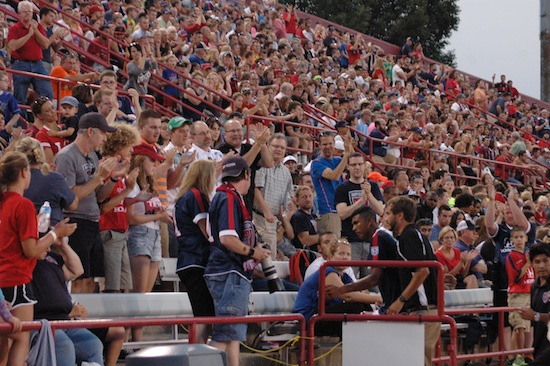
Indy fans offer Sergio Peña a standing ovation as he leaves the field following a dubious red card during Indy’s hard-fought 2-3 loss to the Atlanta Silverbacks in August. Rebecca Townsend
Rebecca: Let’s talk about expectations going into the season and think about how that played out.
Peter: I expected we were gonna win.
Rebecca: Did you, really honestly expect that we were going to win in the beginning?
Peter: Yes! I thought New York was going to be the only team better than us. They were better than us. But there were a few others that were also better than us.
Rebecca: How can a man that knows so much about soccer be so wrong?
Peter: Two things: I underestimated the rest of the league and I overestimated our team, especially our defense. Our back line was awful. Every game we were giving up the first goal and it was often an early goal and we were chasing the game and our attacking options weren’t that great either. We weren’t as good as I thought we were.
Rebecca: Do you think Juergen was more realistic about the building process?
Peter: Yeah! Juergen throughout the whole process tried to set expectations — and set low expectations — and I wanted none of it.
Rebecca: It seems you guys may have found a happy medium in the end. We lost a lot but toward the end of the season, we pulled out some amazing …
Peter: We fixed the defense by signing Cory Miller.
Rebecca: It’s important to note, though, that we still have a lot of the key elements of that defensive line that was supposedly so problematic in the beginning: We still have Jaimi, Eric, Kyle…
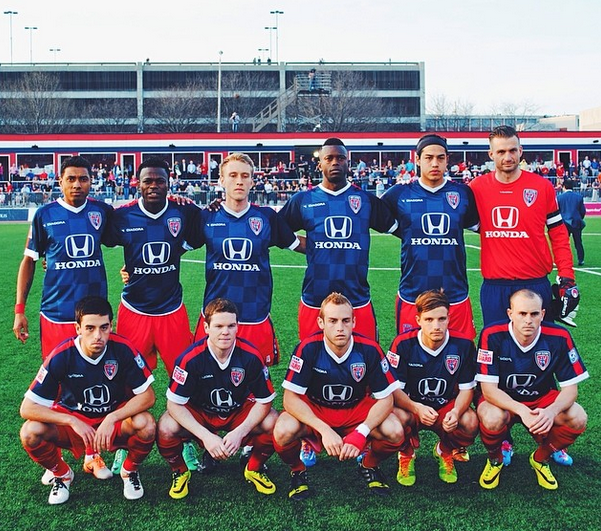
Indy’s first starting line-up. From Lower Left: AJ Corrado, Mike Ambersley, Kyle Highland, Corby Moore and Chris Estridge. Upper row, from left: Kléberson, Walter Ramirez, Brad Ring, Erick Norales, Jaimi Frias and Kristian Nicht. Norales, Frias, Nicht and Hyland remain key elements of the D, as will Brad Ring, who often pops in from a defensive mid position to help cull impending threats on the back third of the field. With the late-season addition of Cory Miller and the post-season signing of Greg Janicki, who won the 2014 NASL championship as a member of the San Antonio Scorpions, Indy’s defense continues to build.
Peter: Moving forward, the back line is the best it’s ever been for us. We’re in good shape with that. Our attacking options we fixed at the end of the year, but now they’re gone because we couldn’t afford them. They’re either too old or too hurt.
We hope we could get Charlie Rugg back, which would be huge.
And we have the money now to go sign a couple more forwards.
We couldn’t afford Jhulliam. His option is at a stupid high option number.
Couldn’t afford or want Jermaine [Johnson]: His option number higher, health bad. Other issues.
Mike Ambersley: His option number was high – his age is getting up. We have concerns about his productivity. You don’t want to pay a player for what he’s done in the past. Like stocks: past performance not necessarily indicator of future performance. Mike Ambersley served a really important role for us last year. But he’s not the answer to scoring goals directly himself and his age and is health are question going forward. The cost of his contract was higher, so we decided to go in a different direction. Now it’s a matter of finding the right players.
Mike Ambersley (center) being choked by an Atlanta Silverbacks defender. Ambersley took A LOT of punishment on behalf of the team throughout 2014 — he truly left it all on the field in his pursuit of goals. He scored six times for the club last season. (Photo by R. Townsend)
Rebecca: Was Mike the most difficult decision?
Peter: Mike and Jermaine were the two most difficult ones. By far.
Jhulliam, as good as he is, was not a difficult decision because of the option price was ridiculously high. We couldn’t sign four or five other players. Jhulliam might come back and say he couldn’t get a better deal — his age is good, his talent is good — we’d love to have him on the team — his attitude. All of that is good, but it’s just the money …
Rebecca: How much wiggle room do you get because it is Indy? Does the soccer enthusiasm trade in for players being willing to maybe take less but be involved with more?
Peter: That’s helping us. A number of players and agents are calling us saying their players love playing in Indy. Would love to play here all the time. That absolutely helps — it expand the pool of talent.
Also, last year I don’t think we has enough players with experience in this league. This is a unique league, as any league is … You need players that know what it’s about to be successful in this league: what the training is like, what the travel is like, what the opponents are like … We had two players with significant experience in this league: Mike Ambersley and Pedro Mendes (gone after spring season for “a number of reasons”) .. most teams have five times that number of players. I think that was problematic.
Now, in theory, everyone we’re bringing back has experience in this league. We’re recruiting players in this league who have been successful in this league who like what they see in Indy.
Rebecca: What’s so different about playing in this league?
Peter: It’s a physical league and the travel is hard.
Rebecca: More so than others?
Peter: Any league in the world except for Russia — and in major league soccer — has less travel. This is the third-hardest league in the world from a travel perspective. In England, half your games are in two hours. … Frankly the training conditions, the locker rooms – this is a hard league. And on the field very physical..
Rebecca: Because people are trying to make their names, right? This is where you either make it or you don’t?
Peter: Well they’re trying to do this throughout the world. But the nature of American players, they are not as technical as in Latin America or Europe or Africa — they’re making it on their physical muscle and it’s hard. It’s different. And players who may be successful in different systems, aren’t necessarily successful in this one.
Rebecca: In terms of thinking of soccer as a business, but also passion-driven: How do you have find that balance between business logic and breeding loyalty where everyone is all-in …
Peter: It’s all at the end of the day business. Winning games is good business. It’s about winning. What goes into winning isn’t purely physical skills. It’s also about character, work rate, selflessness — characteristics that help a team win.
You might be the greatest player in the world in terms of physical qualities, but there is also character, mental tactical aspects of your makeup as well. And I don’t think we had the best balance of those characteristics in the spring season. We improved it in the fall season, but we’re still not perfect. I don’t think we have as much quality on the leadership aspect as a winning team needs to have.
That doesn’t mean we don’t have good guys …
Brazilian World Cup Champ Kléberson netted 5 penalty goals for Indy Eleven in its inaugural 2014 season.
Take a player like Kléberson … Fantastic player, fantastic guy, good character, but he’s not a traditional leader, he’s not a vocal leader. Even throwing aside the language barrier, it’s not in his personality to be an outgoing leader. He leads by example, and that’s excellent, but this team needs more players with the personality to be outgoing leaders.
Rebecca: Kristian, who is very vocal, felt like he wasn’t filling that leadership role, as well. So, yet to be determined on who will be the heart of the team to drive it forward?
Maybe leadership is the answer. I want to be more specific on that question. If love and loyalty are important to making players hit the top of their potential for their team .. but yet everyone is a professional who knows this is business and may hinge on statistics at the end of a season that may not value selflessness … How do you get those important qualities, that love and loyalty in an environment that is, on its face, business?
Peter: Get to know players before you sign them that have those positive qualities.
When you’re assessing a player, it’s about all that. You recognize that not every player is going to have positive check marks in each of those areas, but you want to minimize the negative checkmarks and maximize the positive ones.
Rebecca: For players not from Indiana, how do we make them care about Indiana more than anywhere else they’ve been and want to perform?
Peter: I think the fans have done that. Any player that played for us last year loves the fans and loves the atmosphere they created. That part is are good as it can get. But not all the players were either good enough or strong-minded enough. So, obviously we’re making changes. You’re going to have some turnover for the very best of teams. The Galaxy’s season ended two days ago with a championship. A week from now, they’ll have at least six openings — on a championship team, including Landon Donovan. And that’s the best of teams. Those that finish near the bottom, like us, it’s going to be more than six and maybe a dozen.
We renewed eight contracts. We’ll end up re-signing two or three more than that — maybe 11. Then we’ll have another dozen or so new signings. … Two new backup goalkeepers ..
Hopefully they’ll challenge Kristian and make him perform better and maybe even perform well themselves.
From left: Nathan Sprenkel, Jon Dawson and Kristian Nicht. Sprenkel and Dawsom helped stock local support for the team, Sprenkel as a DePauw University alum and Dawson of Butler.
Rebecca: Can you tell me what happened with the goalies? When I saw them in practice, they seemed to be working. They were stopping the ball when it came their way. They looked committed to their training.
Peter: The coaches’ assessment was they weren’t pushing Kristian enough.
Rebecca: I don’t know how you push Kristian more because when Kristian Nicht should sit his butt on the bench because he can’t stand up straight because he’s got heat stroke, nobody ever pulled him off to give anyone else a chance.
I don’t know… He’s German. He doesn’t sit down. He doesn’t stop until he’s dead.
Indy Eleven’s first player employee Kristian Nicht is a veteran of Germany’s elite Bundesliga. The 6′ 4′, 224-pound, 32-year-old played 2,430 minutes for Indy Eleven in 2014.
Peter: The other goal keepers had chances in friendlies. They didn’t perform up to the standards the coaches held for them.
Rebecca: That’s too bad, but I guess that’s the way it is. I didn’t see those games, I guess. I just saw them sitting on the bench and working hard in practice. How did everybody take it?
Peter: Understanding it’s part of the business. There’s good communication throughout the year with the coaches and the players. They know where they stand. Frankly, it’s easier to let go of players after a bad year than after a good year. All you have to do is point to the standings and say: You were part of this, and it didn’t work out so well. Including myself.
Rebecca: Yeah, you and Juergen. My expectations were like yours … but maybe there are some realities Juergen can help us understand better about how to grow.
Peter: By making changes to the players, that doesn’t mean we’re absolving ourselves from responsibility. We’re part of it, including the players we kept. They are part of the responsibility of our failings.
Rebecca: How do you and Juergen communicate about the games?
Peter: First I have to watch the game, if it’s a home game i haven’t seen the whole game … I’ll either sit down with Juergen or talk to him on the phone. We’ll go through the pluses and the minuses. Usually after the game I go back to the locker room for a debriefing, we go through the individuals, what went well, what didn’t… I get out to practice at least once a week. Maybe twice. Watch and talk. We are bombarded everyday with player applications or agents that want to come in. We talk about those everyday. We’re always trying to improve the team.
Rebecca: How did you find Dragan Stojkov, our new player from Macedonia?
Peter: Dragan came from the L.A. Galaxy. He actually came in with Charlie Rugg. We couldn’t sign because him because he is international and we were at our limit, but he could train with us and that allowed him a chance to learn about us and vice versa… He’s a very good player. He’s hard-working and humble. He’s going to be a real asset to the team. He’s very good.
Rebecca: What was your favorite game this season?
Peter: The game in Edmonton that we won at the end.
Rebecca: What stands out about that game? Just the fact that you got it at the end?
Peter: It was very emotional. They outplayed us up and down the field. We had no business winning. They hit the left post, the right post, they hit the crossbar. They probably hit the woodwork probably five times in that game.
Then, maybe ten minutes, nine minutes left, we had a player taken down in the box … It was a clear penalty to me. But because it was toward the end of the game and possibly because we didn’t deserve to win, the referee didn’t call the penalty.
Rebecca: Oh, really? Does that factor in? You don’t deserve to win, so …
Peter: Of course not…[sarcasm]. It’s harder to call a penalty late in the game when it’s going to decide the outcome.
I was in the stands, standing behind the supporters from Edmonton. And when that wasn’t called, I went ballistic. (Away games for me are different from home games because I’m watching the game. Home games I don’t get as tied into the competition as in the away games. I’m much more of a fan at away games than at home games.)
[An emotional Wilt stomped down the bleachers past supports club and on to the field.]
I might have thrown out some four letter words and embarrassed myself and the organization in the process, but I was upset. I made my way around to the other side behind our bench. I was pumped up. At that point I said, “We deserve to win!”
Rebecca: Were you screaming at your players at this point?
Peter: I slammed our bench shields. It’s still 0-0. I can’t remember which, but one player turned around expecting to see an Edmonton fan, a crazy guy. He was half right. It was the latter. Soon after that was when a blocked shot in the box that rebounded to Kléberson and he put it away.
Rebecca: Bam!
Peter: At minute 99.
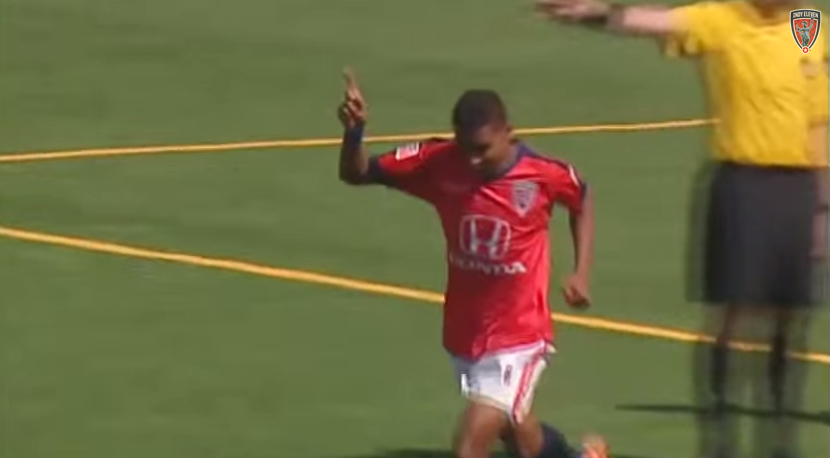
Kléberson celebrates after driving a late-game game winner against F.C. Edmonton (also playing its inaugural season in 2014). Despite being hobbled by injury, Kléberson proved to be the team’s most consistent offensive threat in 2014, scoring eight goals in 20 appearances.
Probably embarrassed the organization more with some more four letter words.
“F. yeah! F. yeah! We deserved it! Cheater’s proof! Going back to seven-year-old logic. Yelling at the fourth official a little, saying, “See!”
That was the first Indy Eleven NASL victory I attended. I wasn’t at the Carolina game. I had the Open Cup at home. This was the first NASL win I’d been at. Celebrated afterwords in a damn-straight way. Hell, yeah! That’s it. Yeah, that was my favorite game.
Rebecca: What was it like: our first home win here, for you?
Peter: It felt like a fait accompli. Not that we would win that game, but at some point, obviously, we knew we’d win a home game. … Whereas the Brickyard Battalion was pumped for a pitch invasion … I watched the end of the game in the Brickyard Battalion, but had no desire whatsoever to have a cathartic rush to the field. The Edmonton game to me was more cathartic and emotional than the Minnesota game. The Minnesota game was more of a sigh of relief.
Rebecca: Taking out No.1 is pretty special right?
Peter: Oh, I was thrilled. But it was more of a quiet, internal moment of Yeah, we did it. An accomplishment; I was really proud and excited.
I was in the last row in the Brickyard Battalion. Watching the pink smoke come up … Brickyard Battalion breast cancer awareness … I watched it all unfold from up there, it was a beautiful sight.
Rebecca: Did it bring tears to the eyes to see so many people so emotional?
Peter: Yeah! I was very proud. It was very rewarding. That was a manifestation of all the work our staff had put in, our players had put in, the coaches, the community. To see them being able to release the pent up energy was fantastic.
The Townsend Family, Clyde, Rebecca and Jasmine, found President Wilt pretty in pink and all smiles post-game on Oct. 11 — his team’s first home win in a NASL match.
There were a couple celebrations around town … (but) I didn’t get out of the stadium until 1 a.m., so I ended up not going to either, but while driving home I saw some Minnesota supporter friends of mine lost, looking for their hotel, so I gave them a ride. Then I went home and the game was just finishing up on television and I watched the end of it and I saw the pitch invasion.
And I got to see more closely via television the celebration, and I saw Kristian Nicht celebrate with his daughters. And I got a little emotional then. [Peter actually breaks up at this point and gets emotional, tears up.] It was more meaningful than if we had won the first game, you know?
Rebecca: I was ready for that first win. And then it hurt more and more throughout the season. Then it got to a point where it was like: This is baloney. We are playing hard enough. We deserve to win. But to have worked through the pain and difficulty of loss, it makes it more valuable. It’s not easy. Looking forward to 2015: What are the chances of some international travel?
Soccer Diplomacy: Indy Eleven staff members John Koluder and Guy-Jo Gordon present team scarves to the Madame Minister Lukenge who visited Indiana in May to, among other things, meet with people involved in the WAZA Alliance educational outreach efforts in the D.R. Congo. (Photo by R. Townsend)
Peter: I haven’t heard anything from Africa in a while, from the Congo… Not looking good.
TP Mazembe’s team crest. Madame Minister Lukenge of Lubumbashi, D.R. Congo, joked that her team’s crocodile would eat Indy Eleven’s canine mascot, Zeke the Zouave.
Moïse Katumbi is governor of D.R. Congo’s Katanga Providence — a current front-runner in an upcoming presidential election. He is also a former fútboler and current owner of the club TP Mazembe, which a Jan. 20 Financial Times article referred to as “one of the best-run football clubs in sub-Saharan Africa.” Katumbi has expressed interest in hosting Indy Eleven. Should the Eleven play in D.R. Congo, they may be the first U.S. club to play on African soil, though more exact stats are needed to confirm this assertion.
Rebecca: About the stadium, how do you get the necessary buy-in?
Peter: Education. Whether it’s the legislators or the public, the media. It’s just educating, so they don’t take things at the surface level of pre-existing concepts of what stadium asks are often about. If they take the time and we do a good enough of a job of educating and teaching them about what we’re proposing, we’ll be fine.
Rebecca: Let’s review the basic points: Is this a tax increase or not?
Peter: It will not be a tax increase. We’re already charging a 10 percent facility fee on our games on our tickets. So that money would just go to pay off to paying off the debt service. That would be true for all the events held at our stadium.
Rebecca: So the Marion County Capital Improvement Board would issue a bond on your behalf and you’d pay it with fees charged to ticket, refreshments and gear?
Peter: Yes, and there’s other revenues that go in including income taxes from our athletes and the employees that work at the stadium and that sort of thing.
Rebecca: Is there any way the taxpayer can get screwed on this deal?
Peter: I’m the president of a soccer team, so that’s a better question for financial experts.
Rebecca: What’s the cost again?
Peter: $87 million — about 12 percent of what Lucas Oil Stadium was 10 years ago.
Rebecca: How many fields do we get for that?
Peter: To be determined. Certainly, obviously, the stadium field. I think if there would be practice fields in additional to that, we’d pay for them privately.
Rebecca: Are we certain this will be a grass field?
Peter: No. I think it’s very likely it would be.
Rebecca: Well, President Wilt, that will do for now. [BTW — It better DAMN WELL be grass.]
Editor’s note: For continued news on the quest for an Indy Eleven stadium, stay tuned to Hoosier Shangrila.









































 Hoosier Shangrila

