Correct me if I’m wrong, but I’m calling this an eastern black swallowtail, Papilio polyxenes asterius. The resurrected butterfly was yellow…
A recent jog in Monroe County took me down a country road running through one of the most picturesque valleys in the state and maybe the world. The beautiful, wooded hills of southern Indiana are full of breathtaking vantage points, but this particular valley runs deepest in my heart. I grew up transversing this place by foot, by bike and car.
After returning from dreamlike scenes in Brazil, I came home to run through the Brummett’s Creek valley and was blown away anew by its lushness…the Hoosier Jungle blooming in thick layers under a hazy mist as a rose and orange sunset glowed. Herds of deer observed me rolling through their territory.
The valley uplifts me and I was attempting last week to work through knee pain on a 5-mile walk/run to State Road 46, which marks the southern termination of Brummetts Creek Road.
On the jog, I passed a beautiful butterfly that looked like it had recently been hit. It lay lifeless on the road, but not crushed. Perhaps I could display its beautiful body instead of leaving it to be smeared into the hot asphalt like the snake I found further up the road. As I stepped to scoop it into my hands, it gave a small flutter.
A tenth of a mile down the road, a rumbling pickup truck rounded the corner, heading toward me.
The butterfly lifted itself off the road, but was still dazed and confused and not moving far from the spot where it lifted off. By now, the truck’s occupants realized an unusual lady was in the road. It slowed to a stop as I gave them a wave and managed to herd to butterfly off the road and into the grassy ditch. Two good old boys in the truck humored me pretty well. As they rolled by when I got out of their way, the guy in the passenger side leans out and says, “I like nature too, but….” He gave his head a slight shake and seemed to chuckle as they went on their way.
Then they were off. I completed my jog and in the final stretch found a butterfly who had actually given up the ghost on the driveway. I scooped it up. The beauty of God’s creation glowing in my hand. A vital thread running through life, weaving lives together even as we shed our skins, our shells, or wings. Does a spirit really need anything to fly?
Welcome to this daughter of the land’s endeavor to offer old friends and the uninitiated a brief retrospective of this legendary Hoosier place, a truly amazing and special spot nestled in 20 acres of protected forested hills with its own little private lake to supply fresh, spring-fed water to the house.
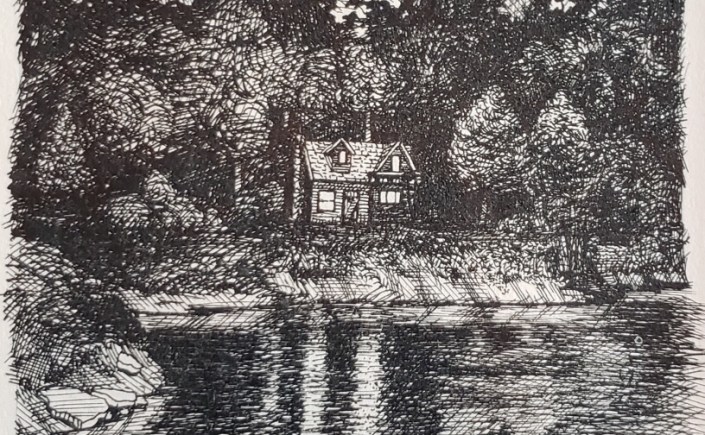
The pen-and-ink drawing leading this posting, used for Alison Cochran and Jo Jo Porowski’s 1983 wedding invitations, captures the original cabin, as it was when they arrived with me (Becca) and my brother, Ryan Wilson.
The original four-room log cabin (a notorious drug dealer’s hideaway in the ’70s) received a three-story addition built by JoJo (my stepfather/mom’s second husband) and his friends soon after we moved in around 1983.
In the ’80s, skinny-dipping hippies on the rope swing ruled — and the property’s reputation as a good place for a great time continued to build.
Clockwise from top left: Mom and Jo Jo on their wedding day; Mimi, Mom and me in the old upstairs bedroom; Ryan salting Mom’s split pea soup in the old kitchen; musicians jamming on the dam; and JoJo standing against the cabin’s old south wall, in the place where he would build the three-floor addition with mom’s kitchen.
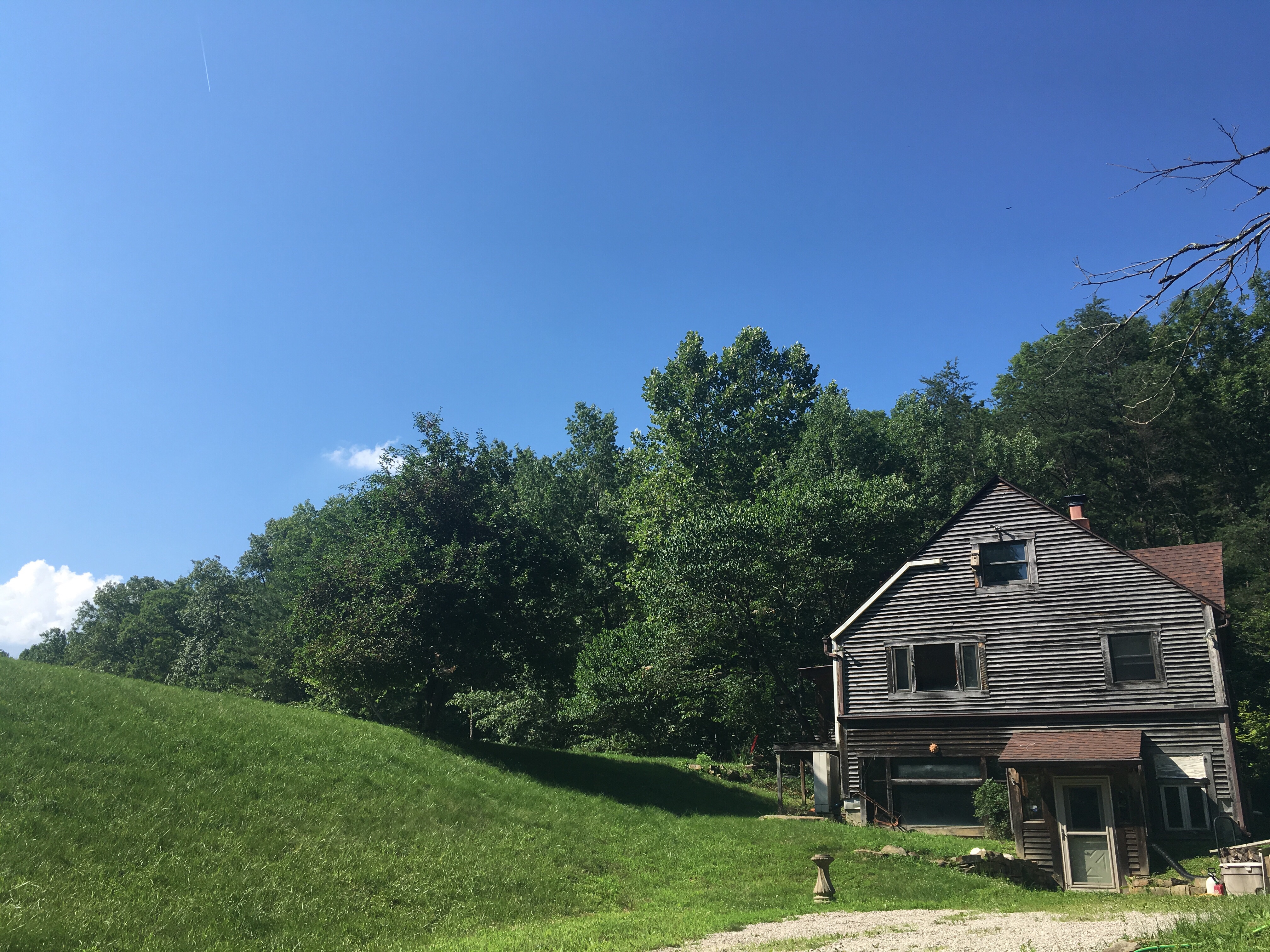
This is the the south-facing exterior today. The ground floor (Mom’s kitchen) was the only part of the home damaged in the dam-crashing flash flood of 2012. The place is always a work in progress.
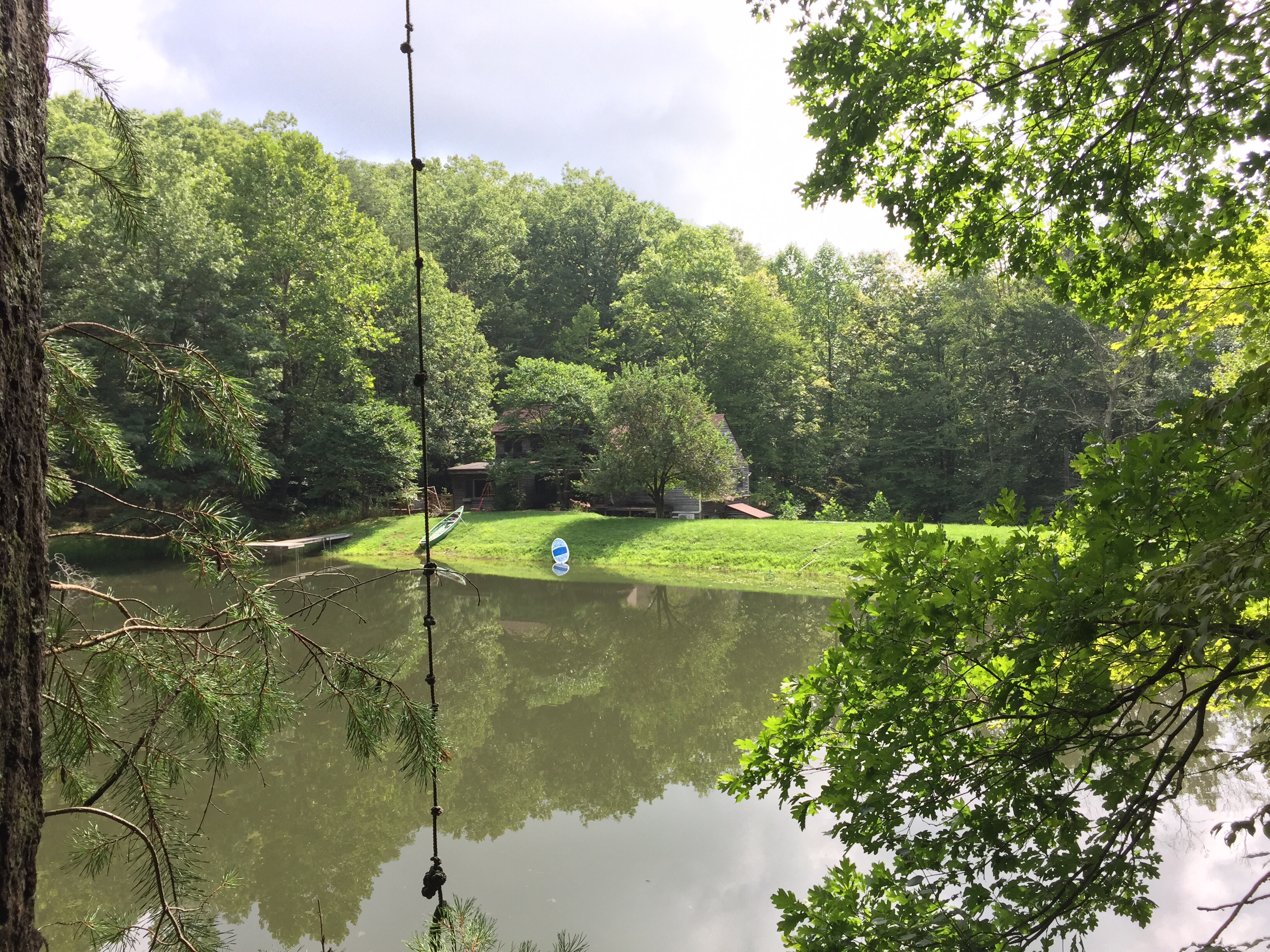
Here’s what that view looks like standing up on the dam (above) and from the vantage point of the rope swing.
The ‘80s addition included a summer kitchen (Mom’s kitchen) at the ground/basement level, a living room and bedroom (mom’s bedroom/living room) on the second level and a bedroom on the third level (where both my brother, Ryan, and cousin, Reuben, have lived over the years; now the “kid’s room”). Today, trees obstruct much of the home’s exterior when you look at the place from the rope swing. Compare that with this next photo, taken from almost the same vantage point, 35 years ago!
This picture was taken of the original cabin on the day Alison and Jo Jo were married. Though the tent obscures the south side of the house, one may be able to tell that Jo Jo’s addition was not yet built. Also, what is now “the door to nowhere” on the top level then had a lovely platform deck and stairs down to the dam. Finally, note our old-school air conditioning in the upstairs bedroom window: a box fan. Today, the wood stove and box fans are no longer the only climate controls at Hash Road.
Becca chilling lakeside in the grass on the dam. It’s a nice place to catch up on reading while soaking up some rays. Not everyone likes roaming in the buff, but those of us who grew up as products of the natural woodlands and the wild 1980s of Bloomington, Indiana, are accustomed to the luxury of total seclusion.
Around 2000, my brother, Ryan, and Richie (Mom’s boyfriend between her second husband, Jo Jo, and her third husband, the musician Chris Little) removed two of the cabin’s original rooms. The tiny original kitchen became a suite for my grandmother, including a living room overlooking the lake, a bedroom (“Mimi’s room”), a kitchen and bathroom.
Mimi’s living room (above). This overexposed shot will soon be replaced. For now: Just imagine the lake right outside that window. You can vaguely make out the pine bench swing by the fire pit. Also, truth in advertising: that loveseat moved to Indy. We’ve opened up the space. Becca’s little A-frame bedroom became an open and airy space with exposed wooden beams, overlooking the lake (below left, facing lake) with another room tucked away behind it (below right, facing woods and spillway, which rushes into a waterfall during the rainy season).
This room overlooks the lake.
This room overlooks the forest and spillway (waterfall in rainy season).
Alison passed away on Valentine’s Day, 2010. She was 57. (Thank you so much to the Elenabella blog for providing a permanent online home for the obit I wrote and a piece of her music. Mom was a lovely fiddle player and singer.) Her mother, Ruth “Mimi” Cochran, also died in 2010 — on Labor Day.
Alison’s death left the family with the choice of what to do with the property: Sell out or try to protect a family legacy and one of the wildest spots left in Monroe County?
Keeping up with what grew from four rooms into quite a large house, plus the surrounding classified forestland (which insists on certain ecological protections), and the lake, creeks, and spillway involves a lot of cost and oversight. Still, the yoke of neverending responsibility presents what has thus far been an irresistible temptation. The pain is offset by the pleasure. I can’t not do my chores. The only constant in this nutty world seems to be chores at Hash Road!
What an honor to maintain the place as a natural memorial to my mother, grandmother, and great-grandmother, who all lived there over the years and who all sacrificed so much to allow family and friends to have such an amazing place to commune with nature — to take some time out to relax and enjoy life.
Thus, I welcome you, the greater public, to help me in my mission to preserve the property by experiencing Hash Road for yourselves!
MAJOR DISCLAIMER: HASH ROAD IS NOT FOR EVERYONE!!!! For instance, people who prefer their chillax spots to have granite countertops — or fancy finishings, in general — should probably look elsewhere. People who want cable television won’t have it unless they install it for themselves.
This is the country. The place is rustic. My mom, Alison Little Cochran, was an Earth mother, a wild, forest-loving creature. The home’s lines between wild and domesticated are sometimes blurred. Sometimes the power will go out and it takes a while for it to be restored. Sometimes the water feed to the cistern needs to be re-started. Sometimes people go skinny dipping or sunbathe naked.
There is a cat, Sophi, who lives on the premises. She has her claws. She kills things. This is necessary when one lives in the country if one prefers to live without mice. Sophi can be kept out of bedrooms if allergies are a problem — or if one is just not into cats.
If allergies are a problem, please bring appropriate medication because one is guaranteed to encounter dust, pollen, Sophi, nature.
Speaking of nature, nature can include spiders, snakes, turtles, frogs, toads, mosquitoes, ticks, fish, horse flies and dragonflies (lots of really cool dragonflies!). Also, amazing stars (we have a telescope) and geology (geodes) and hydrology with often dry creek beds that at times rage with rushing water … Future goals include installing a water quality testing lab in the basement.
When rainy season arrives, a lovely waterfall cascades in the spillway hugging the northeast corner of the cabin. Mimi’s kitchen and Becca’s bedroom overlook the spillway canyon.
Rushing water also led to a devastating flood of the property and partial dam collapse. It took 50 truckloads of dirt — $20,000 worth of work — to repair the issue. Because it was what they called an “act of God,” State Farm did not contribute a dime.
This is when it became clear that managing a constant flow of leaves, sticks and mud was the true legacy of Hash Road. That sometimes, the people who love the place and take care of it have to stand neck deep or even buried in nature to meet its management challenges.
God was good enough to get us through the very scary flood experience. The dam looks beautiful today.
Property management presents many unexpected responsibilities and expenses. This is why I encourage friends and family — old and new — to visit and introduce new generations and guests to Hash Road as a truly special spot in nature. That way, Hash Road lovers can contribute to its long-term preservation and sustainability.
After all, ownership of property is a fleeting and temporary prospect. Really, we are just taking care of it for a bit. This Hoosier child, born in the Year of the Tiger — 1974 — is just following in the footsteps of the three generations of Buzzerd-Gerwig-Cochran/Wilson women who lived on the land in “the days gone by.” I’m just clocking my hours and one day the good Lord will call me home, too.
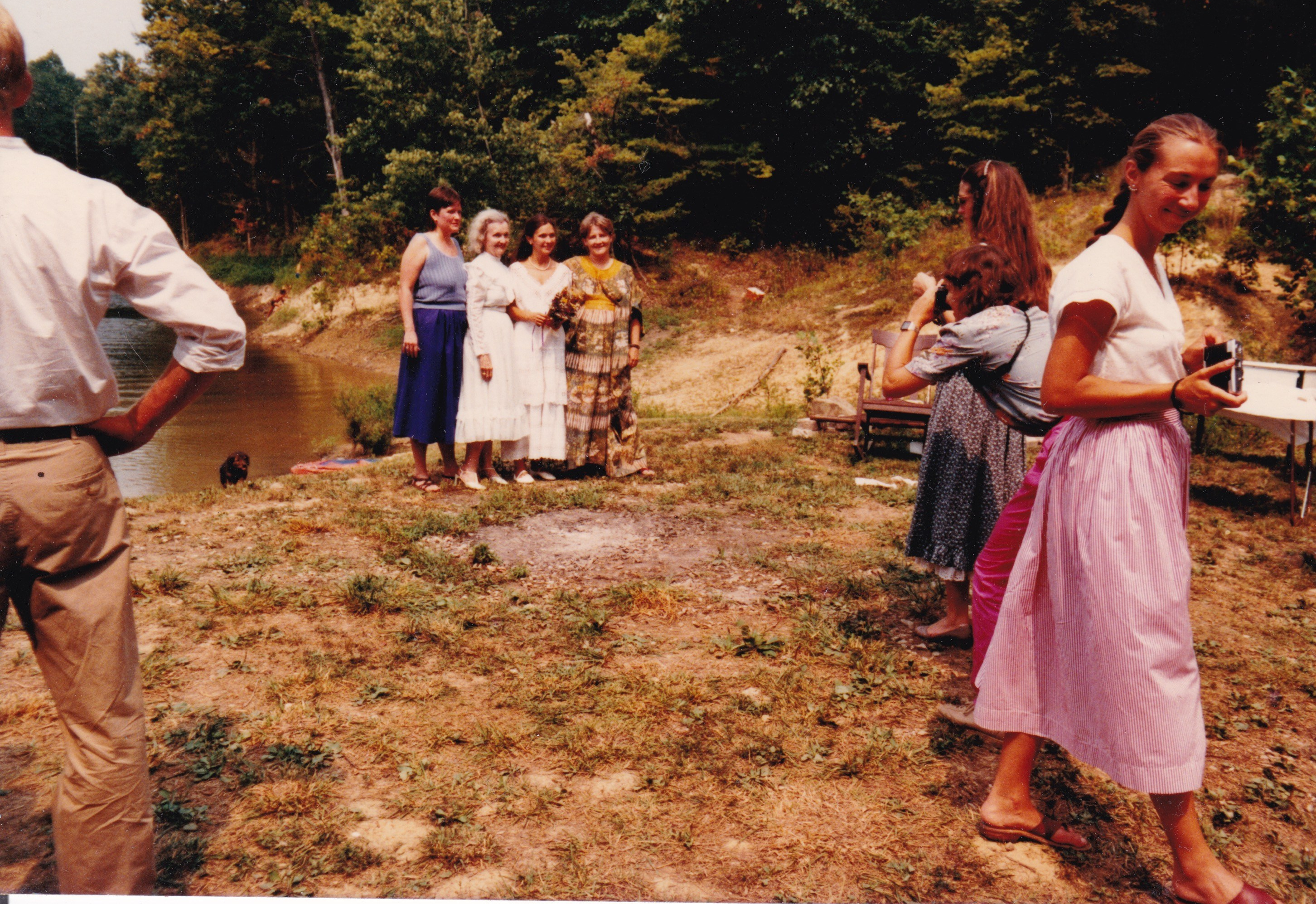
This photo of a photo was taken at Alison and Jo Jo’s wedding. To the left, Jo Jo’s butt. To the right, great old friends Meredith Richmond and Chris Haak are on the scene as the wedding photographer snaps a group photo of (from left) Aunt Mary (the eldest Cochran sister), Ruth “Mimi” Cochran, Alison and Aunt Sarah Cochran “the Reverand” (who passed away on St. Patrick’s Day, 2018).
Because the world gets crazier by the day (and water becomes an ever-more precious resource), protecting this precious sanctuary to share with future generations becomes as urgent a call as ever. The grounding connections one finds at Hash Road are incredible, ever-changing yet always rooted in an ever-present vibe of nurturing support.
A friend felt sorry for me one day as she saw I had a mountain of work to do at the place. I felt kinda sorry for myself, to be honest, my eternal Cinderella complex.
“Why do you have this place?” she asked, as nicely as possible, maybe kind of gently asking, “Why are you doing this to yourself?”
Sometimes, when I have to clean up cat pee or battle a raccoon or face off with nature in some other crazy, unexpected way (a live, half snake, for example, or maybe …. DAM COLLAPSE!), for the ten millionth time in my life, I want to pull out my hair and run away to the beach forever. I’ll wonder why I remain tethered to the property. Then I’ll pause and look out over the lake. Look at the trees. Listen to nature. Wait for her to envelop me. And I feel better. In fact, I usually lose about 20 pounds of stress as soon as I hit Monroe County.
You can take this girl out of B-town, but you can’t take B-town out of this girl.
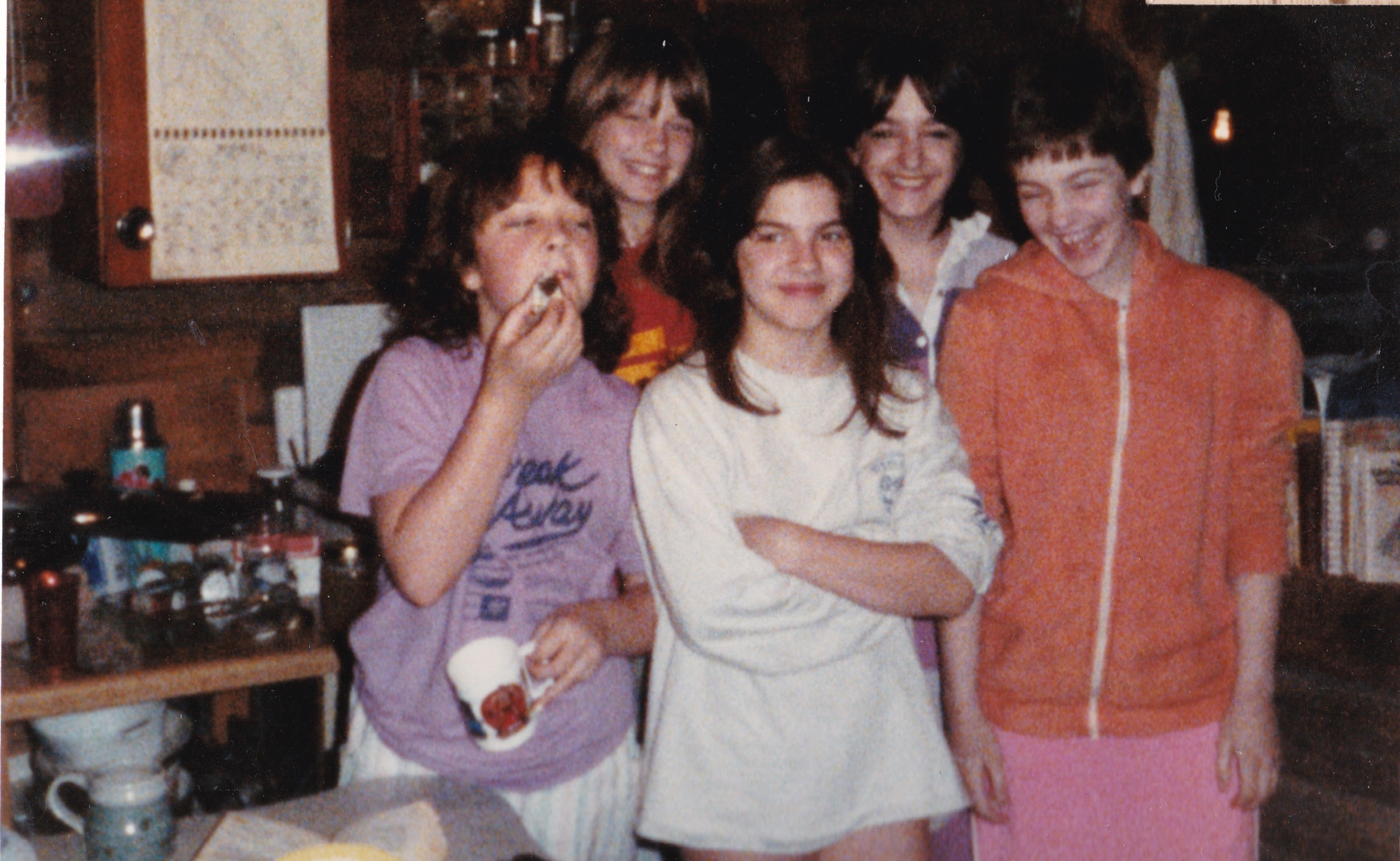
Me, shortly after moving into the cabin, standing in the original kitchen (now sacrificed to make way for Mim’s place) surrounded by some of my best Harmony School girlfriends during a slumber party in celebration of my 9th birthday. Closing in on 40 years ago!!! I’m still friends with these chicks! From left: Genne (now Genevieve) Pritchard, Karina Pritchett, Heather Schultz and Leah. Drayton
Ultimate goal: Sustainability. Roots.
After I’ve joined the heavenly choir with Granny, Mimi, Alison and the rest of my friends and ancestors who’ve worked to provide for me, may the fruits of those labors and that love continue to multiply for the generations to come.
***
I’m now working to formalize a timeline of Hash Road. So, if you’ve got an image you want to memorialize, send it my way!
We’ve had so much fun over the years …
In the ’80s …
Winter sports included clearing the ice and a toboggan run. Here you see people clearing the ice for skating (Mom, Ryan, Karina?) and Ryan heading down hill rapidly!
In the summers, sometimes the lake level can really drop. At this level, the drop from the rope swing is probably 20 feet! Swing at your own risk!!! (Ryan would probably still be doing flips!) But, seriously, this picture below is the lowest I can remember the lake. I bet it was taken during the ’88 drought.
Abbie, a great friend of the Hash Road family, paddling around the lake with her dogs, Stash and Janice. Recently she helped me with such adventures as “flush the cistern” and set up the wifi, and snap some new pics from the dam and rope swing!
Now for some classic Hash Road from over the years …
The Pitch Bitch will no longer be on a solo mission. In mid-April, she joined forces with long-time Indy Eleven-centered soccer conglomerate Bloody Shambles, which now is hosting the Pitch Bitch’s creative contributions.
Need to catch up? Following below are the pieces she’s shared so far. We’ve got 12 more 2018 home games to go! If you need/want more, check out James Cormack, the Pitch Bitch and Guy-Jo Gordon getting their podcasting pipes warmed up. The Bloody Shambles crew plans to record again tomorrow night ahead of Indy’s 1 p.m. away game Sunday against New York Red Bulls II. The Pitch Bitch loves to join the faithful Brickyard Battalion flock to watch away games at Union Jack Pub, 924 Broad Ripple Ave.
Monday, May 21, 2018
Time To Hit The Reset Button – Indy Eleven V Bethlehem Steel FC REVIEW
Zach Steinberger scored Indy’s solitary goal against Bethlehem Steel in a 1-2 loss.
A disappointing week — with an early exit from the U.S. Open Cup, the only open, true test of soccer champions offered in this country — morphed into a disappointing weekend for Indy Eleven with a 1-2 home loss on Saturday to Bethlehem Steel.
In post-game comments, Indy head coach Martin Rennie was ready to push the reset button. His tired team was ready for a refreshment of minds, bodies, and spirits. He was the first to admit that the squad’s teamwork, passing and movement were off, that too many opportunities were given away because of rushed play. And, he said, he offered no excuses for himself or his team regardless of their recent grind of several games on the road with several talented players benched to injury. (Click here to read the whole post at BloodyShambles.com.)
Thursday, May 3, 2018
Pleasure And Pain Aplenty, Parting Shots From A Rough Ride – Indy Eleven V FC Cincinnati REVIEW
Ayoze from the spot gets his first goal for Indy Eleven (Photo: Clyde Townsend)
Minute 5, Cincy’s Corben Bone is not shut down as he streamed into Indy’s left defensive channel and launches a cross into the box where his striker Emery Welshman escaped a brief interaction with Brad Ring, somewhat akin to a do-si-do, before what looked from the press box to be rather incidental, off-balance contact with Carlyle Mitchell. To the ref it looked like a PK. Cincy midfielder Kenney Walker nails his shot. 1-0.
The hosts redoubled their efforts to regain the upper hand. It did not take them long.
Hungry Indy striker Jack McInerney worked for his meat, feasting on his interception of a Cincy pass in the 24th minute, Cool Jack Mack drives a shot toward Spencer Richey that sent the visiting goalie into full panic mode. In diving to block McInerney’s first effort, Richey set his rival up for a rebound shot. McInerney, a veteran of MLS and the U.S. Men’s National Team, embodied cool, calm, collected focus and, with ease, guided the ball into the net. 1-1. (Read the whole post at BloodyShambles.com.)
Thursday, April 26, 2018
Soaring Like Eagles, Indy Eleven’s Power Animals Emerge – Charlotte Independence V Indy Eleven PREVIEW 4/28/2018
Indy Eleven going through final preparations before heading to Charlotte tomorrow.(Photo: Pitch Bitch)
Today’s soccer story is not about individuals. It is about a team. About vision. About internalizing identity. Today’s soccer story is about what Indy is — and what it aspires to be.
Thanks to an upbringing among the hippies and woodland folk of Bloomington, Indiana, and the surrounding country, the Pitch Bitch is inclined to look toward her natural environment for signs and signals — for messages.
Today, the message was power — in the form of first an eagle and then three hawks. These magnificent creatures will bookend this soccer story. [I had so much fun writing this piece. Hopefully, you will enjoy reading the rest of it at BloodyShambles.com.]
———
Finally, we’re going to be podcasting throughout the season. In our first experiment, I talk a little about my soccer background — and Guy-Jo Gordon gives us a rundown on the futsal-driven community building an Indiana crew has partnered with in Cuba. (Guy-Jo is currently in Cuba and with his local partners has organized and hosted a new futsal tournament for men and women players.)
So where do we stand today, May 23, as we head into Memorial Day Weekend?
Indy Eleven faces the New York Red Bulls II at 1 p.m. on the road this Sunday, May 27. The next home game will be at 7 p.m. against the Charleston Battery on Wednesday, May 30 at Lucas Oil Stadium.Tickets start at $15 at IndyElevenTickets.com or by calling (317)685-1100.
Currently, the team’s record stands at 4-2-3 (WLWWDLWDL) with nine USL regular season games played so far. On the road, the team is unbeaten. All three losses have come at home: once to Bethlehem Steel and twice to Cincinnati F.C. Cincy currently sits at the top of the USL Eastern Conference standings, boasting 20 points collects in 10 games. Indy has 14 points in 9 games played. (In professional soccer, a win worth 3 points, a tie is worth one and a loss is worth nothing.)
This is me, Rebecca Townsend, in my library at home in Boone County, Missouri, a few miles south of Columbia, approximately 2010. (Photo credit to Clyde Townsend)
This timeline is a work in progress: I’m sorting through old files and papers, trying to create a visual map documenting my professional journey thus far. This is an evolving scrapbook.
As I have for well over a decade, I continue to enjoy coaching soccer in the inner-city. Here are some shots of my Tab Rec teams taken over the years, including one from the year I coached with my bro (also a true devotee of the game).
Though I still write and have a heart for journalism, after losing my full-time position as news editor at Indy’s local alt weekly in 2014, I became a professional massage therapist, working to help build Lift Therapeutic Massage, a well-respected, independent studio near the Eli Lilly headquarters in Downtown Indianapolis.
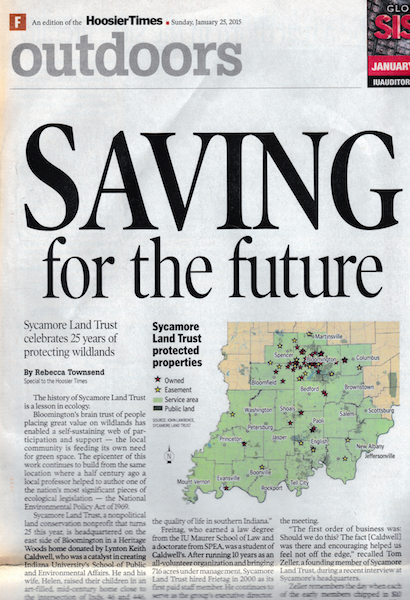
I do some freelance journalism (such as the Hoosier Times story shown here and the two examples offered below: the first from Sophisticated Living Indianapolis, the next from Farm Indiana), but most of my creative efforts are now focused on personal endeavors to be publicized later on.
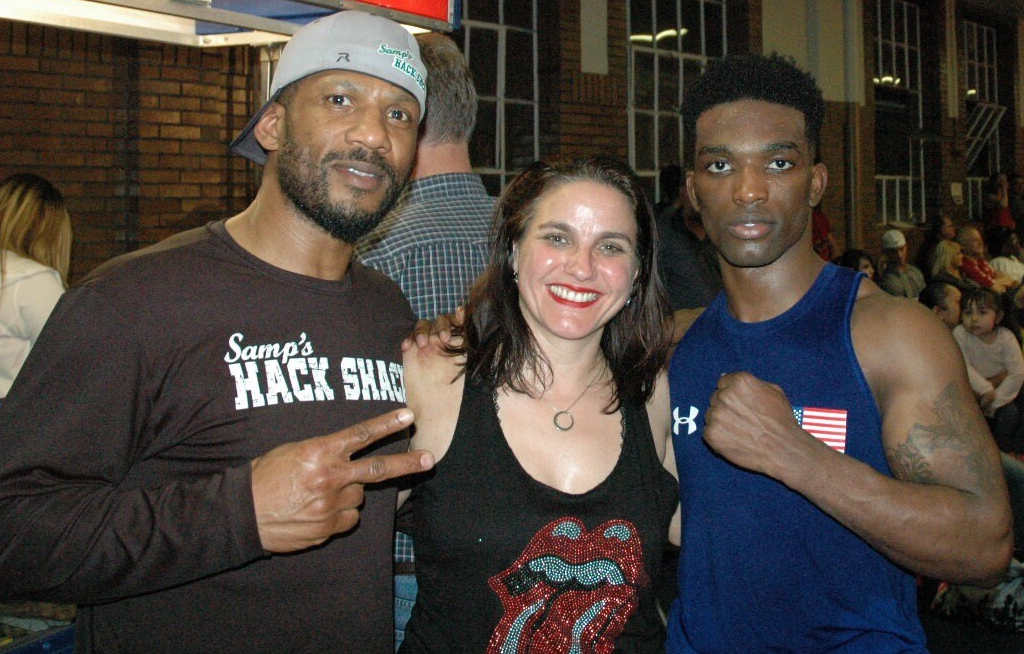
Also, a boxing story written in 2013 garnered the interest of John Bansch, a legendary Indianapolis Star sports reporter who also volunteered as publicity chair for the Indiana Golden Gloves. He knew he was going to die (which he did last spring, the day before the Gloves started) and he recruited me to take on his duties — essentially hitting up local media to support amateur boxing. So now I sit ringside during the tournament and publish the commemorative program for the championship, telling the stories of incredible athletes such as Frank Martin, the first Indiana fighter to win a National Golden Gloves title in 23 years. I’ve hyperlinked this photo of Martin to a digitized copy of the story I wrote for the 2017 Golden Gloves program:
From left: Ike Boyd, Rebecca Townsend and Frank Martin following Martin’s victory in the Indiana Golden Gloves in April 2017.
2015
In my one-year contract as sideline reporter for Indy Eleven broadcasts to local television and national streaming audiences, I covered one of my life’s greatest passions (soccer) from an intimate vantage point. Some of my favorite memories include witnessing the posturing between the opposing coaches and the refs that one can only truly appreciate from close range.
More clips to come, but for starters, here is my interview with the legendary Thomas Rongen, then coach of the North American Soccer League’s Tampa Bay Rowdies, in town for a May 30 match against Indy Eleven.
Here’s a brief clip from later in the season with Indy Eleven coach Tim Regan.
Also in 2015, while working toward my degree at the Indiana College of Sports and Medical Massage, I took the Myers-Briggs Type Indicator test. My answers placed me in the “supervisor” category: ESTJ. Here’s a brief summary of the characteristics associated with ESTJ personality types.
2014
A year of great highs and lows. 2014 took me to Brazil for the World Cup.
2014 also saw me lose my job at NUVO a month after returning home from the Cup. No, I did not lose my job because of my sabbatical at the Cup. At least not that anyone would admit to my face. I was told by the managing editor (who himself would quit a short time later), “NUVO is moving a new direction, we’re going to have to let you go. We feel you’d be happier at a place with more resources.” “Who wouldn’t be?” I thought. And the ironic thing is, aside from being heartbroken and feeling betrayed, I was happier as soon as I drove out of the parking lot and never had to check my NUVO email again. I had been a one-woman newsroom, unable to stick to just one beat. Keeping up with the avalanche of information dumped on me 24 hours a day was exhausting. [Also, I’d been through the personal wringer during this time: the loss of my mom (57) and grandma (93) in 2010, my dad (60) in 2011, a catastrophic flood at the cabin I grew up in Monroe County in 2012 and a four-year, total-gut-job home renovation project in Indianapolis that lasted from 2012-2016. One of those years we were commuting back and forth between Bloomington and Indy. The last year of that project (while in massage college), I lived in an RV in the back yard of our Indy house with my husband, then 12-year-old daughter, two dogs and a cat. Chaos.]
The afternoon after I lost my NUVO job, at my soccer coaching job on the International School of Indiana’s beautiful grass fields just across the White River from the Indianapolis Museum of Art, I thought, “Yeah, I’m happier already. Who is the loser here? Me, out on this glorious field inspiring the Lady Gryphons to greatness? Or the people who will likely die of heart attacks, cracked out on their laptops under fluorescent lights in partitioned cubicles?”
On more than one occasion in the newsroom, I’d been exhausted and overwhelmed, certain that I’d die at my desk and no one would care — that all the effort it took to be a committed journalist would be a waste.
So it came to be, following a blissful vision of health and balance that began to unfold to me one night under the stars near the lighthouse on the coast of Salvador, Brazil (just a few hours after the U.S. Men’s National Team conceded defeat to Belgium in the Round of 16), I entered the Indiana College of Sports and Medical Massage in Carmel (now Indiana Massage College). Downsized out of my alt weekly job after earning an SPJ award for my coverage of the shrinking Star newsroom (see the 2011 section), I figured I may need another trade to support myself as a journalist. Given the political headwinds blowing ever since, perhaps the temporary pause in active-duty, front-line journalism served as a blessing — an opportunity to breathe deeply and release stress during a period of intense national anxiety, compose my thoughts on “fake news,” “citizen journalism,” and the roles different forms of journalism can play in democratic society.
It invigorates me to look back and know I produced a solid body of work during my tenure. (And I know I have plenty more in the tank.)
Consider the variety of topics my NUVO news desk covered…
Keeping track of the State of Indiana’s activities on environmental issues occupied a good deal of my time. Here are some examples:
2013
Editing retired U.S. Congressman Andy Jacobs Jr.’s weekly Thought Bite columns led to a sweet but brief friendship. Jacobs, a 30-year member of the U.S. House of Representatives, prolific writer and a veteran of the Korean War, passed away in 2013, less than two years after I met him. I was honored to publish the following tribute (click the hyperlinked picture to read the full piece):
***
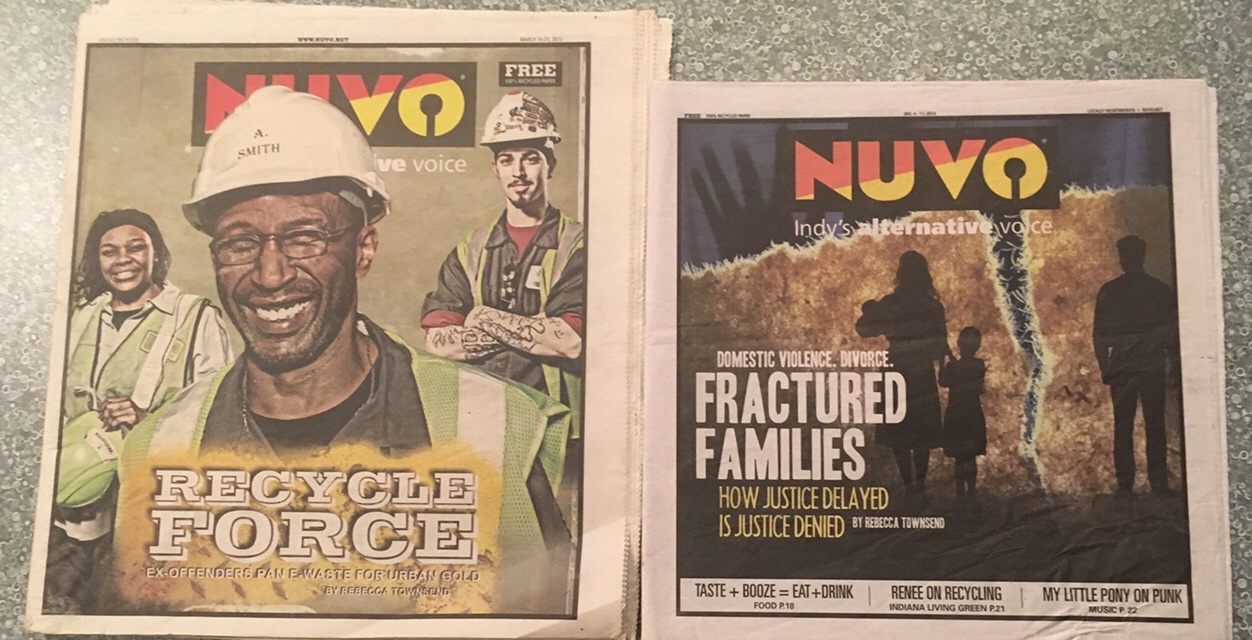
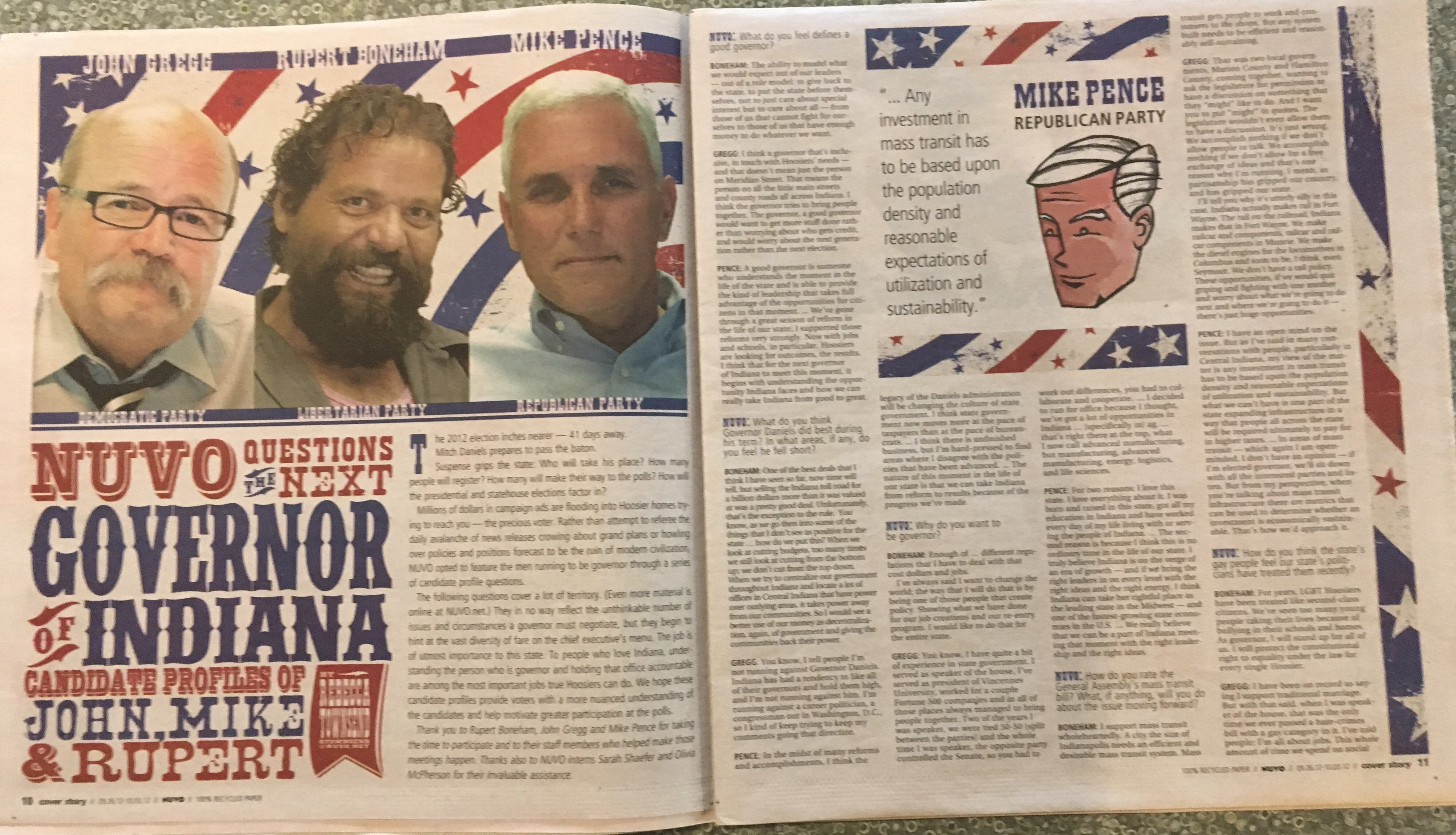
Here you can see two examples of my cover stories, as well as the results of a re-design the publisher carried out while I was working at NUVO. I received a promise that the news section would never drop below two pages. Months later, I was fighting off an attempt to cut it further.
The following story is among my favorites from the NUVO days. Randy was able to stay in school and graduate — and school officials were on the hot seat. This story also provided and example of how I would publish web packages using my photos, video and info graphics to complement my written stories.
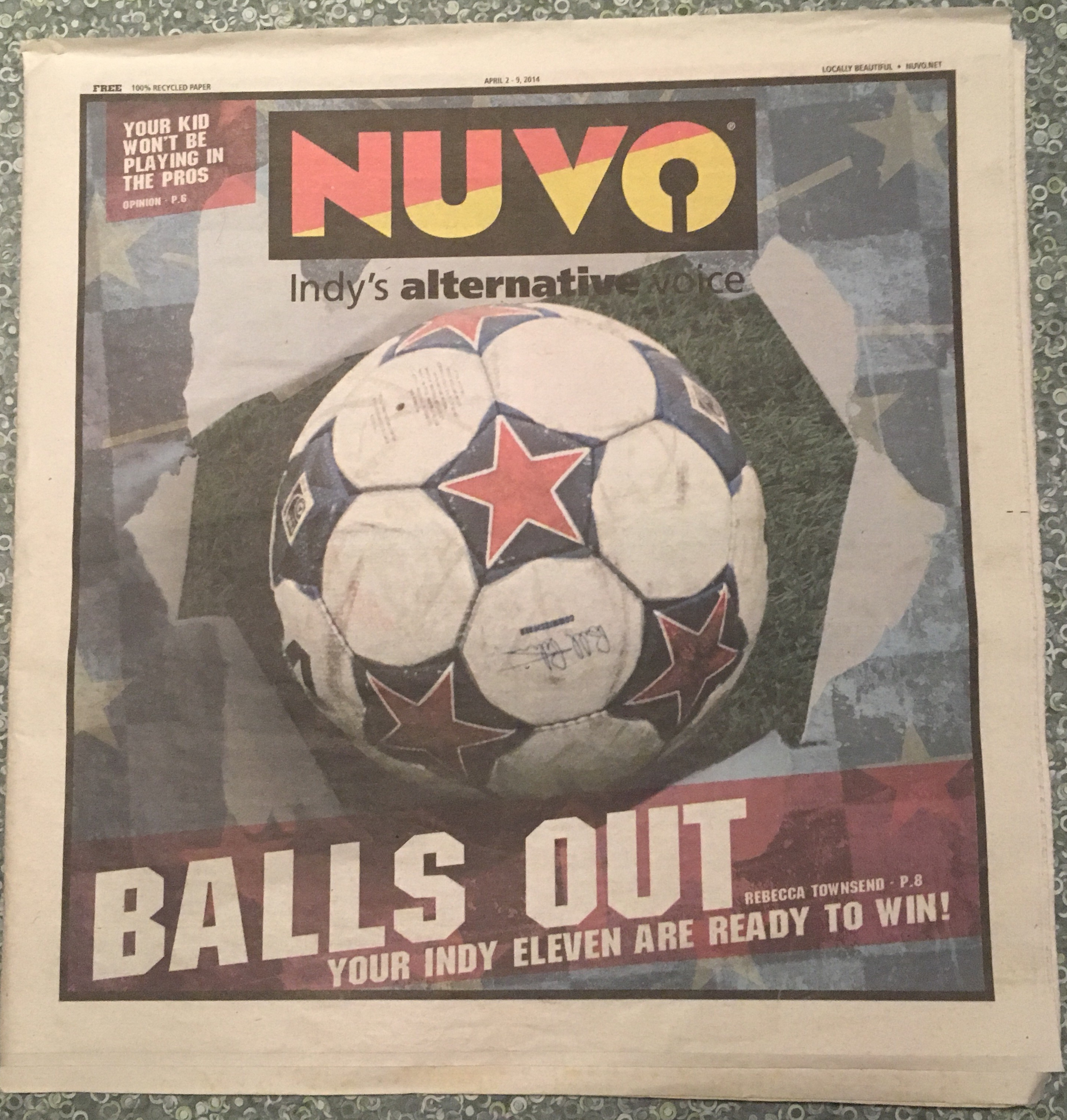
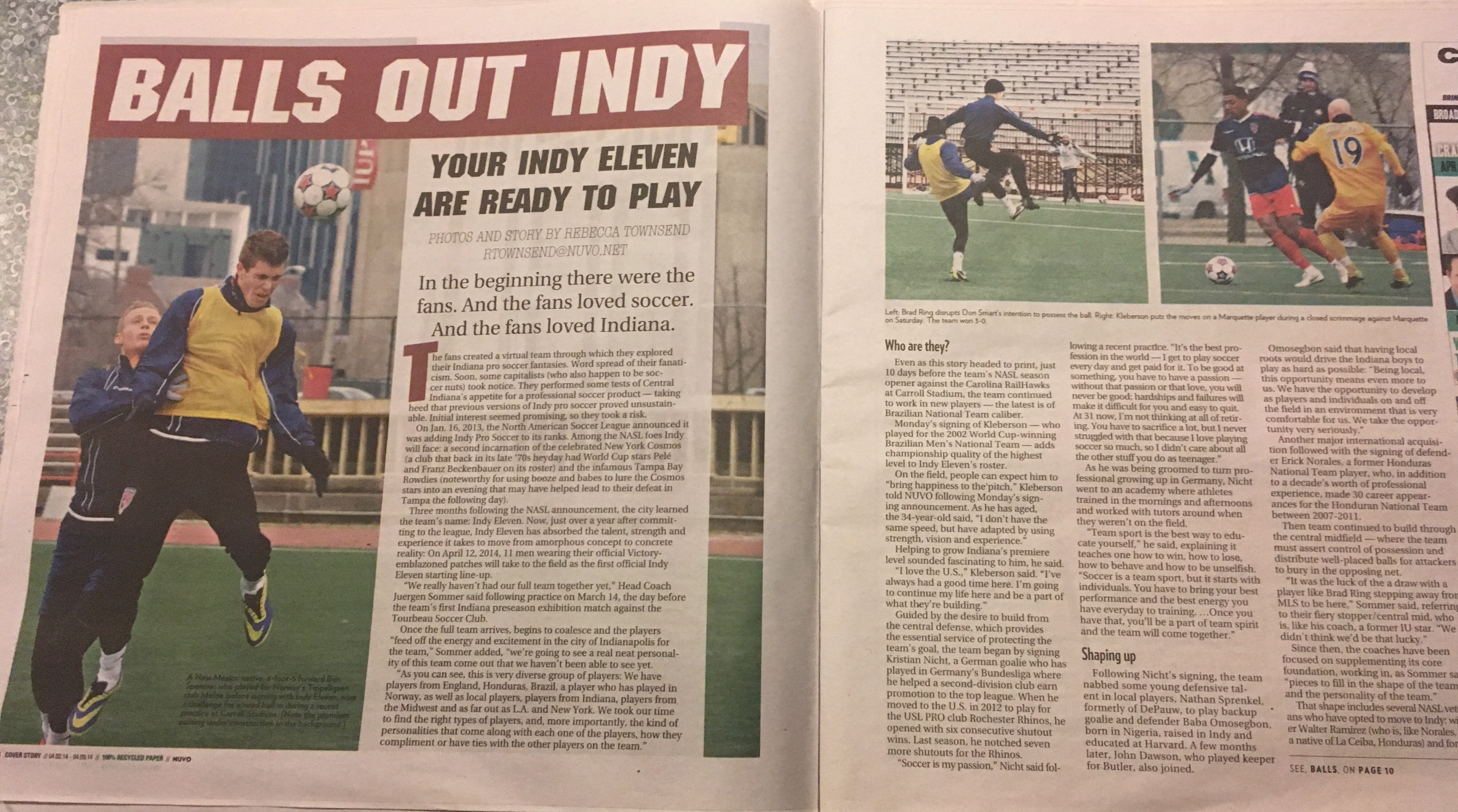
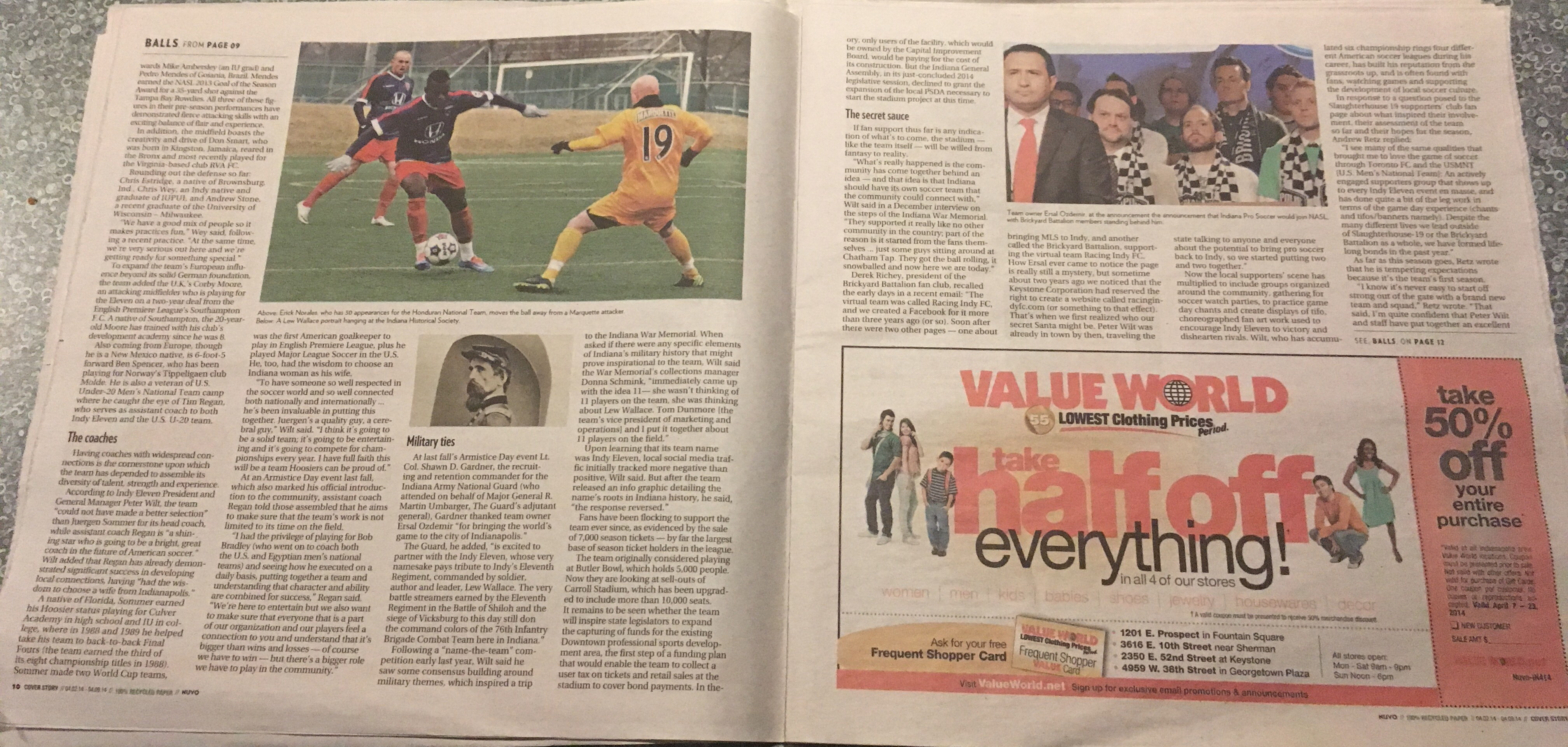
Also during this time, a professional soccer team developed in Indy from the ground up — and I had a front row seat. I produced many web exclusives as the team developed over the seasons, but I also may hold a state (possible national) record for most print real estate dedicated to soccer coverage. The feature pictured below was released just ahead of the team’s inaugural game. Anyone recall another Indiana soccer story that garnered a cover plus five whole pages inside?
The same week we ran my Indy Eleven story, I covered efforts to bolster inner-city quality of life (among other items) — and we ran an opinion piece by Dr. Louis Profeta. “Your Kid and My Kid Are Not Playing in the Pros” probably still holds the record for one of the most popular pieces we ever posted online. Dr. Profeta introduced himself to me at the gym one day after I finished boxing. He, too, boxed, if I remember correctly. That conversation led to him running his piece with me. Lucky NUVO!
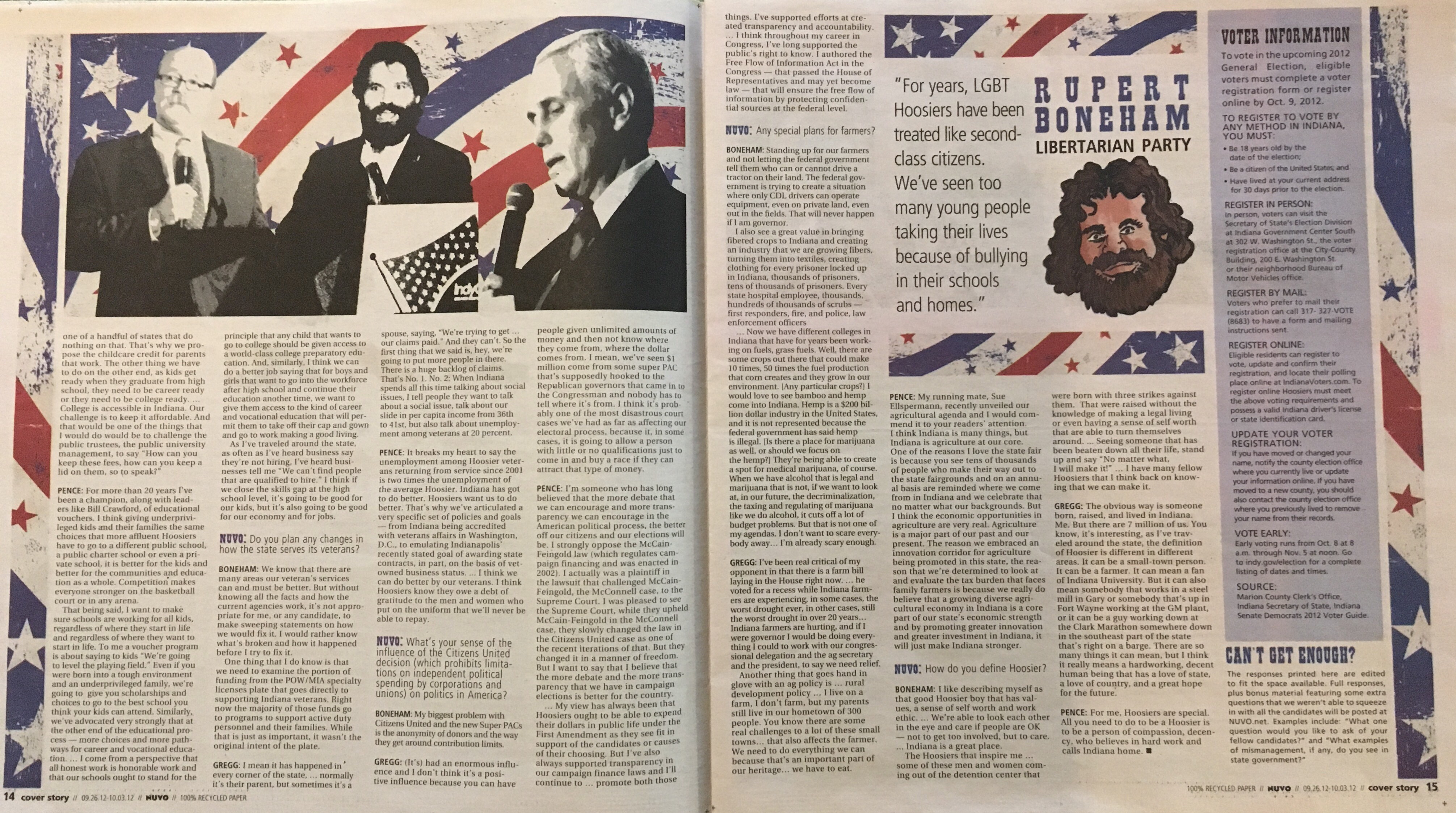
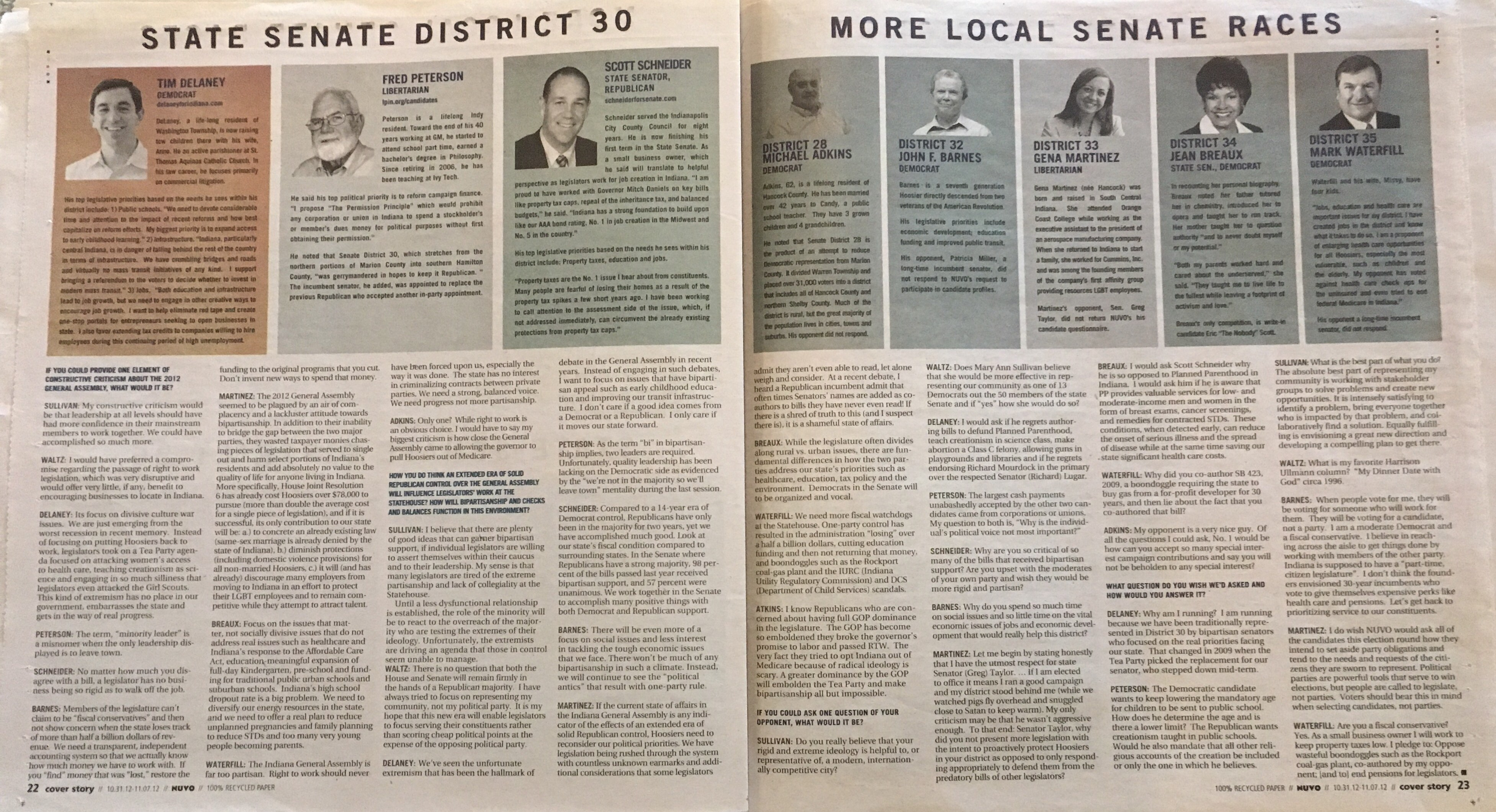
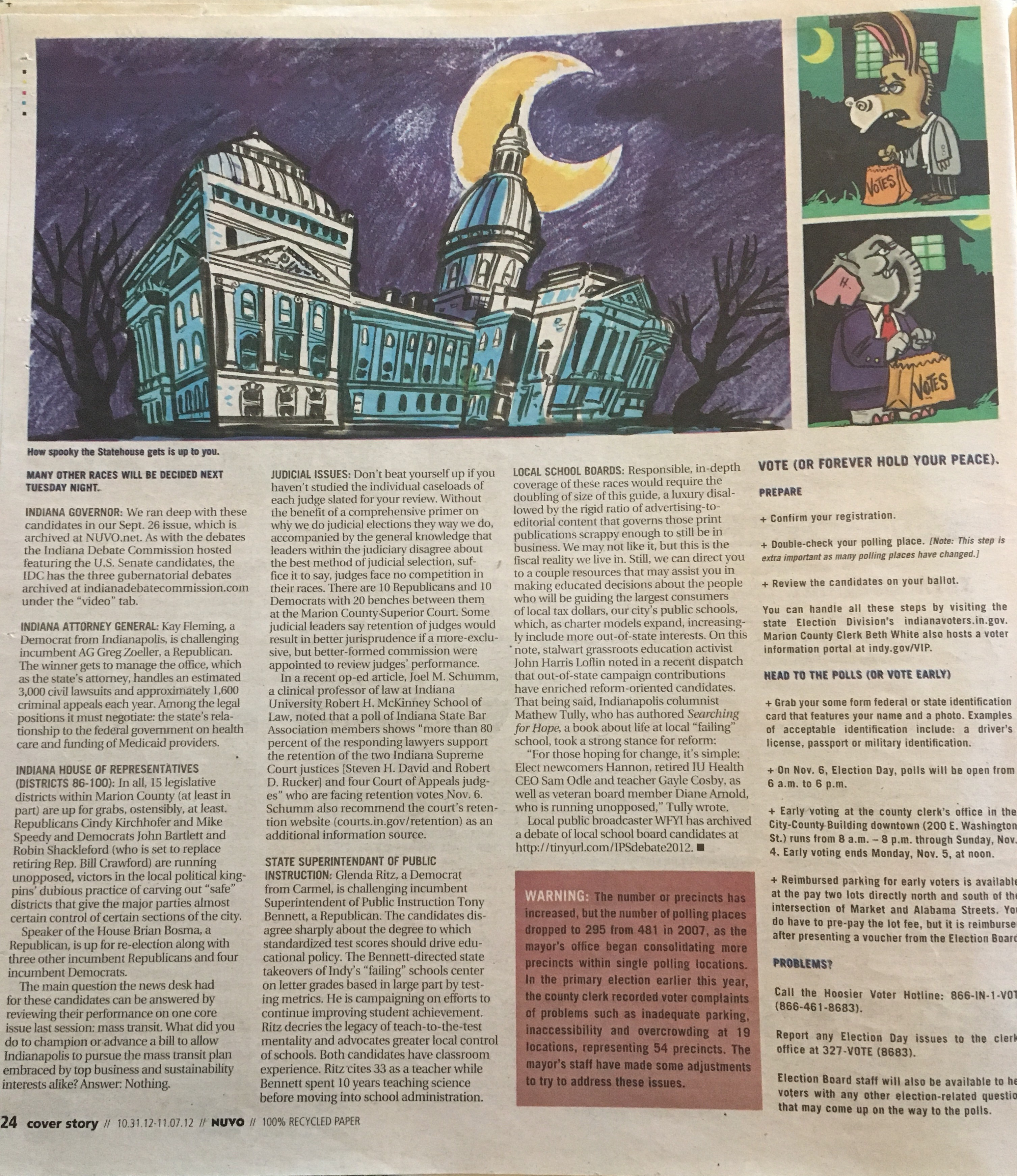
This year was an endurance test: a presidential AND a gubernatorial race, not to mention a slew of local offices up for grabs. (We’d just had a mayoral election in 2011!) But most importantly, a story I edited and contributed to with my data analysis and reporting skills, “Separation Anxiety: The Twisted Web of Church and State” earned SPJ Indiana Pro Chapter’s first place for investigative reporting in 2012.
Here’s what my election guides looked like. (The latter won SPJ’s second best political coverage for a non-daily in 2012.)
2011
As soon as I returned to Indiana, I began winning awards for NUVO, including for my 2011 Election Guides. Within a year, SPJ’s Indiana Pro chapter asked me to be on their board and soon promoted me to vice president, a position I held until resigning in early 2017. (Please note the local reporting awards are judged by out-of-state chapters and our chapter reciprocates by serving other regions’ judging needs.)
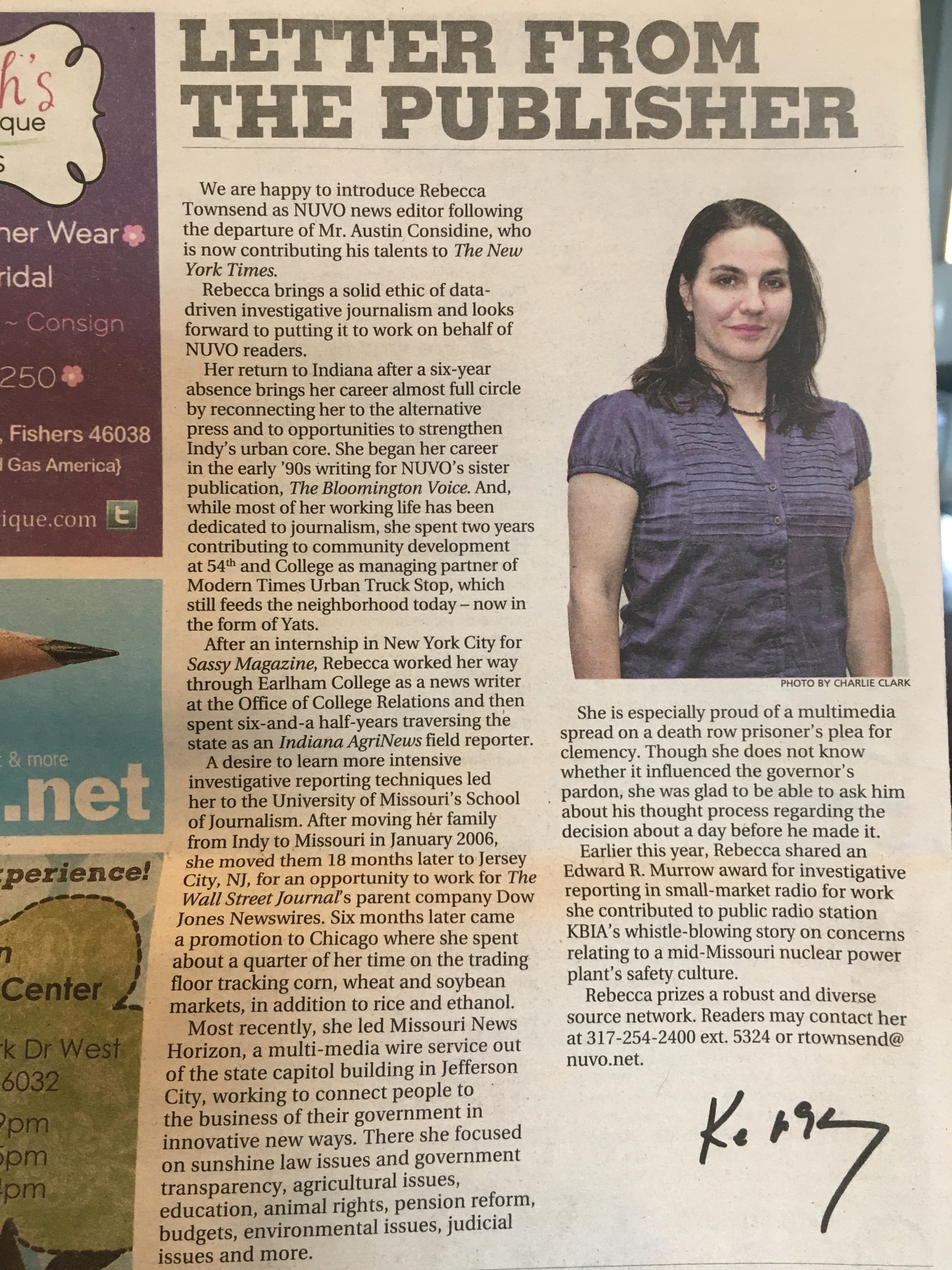
On June 8, 2011, NUVO ran a letter from the publisher announcing my arrival as news editor:
Though I love traveling the world, it felt great to be welcomed home to Indiana in 2011.
2009
As I was wrapping up my thesis, my advisor and I distilled its core findings into an article for the peer-reviewed journal Literary Journalism Studies.
My authentic coffee-or-wine-stained cover of the issue of “Literary Journalism Studies” containing an article on my theory of writing culture.
In the summer of 2009, for a number of reasons but driven chiefly by the financial burden of having an unsold house Missouri while we were paying to live in Downtown Chicago, I resigned from Dow Jones and the family returned to Missouri where I began volunteering at KBIA while I plotted my next career move. During that time, I helped bring the KBIA team a 2011 Edward R. Murrow investigative reporting award for a nuclear industry whistleblower’s chronicle, “Safety Culture at the Callaway Plant.”
By the end of the year, the Missouri Broadcasters Association offered me an opportunity that presented one of the greatest challenges and triumphs of my career: the chance to build a multimedia newsroom from the ground up inside the magnificent Missouri State Capitol.
Newspapers, radio and television stations statewide would pick up my stories, video clips, photos and audio packages from Missouri News Horizon. Here are two examples pulled from the online archives of the Southeast Missourian and KOLR Springfield’s OzarksFirst.com.
Here is an example of a citizen environmental blog picking up a piece I wrote for statewide distribution:
2008
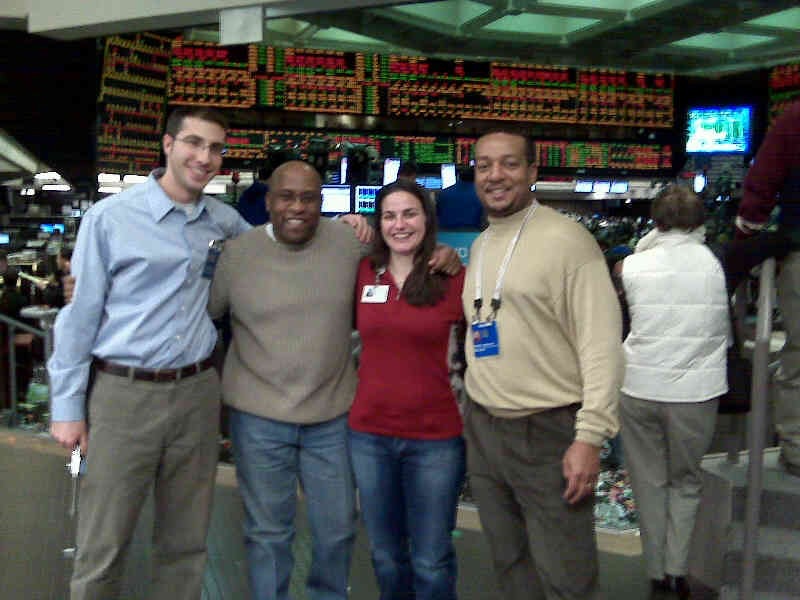
Working with these dudes (and Ian Berry, not pictured) was one of the highlights of my professional career thus far. From left: Tom Polansek, Theopolis Waters and Andrew Johnson with me at the Chicago Board of Trade, New Year’s Eve 2008.
Seven months after moving to Jersey City, I was given what the recruiting editor said was the fastest promotion in Dow Jones history when they sent me to Chicago to be a commodities reporter, which put me at the Chicago Board of Trade on the day during the financial crisis when the Dow Jones Industrial Average bottomed out.
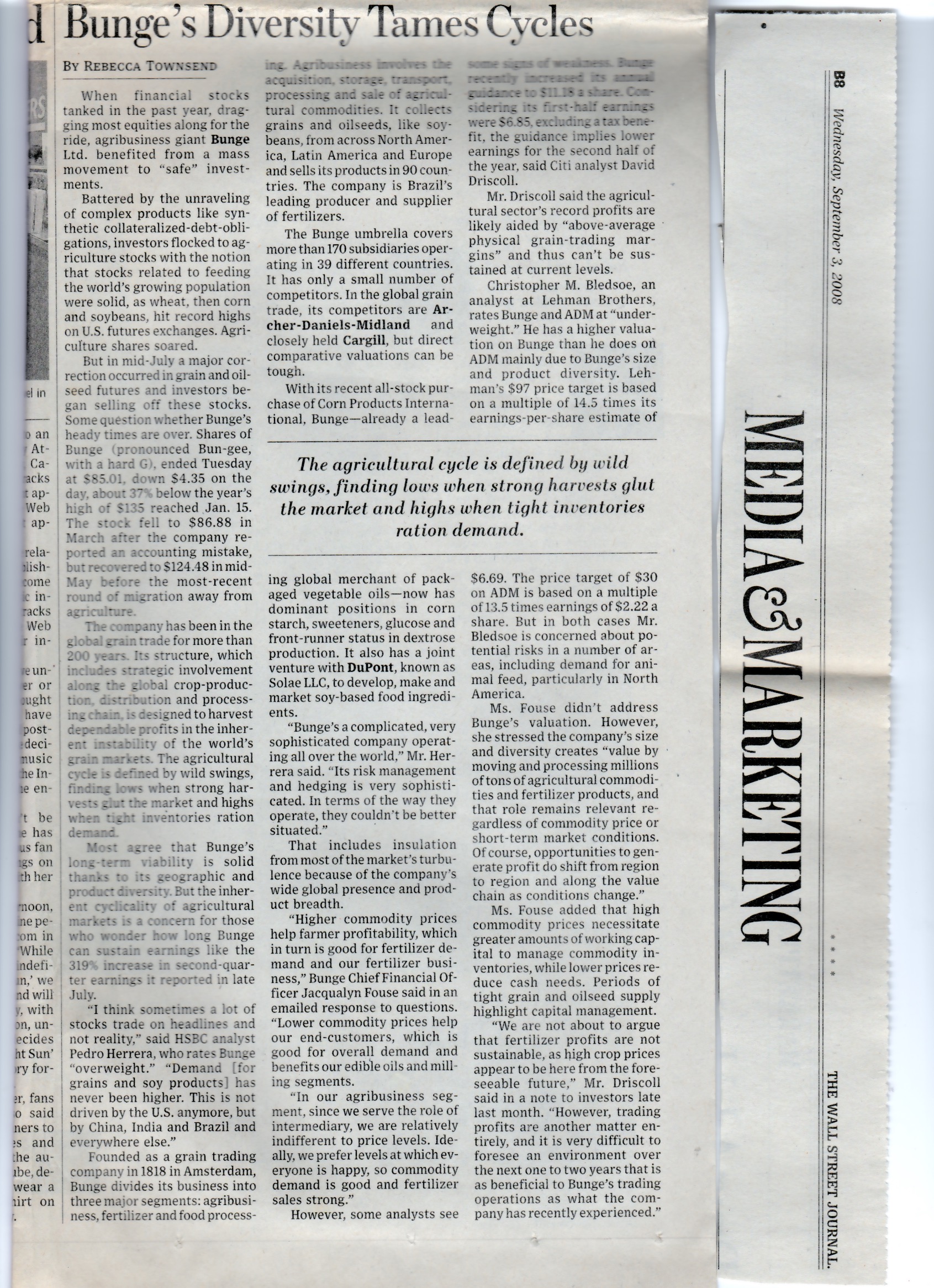
During the chaos, I achieved a career milestone: my bylines in the Wall Street Journal. Not the front page, and no major investigations, but still, I had arrived …
This picture of some of the pieces I wrote for Dow Jones Newswires and the Wall Street Journal shows the variety of headlines and issues I was handling during the Dow Jones days.
2007
The stack of papers is the total data requests I filled for newsrooms around the country the morning after the tragic I-35W bridge collapse in Minneapolis in which 13 people were killed and more than 100 injured. I was the sole employee on duty that morning at the National Institute for Computer-Assisted Reporting.
My investigative environmental work is featured in Mizzou’s alumni magazine.
Despite the tragic fashion decision I made by wearing those shoes, I was happy to be featured in MIZZOU Magazine. I especially like this quote the reporter used: “Environmental reporting isn’t just about the scare of the day,” Townsend says. “The journalist’s role should be to consistently assess the health of the environment and let people know what you find.”
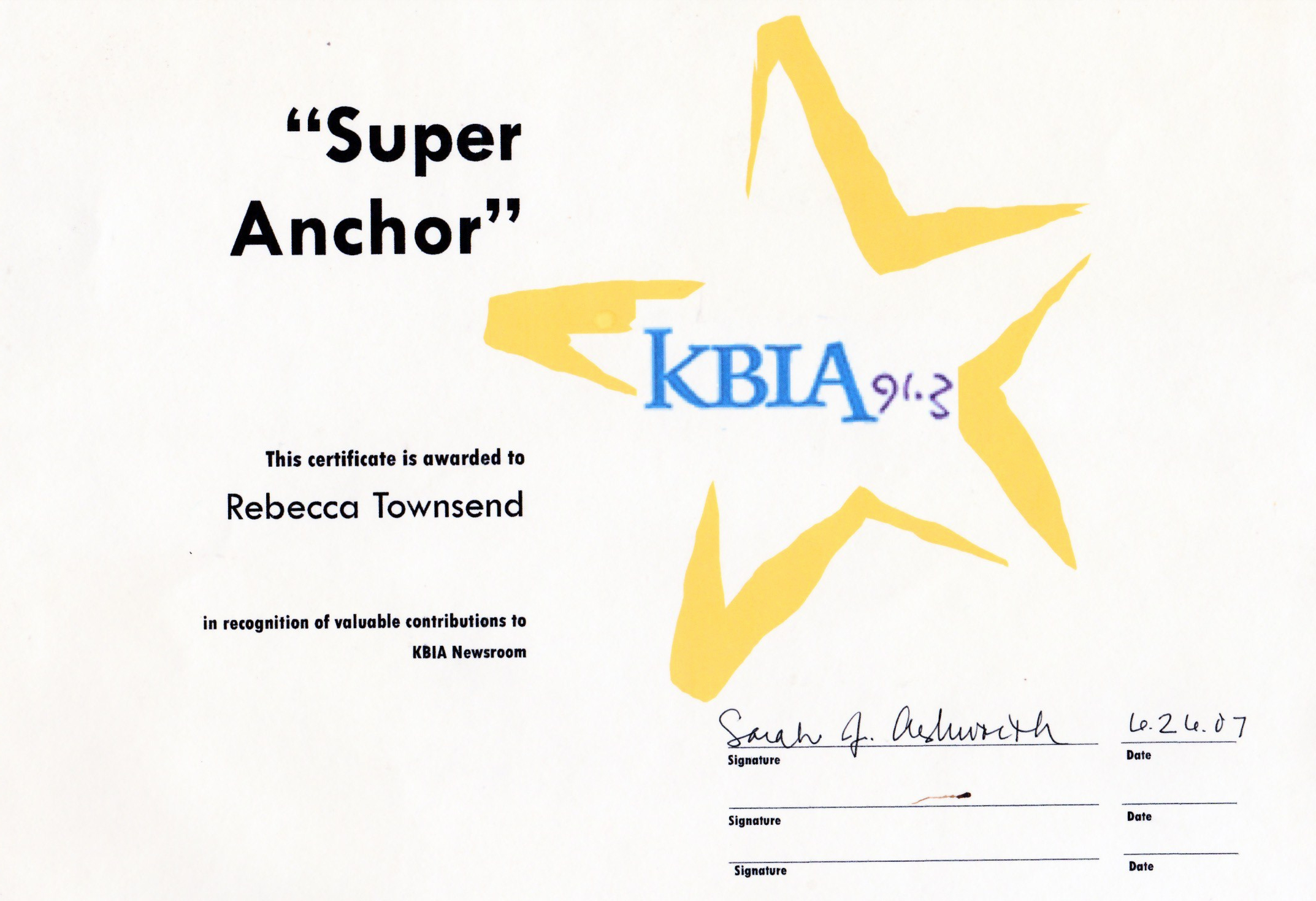
The public media outlet KBIA on campus allowed me to fulfill a lifelong dream of broadcasting the news on the radio. In recognition of my efforts, the news director Sarah Ashworth gave me a sweet certificate:
In addition to completing an independent mapping project with Professor David Herzog, I also earned a Mapping Boot Camp certificate with Professor Brant Houston.
By the fall of 2007, I had a full-time reporting gig at Dow Jones Newswires, relocating to Jersey City. My daily reporting focus shifted from the environment to the economy, which was on the verge of an epic meltdown.
This is Missouri Agricultural Leaders of Tomorrow Class XII on its trip to DC in 2008. That’s me two to the left of Secretary of Agriculture Mike Johanns. We watched his staff at the National Agricultural Statistics Service release one of its top secret crop reports. (Yes, just like from “Trading Places”!) Together our ALOT class traveled to every corner of Missouri, plus DC, and our experience culminated on a two-week tour of France and the Czech Republic. This underscores why I love agriculture. It is a global beat that involves nearly everything.
2006
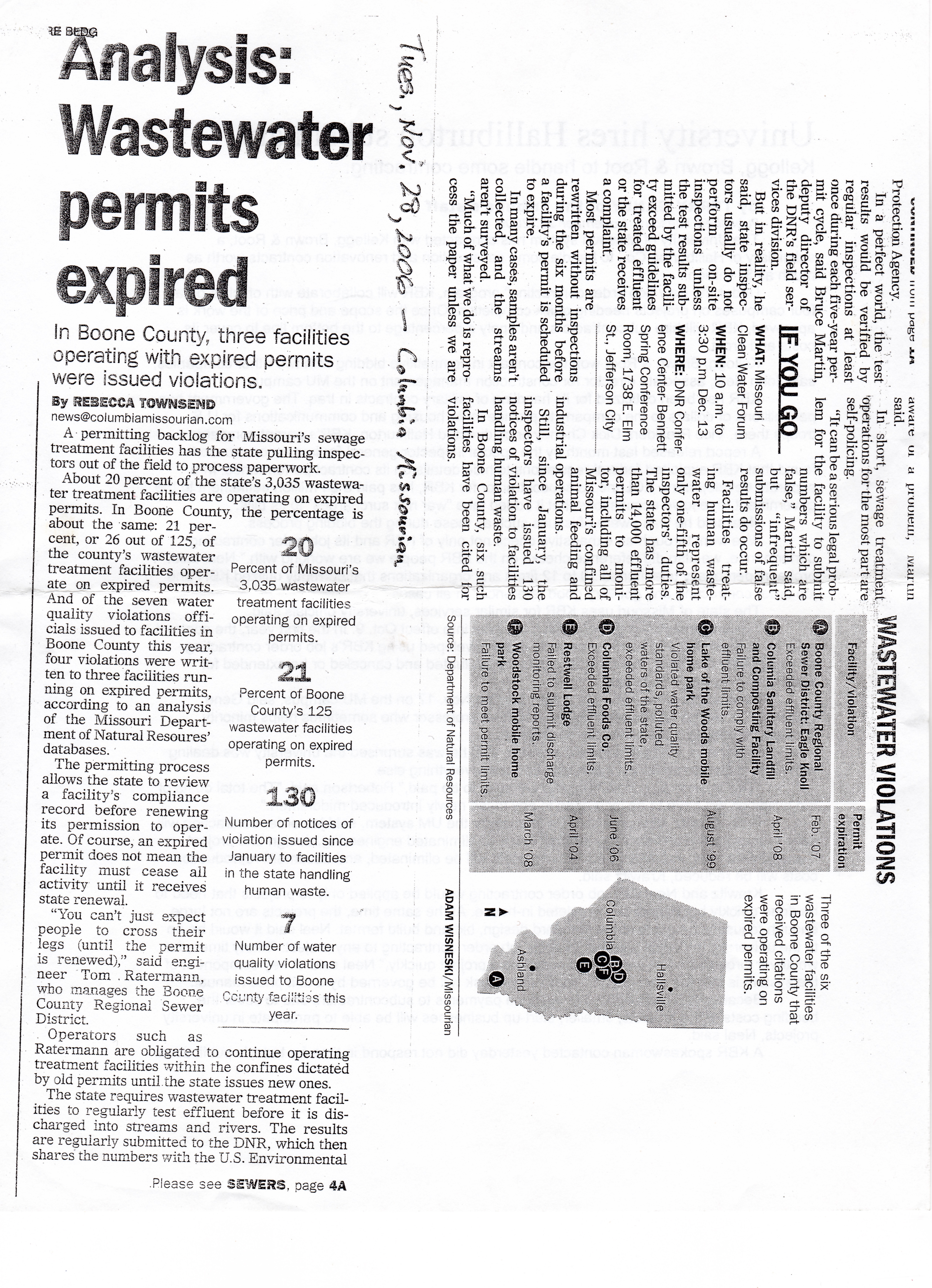
I earned an A in investigative journalism from Professor Brant Houston, former president of Investigative Reporters and Editors, for a story I did using computer-assisted reporting techniques (joining tables in two separate spreadsheets of public information) to illustrate the challenges the county sewer inspection team was having in keeping up with the demands of the job, allowing local water treatment providers to operate on expired permits. The story made the Missourian’s front page on November 28, 2006.
An “enterprise join” learned from the investigative journalists at the University of Missouri enabled me to write a front-page investigative story on the county’s sewage treatment inspection backlog.
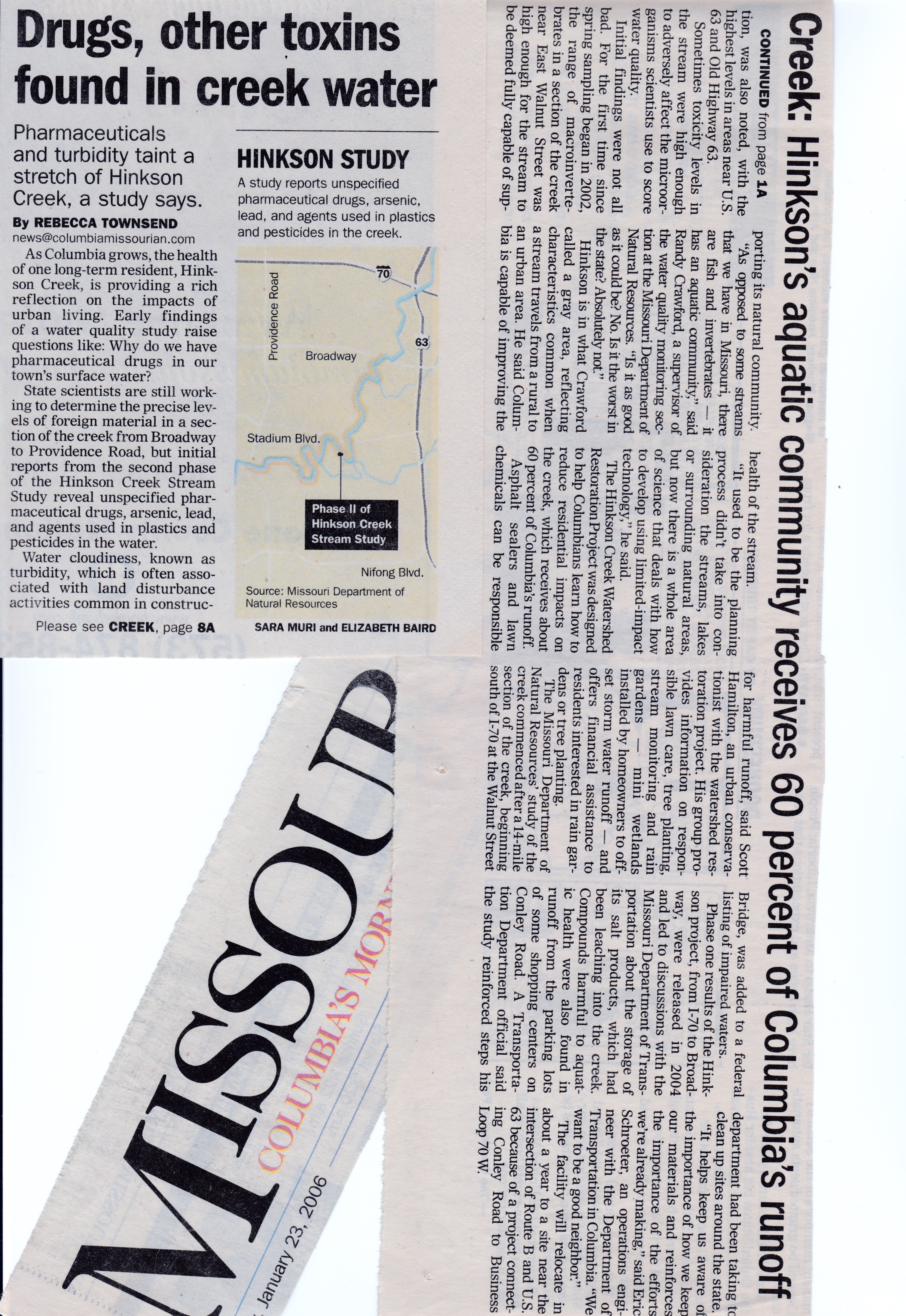
Less than one month after moving to Columbia, on Jan. 23, 2006, I made the Missourian front page for the first time — with another story about water quality.
The state environmental officials did not want to turn over the study that ended up leading to this headline, but my Missourian editor, John Schneller, encouraged me to stay on them. Persistence paid off!
2005
In my seventh year of covering the livestock industry, I’d spent a lot of time writing about animal welfare issues and interviewing some of the world’s leading researchers on the topic.
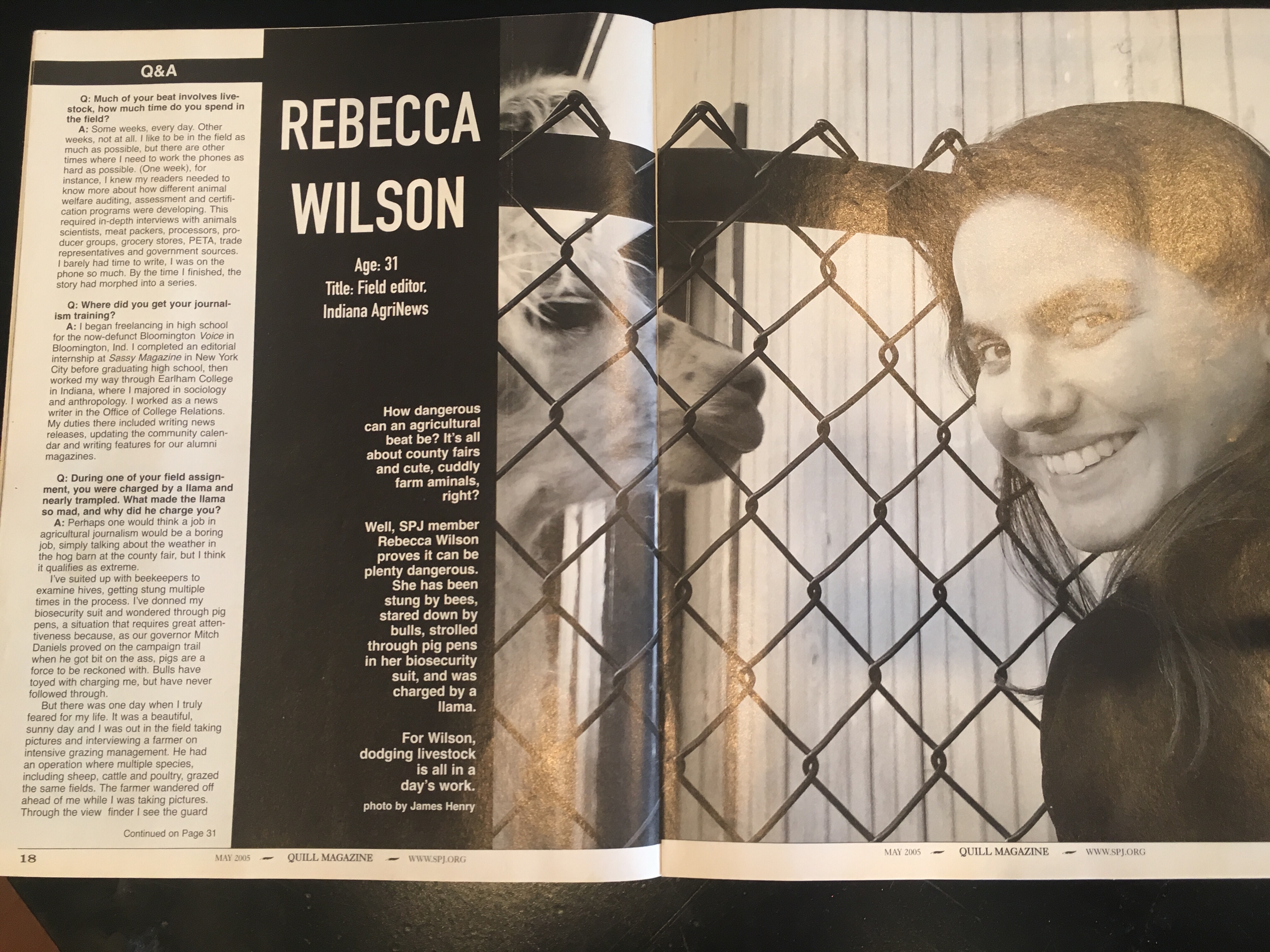
In 2005, SPJ’s national membership magazine put out a call, looking for “extreme journalists” to interview. I wrote and made a case for agriculture as an “extreme” beat. Quill agreed and sent a writer to interview me. They even gave me a shoutout on the cover.
I’m proud to report that while working for AgriNews, a publication taken almost exclusively by rural, white farmers, I was able to produce award-winning coverage about issues faced by migrant workers.
(Even though I’d been married for almost 5 years at this point, I still used my maiden name at AgriNews because I’d started with the company as Wilson and I wanted continuity in my byline. The award below came in 2006, while I was already at Mizzou, for a story written in 2005, so I switched to Townsend.)
The Society of Environmental Journalists includes some of the world’s finest journalists — enabling them to support each other in bolstering the media industry’s — and the public’s — understanding of some of the most complicated issues this planet faces. I’ve attended SEJ conferences in Texas, Montana, Florida, Wisconsin and Vermont.
During what would be my last year with Indiana AgriNews, I joined teachers from all over the world for a week in Bloomington as we explored worldwide food and resource issues. This undertaking foreshadowed a continued interest in food systems, the environment and world economy, which I continued to build on the commodities desk at Dow Jones and as a member of Class 12 of Missouri’s Agricultural Leadership of Tomorrow (ALOT) educational/leadership development program.
2004
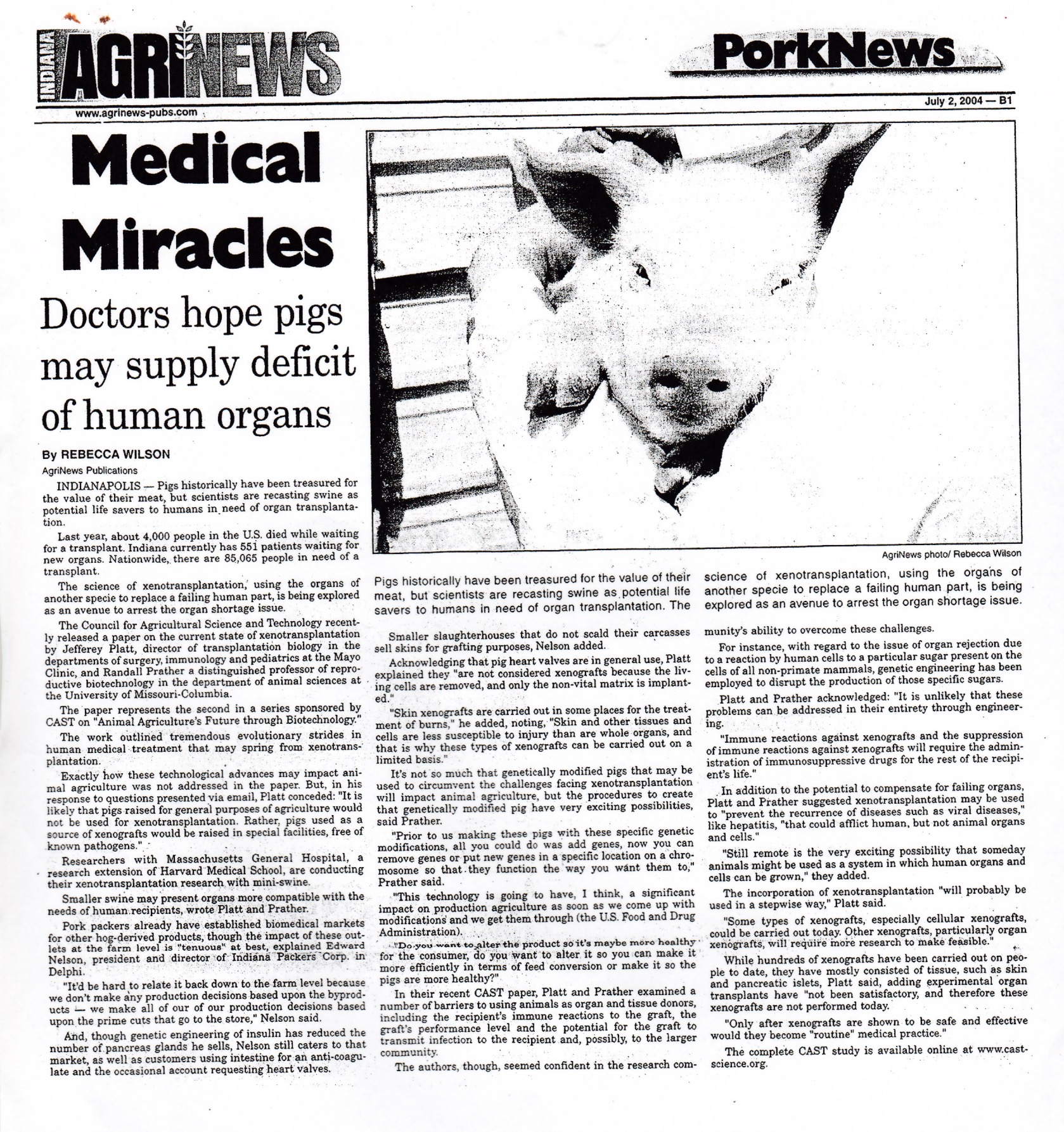
My job at Indiana AgriNews offered the opportunity to write many articles about the intersections of the biomedical and agricultural industries. Here’s an example (that’s my picture, too):
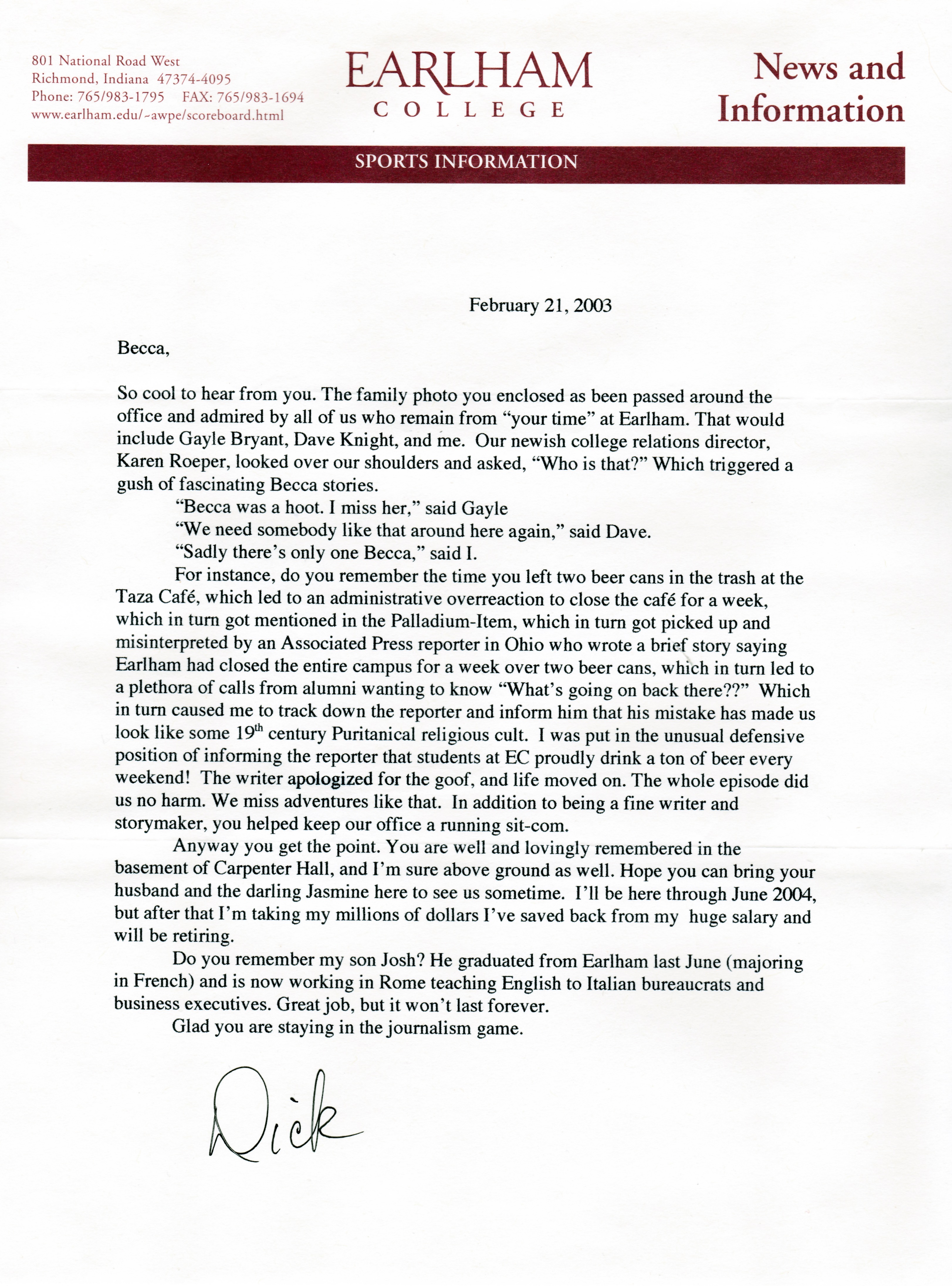
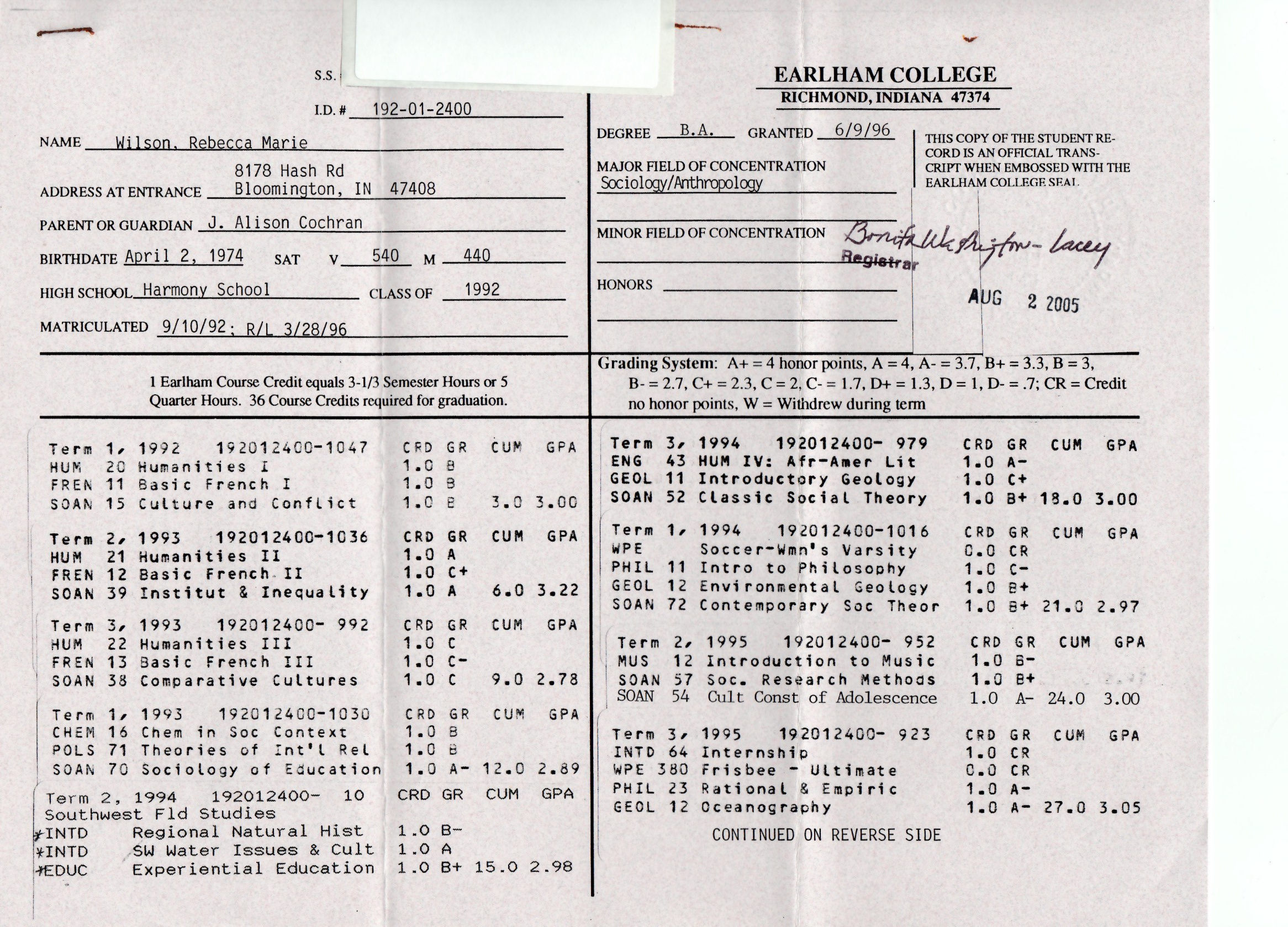
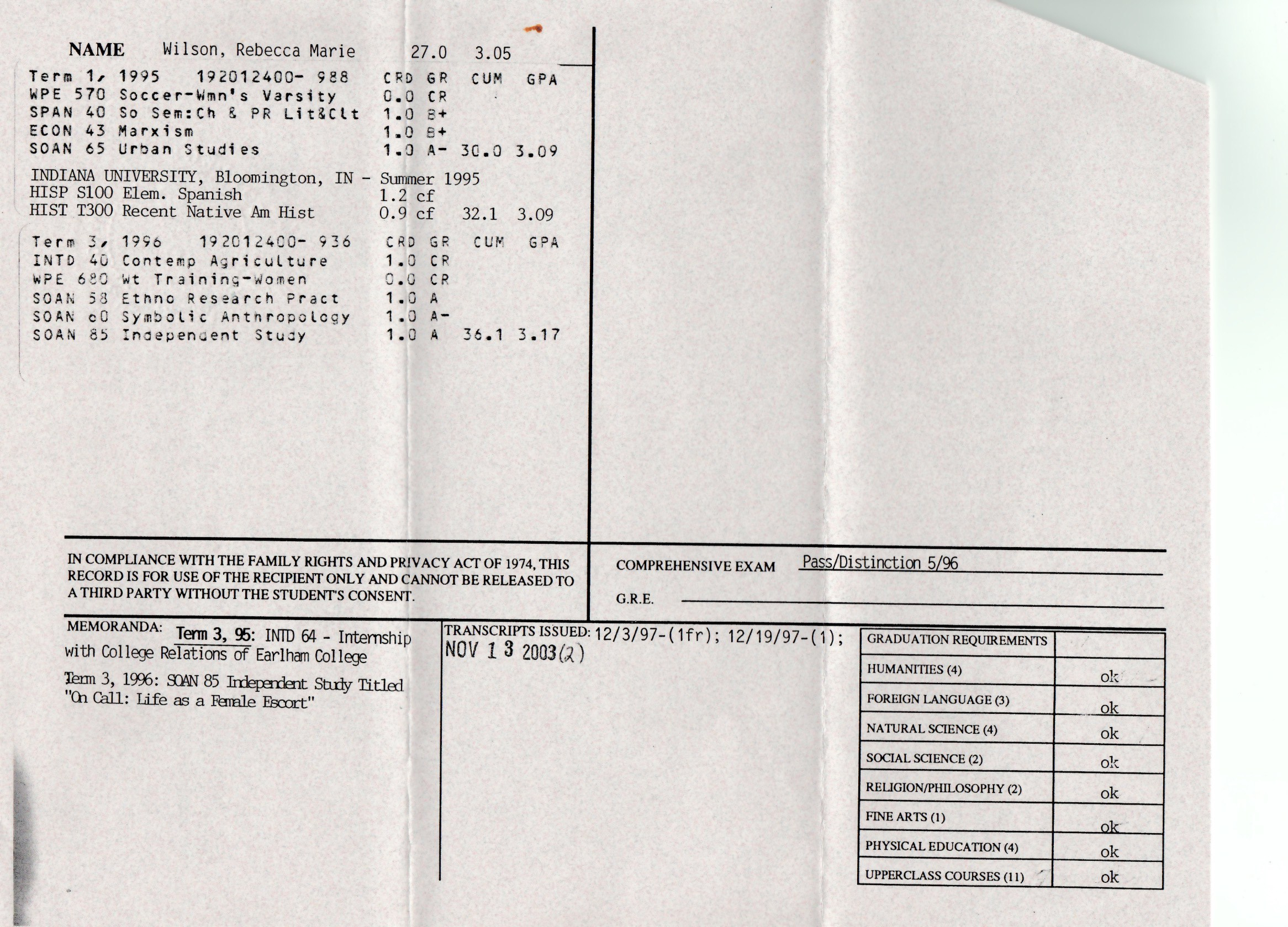
Dick Holden was my editor from 1992-1996 at the work study job I held at Earlham’s Office of College Relations all four years of my undergraduate career. He wrote this letter to me in 2003. As you can see, he was a solid writer. As you may imagine, I learned a lot from him.
1998
In late 1997, I received an invitation and a challenge to start a restaurant at the corner of 54th and College (in the same location Yat’s occupies now). I accepted the invitation, wrote a business plan, secured a $20,000 private investment and a $100,000 SBA loan and managed to have Modern Times Urban Truck Stop and Bookstore open in less than 6 months. Though I closed a year and half later, I count several victories for this project: 1) Most restaurants close in less than a year. We did better. And a lot of people loved us. We grossed more than $250,000 during our time of operation. 2) We did not have to claim bankruptcy. 3) We are still remembered for our legendary style.
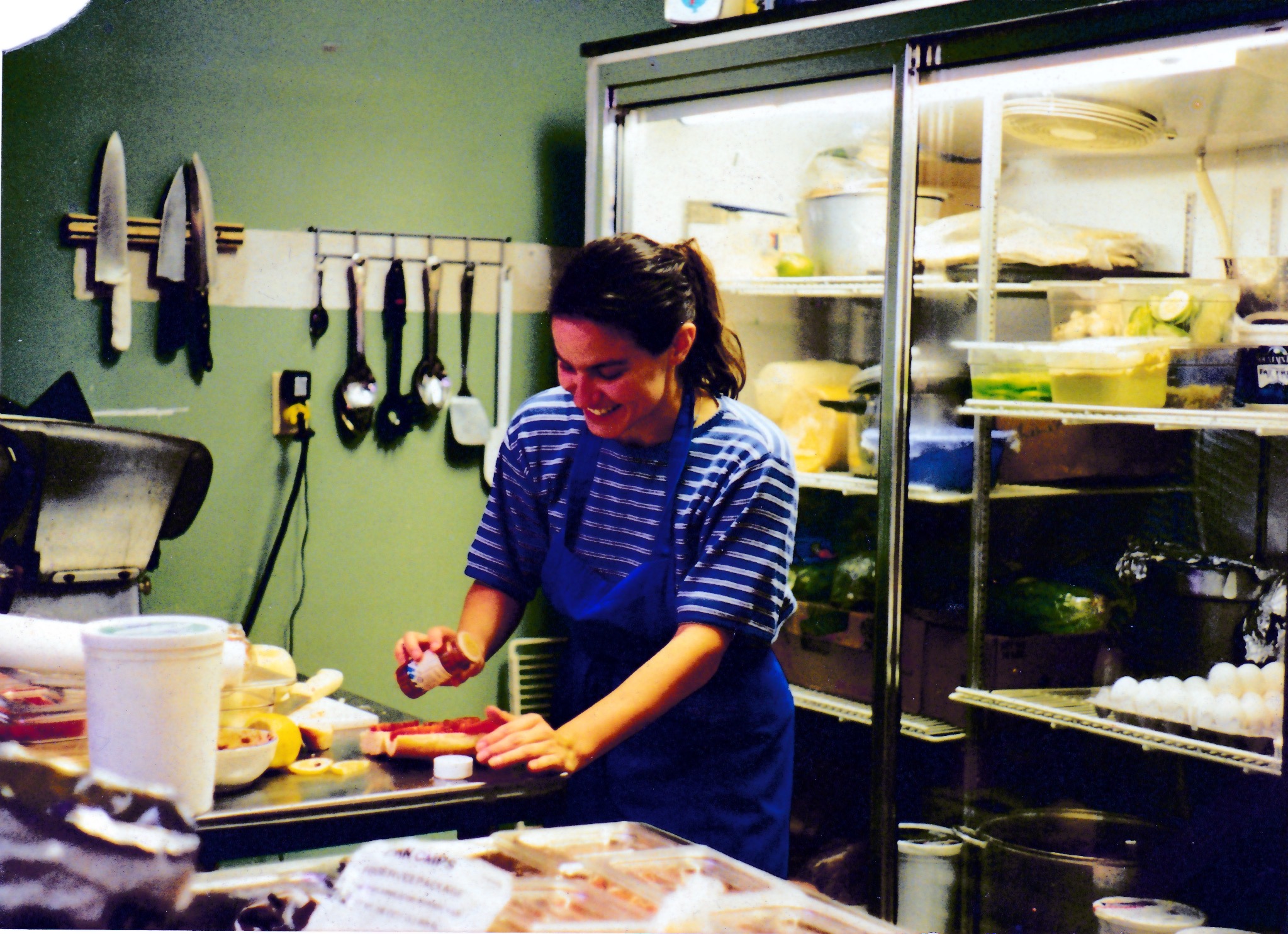
Me in 1998 making a Chicago dog in the Modern Times kitchen. And a snippet of the menu:
1997
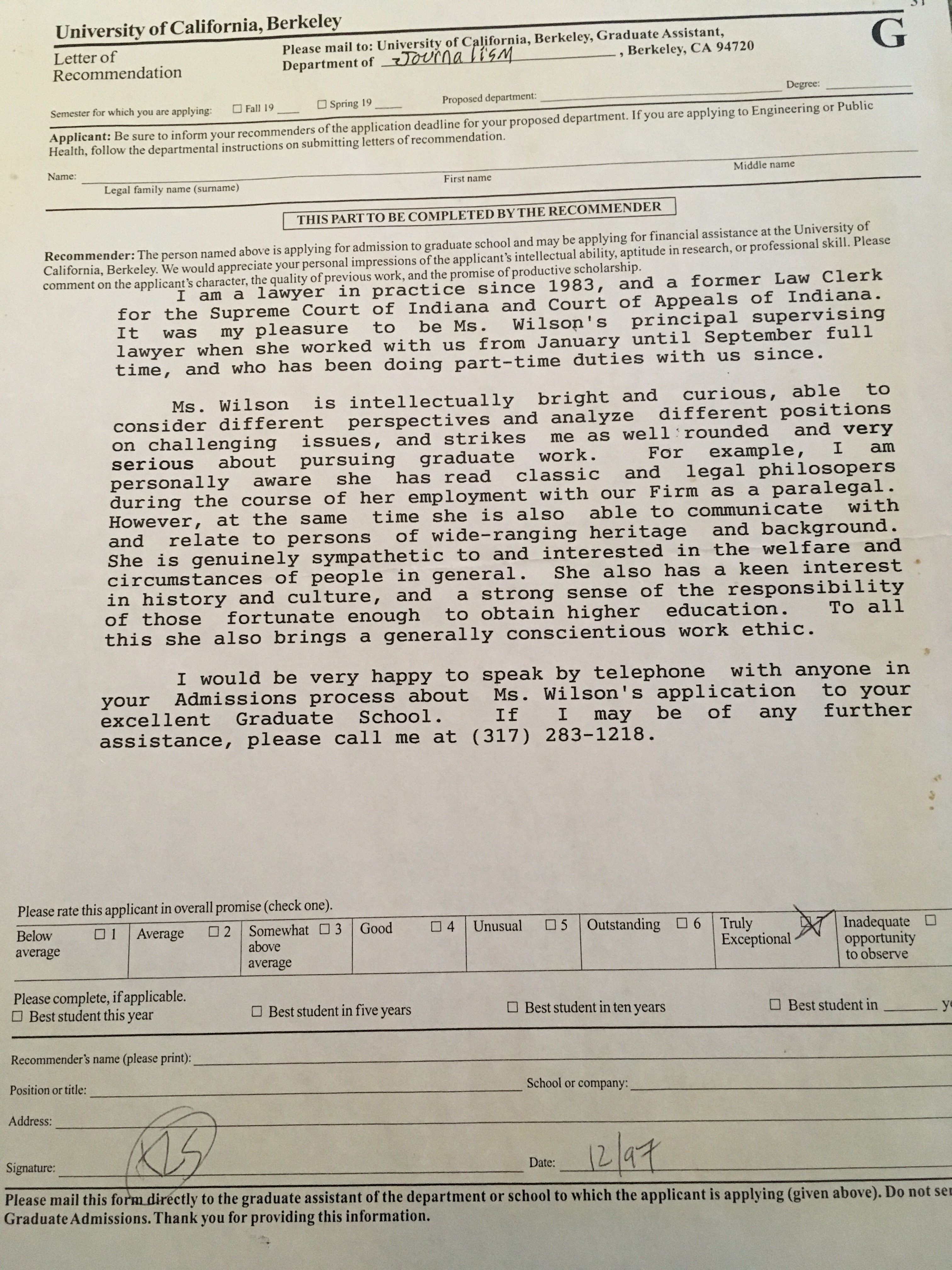
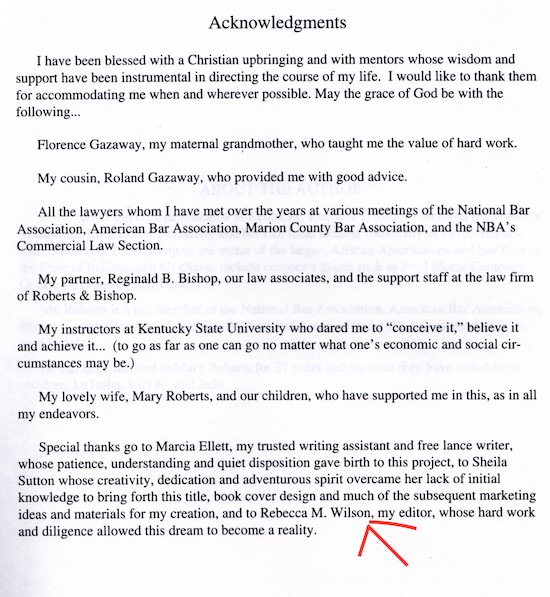
This letter from my supervising attorney at Roberts & Bishop, Kevin S. (RIP), is among my most treasured endorsements. Berkley rejected my application, but a decade later the University of Missouri offered me a free ride, so everything worked out as it should. During my time at Roberts & Bishop, I interviewed new clients and filed initial paperwork in personal injury and discrimination cases. Also, I solicited new corporate clients and helped a senior partner organize, edit and publish a book on practice management.
1996
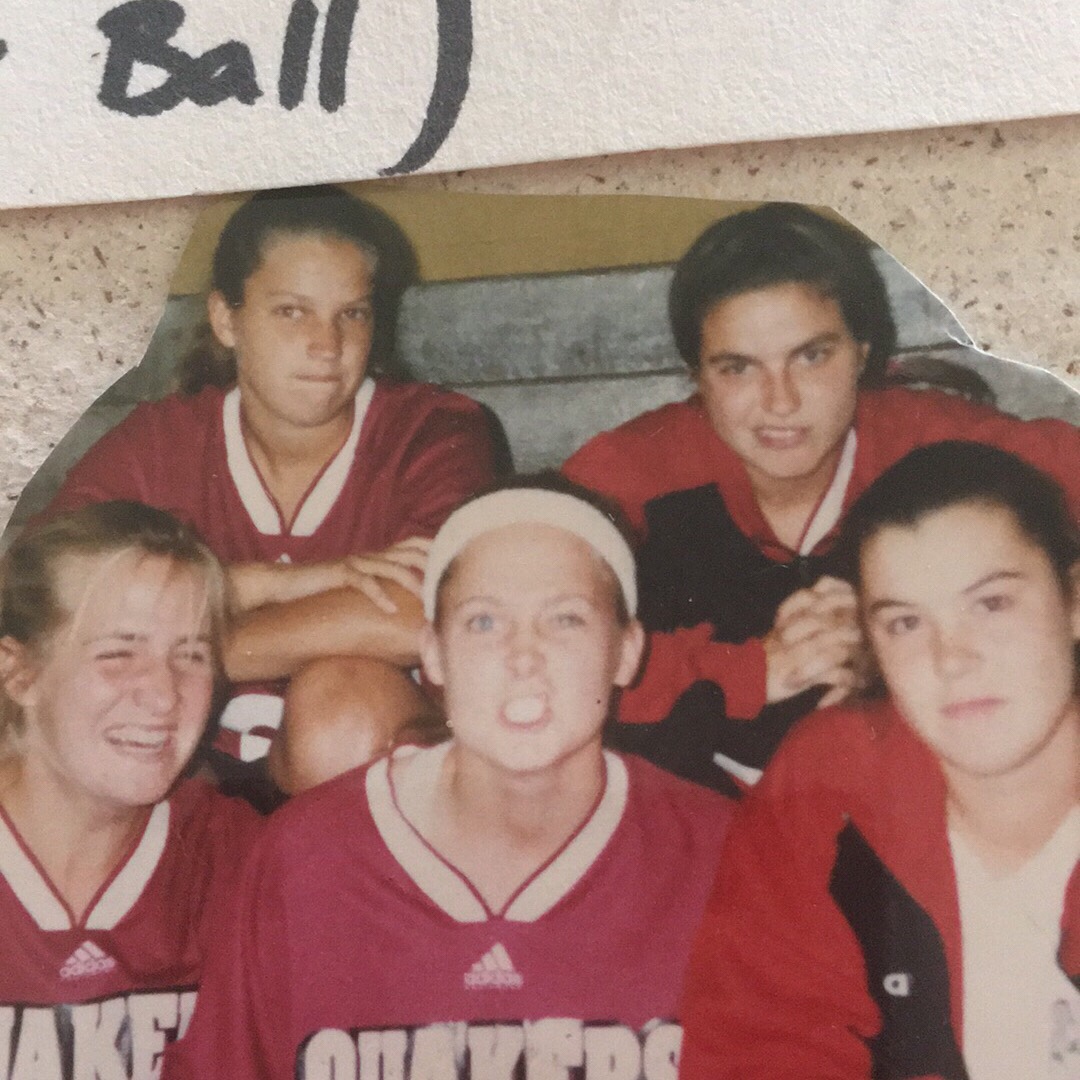
Me with my hustlin’ Quakers defensive line getting our game faces on ahead of a 1995 match at Kenyon. We earned a program win record during this year, my senior season.
In the summer of 1995, I enjoyed taking classes at IU and my co-ed soccer team (read: three girls and 14 guys), Hoosier Outdoor, beat Pegasus, a team led by IU soccer alums, in Bloomington’s recreational soccer tournament, a highlight in my three-decade soccer career!
1992
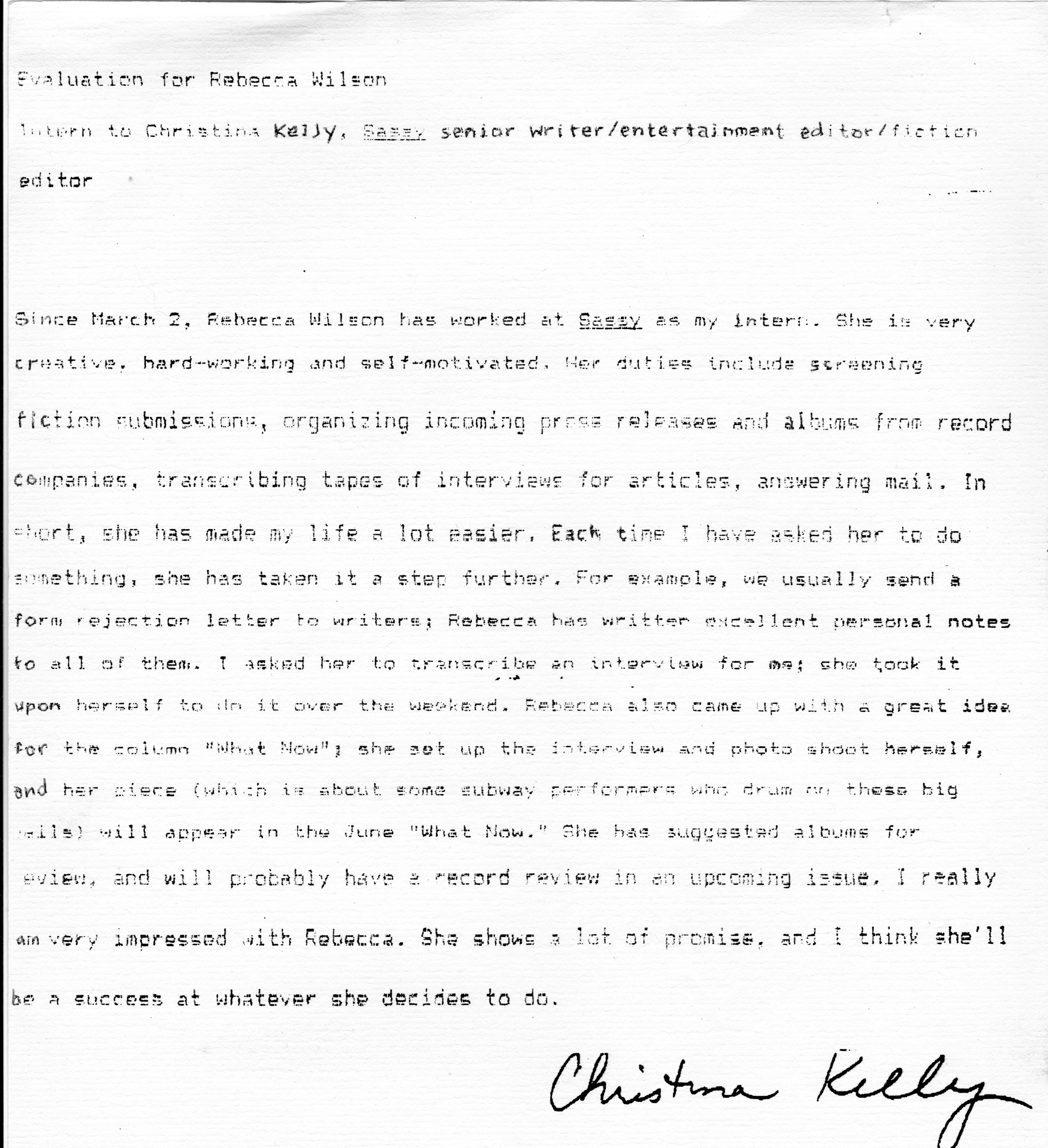
My graduation project from Bloomington’s Harmony School required me to relocate to New York City, where I worked an editorial internship for Sassy Magazine, a national publication for teen girls.
This is the evaluation of my supervisor, Christina Kelly, a senior writer and editor. I particularly like this part: “I really am very impressed with Rebecca. She shows a lot of promise, and I think she’ll be a success at whatever she decides to do.”
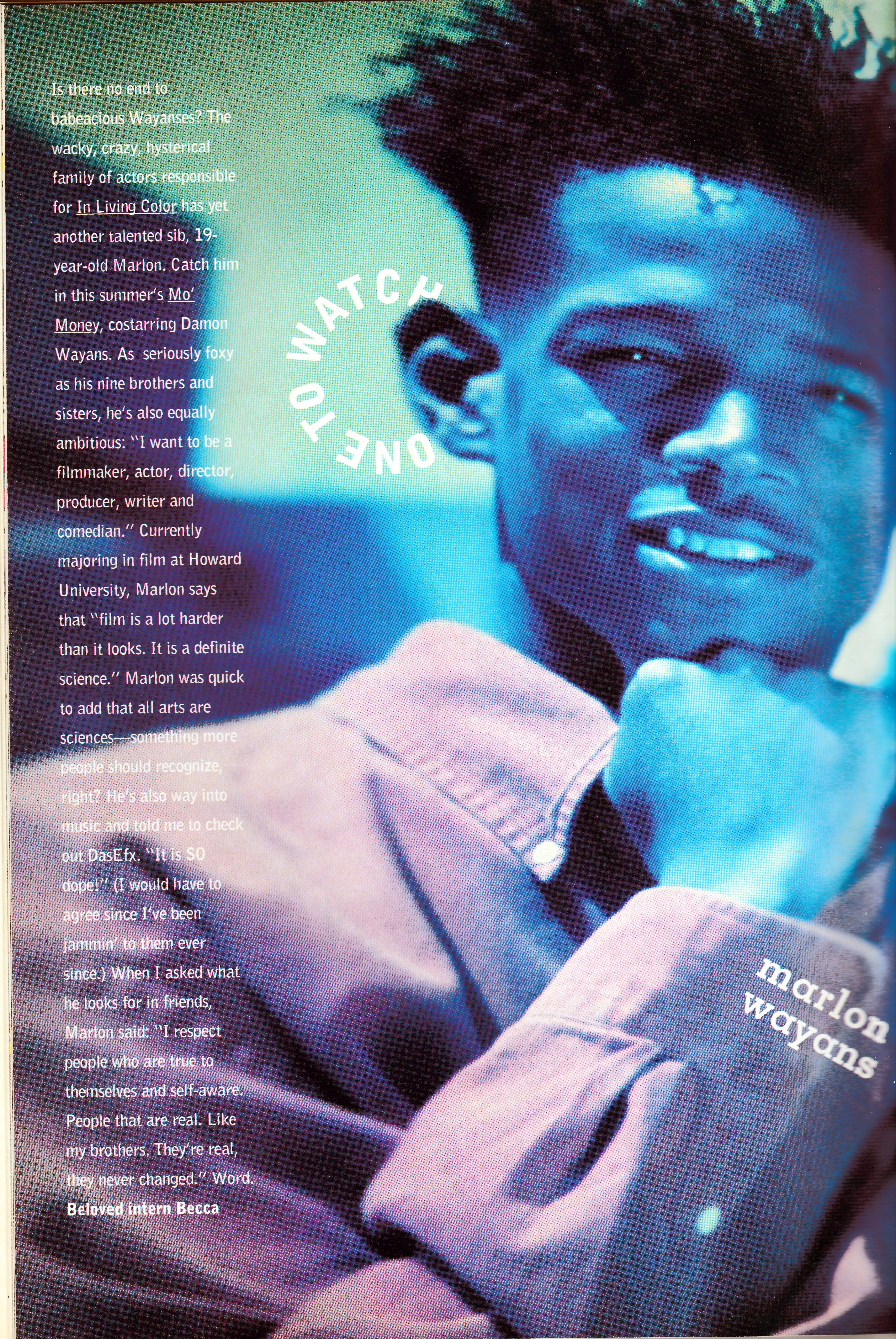
I enjoyed talking to Marlon Wayans. This interview happened before I had real training in professional boundaries, so before I prepared to leave the office where I was speaking to Marlon and one of his friends — and driven by a fluster of hormones and ambition, I used the strongest pickup line I knew: “Has anyone ever told you that you are a total babe?” It must have been hard for a comedian not to laugh in my face as his assistant kindly moved me toward to he door. Still, It looks like that theme inspired me as I wrote …
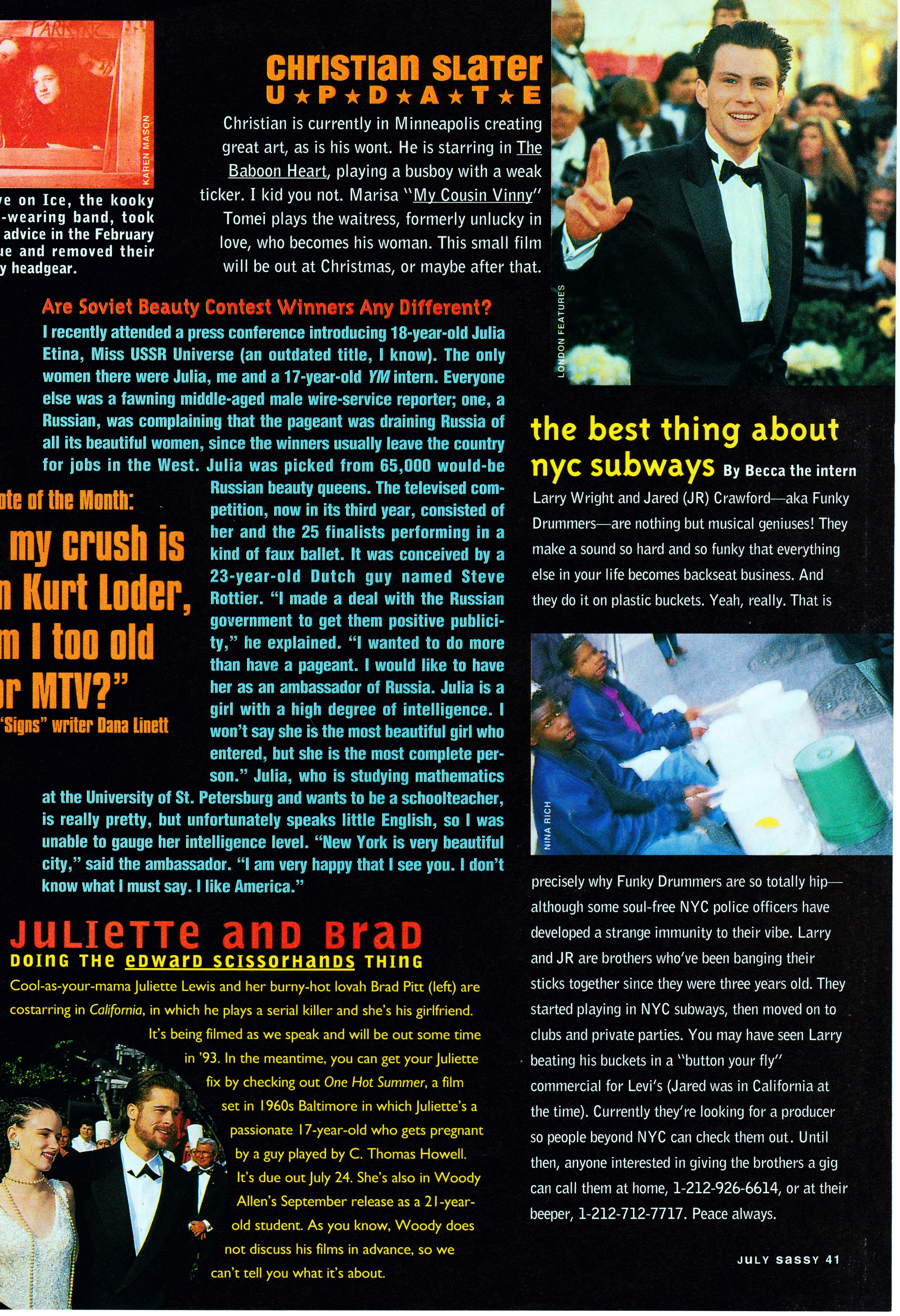
Observing street life in the city and talking to some of the characters I met presented the opportunity for me to slip “The Best Thing About NYC Subways” into the magazine:
Here’s a feature Steve Hinnefeld wrote for the Herald Times wrote upon my return:
Upon returning from NYC, I did some freelancing before leaving Bloomington for Earlham College in the fall.
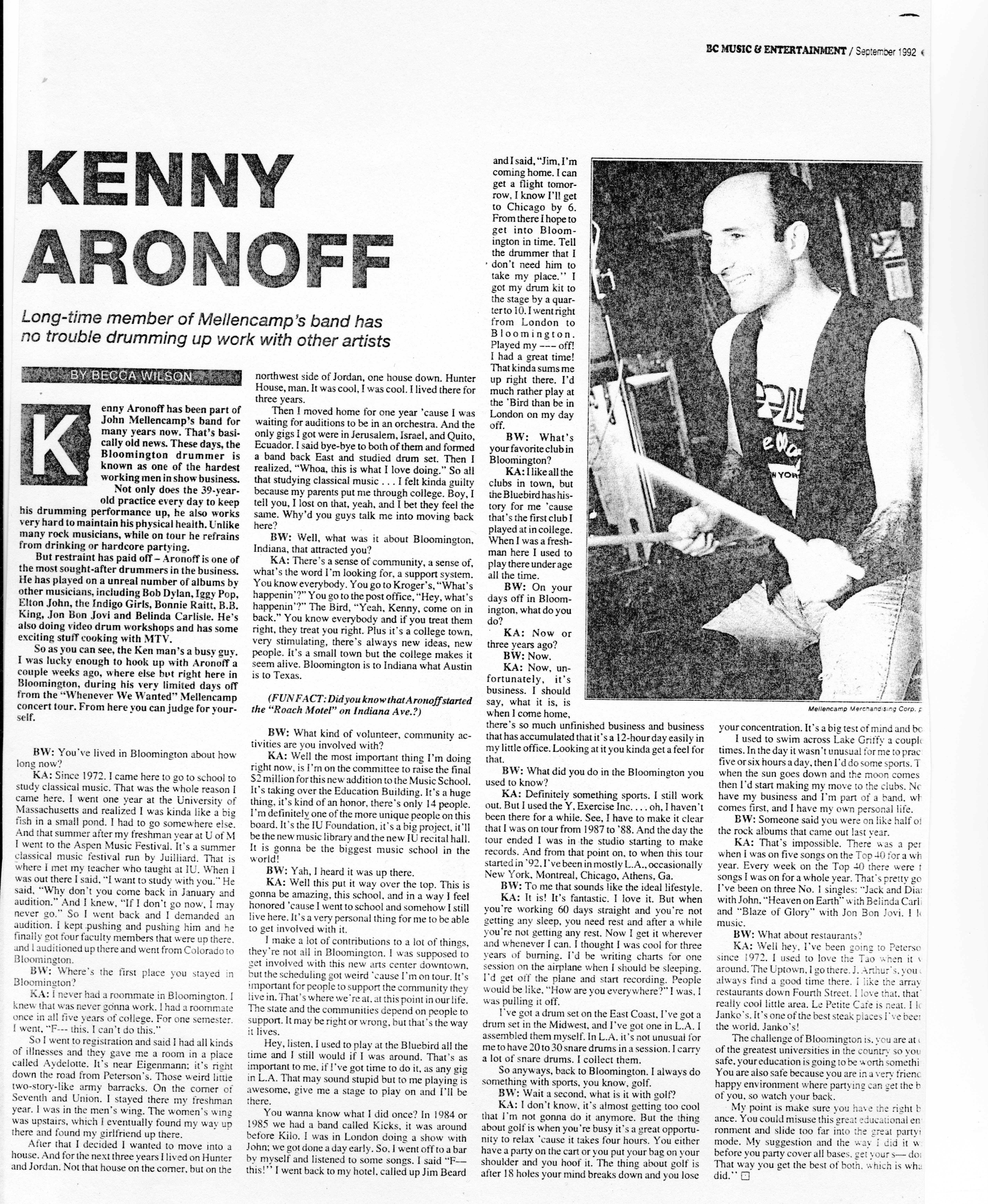
Here’s a feature I wrote on storied drummer Kenny Aronoff:
Did you know that Kenny Aronoff started the famous Roach Motel across Indiana Avenue from IU’s Dunn Meadow?
1991
At 17 years old, I moved out of my mother’s house and began living in Downtown Bloomington, supporting myself by working at the Red Chair Bakery on Kirkwood. When I resigned that job before moving to New York City, the bakery’s owner wrote a recommendation for me.
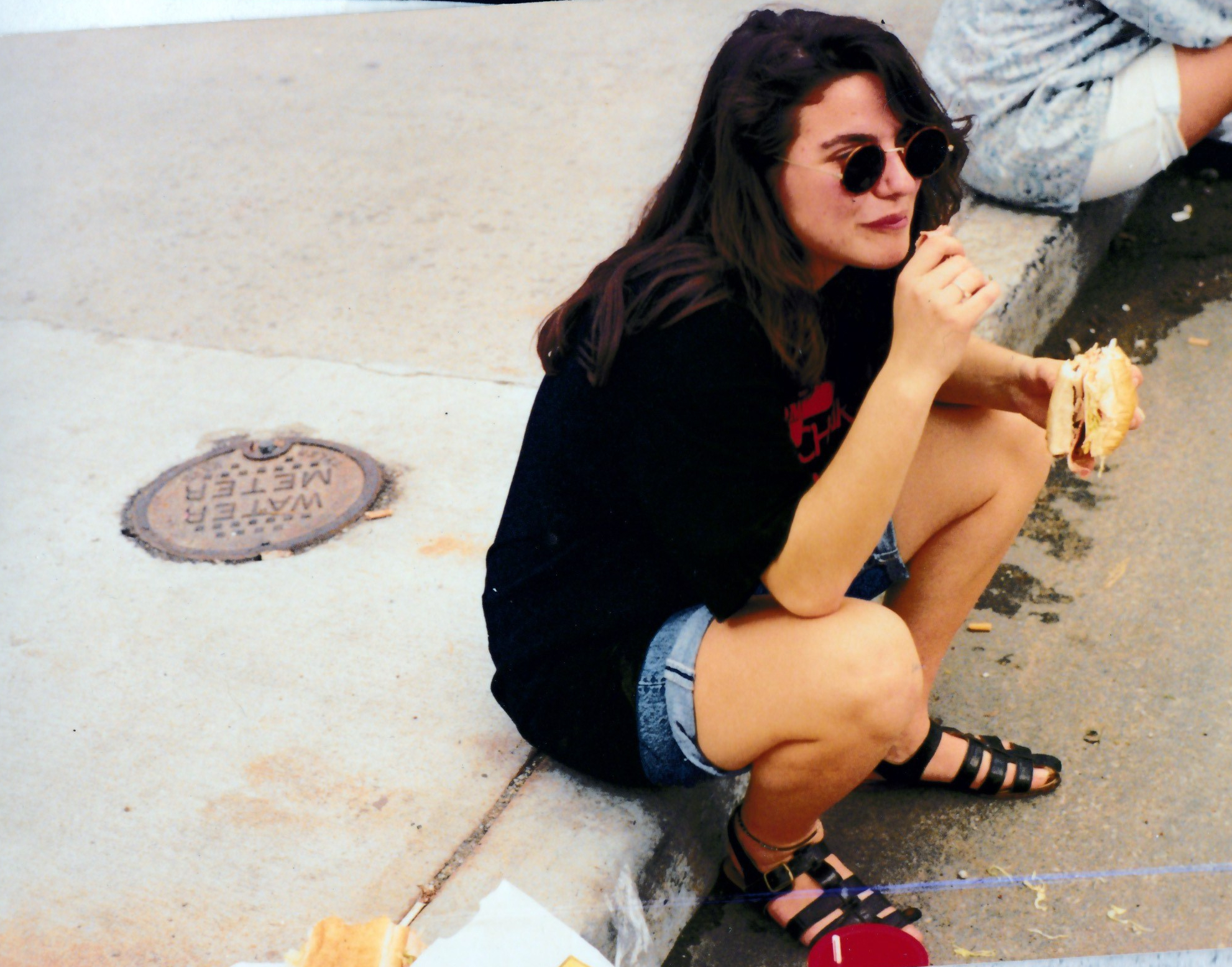
Me on break in the summer of 1991, enjoying a Dagwood’s sub on the Kirkwood Avenue curb in front of the Red Chair Bakery (now absorbed into the Village Deli).
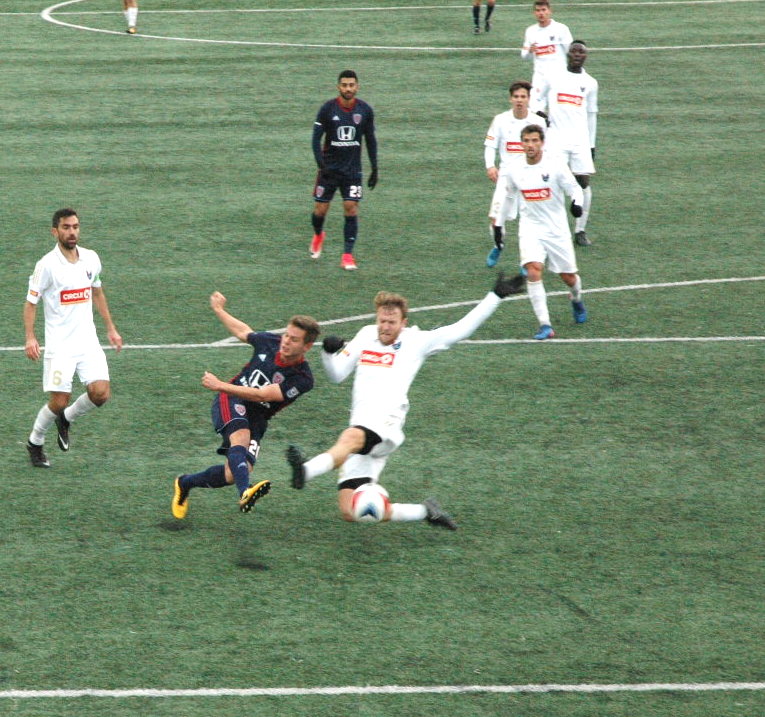
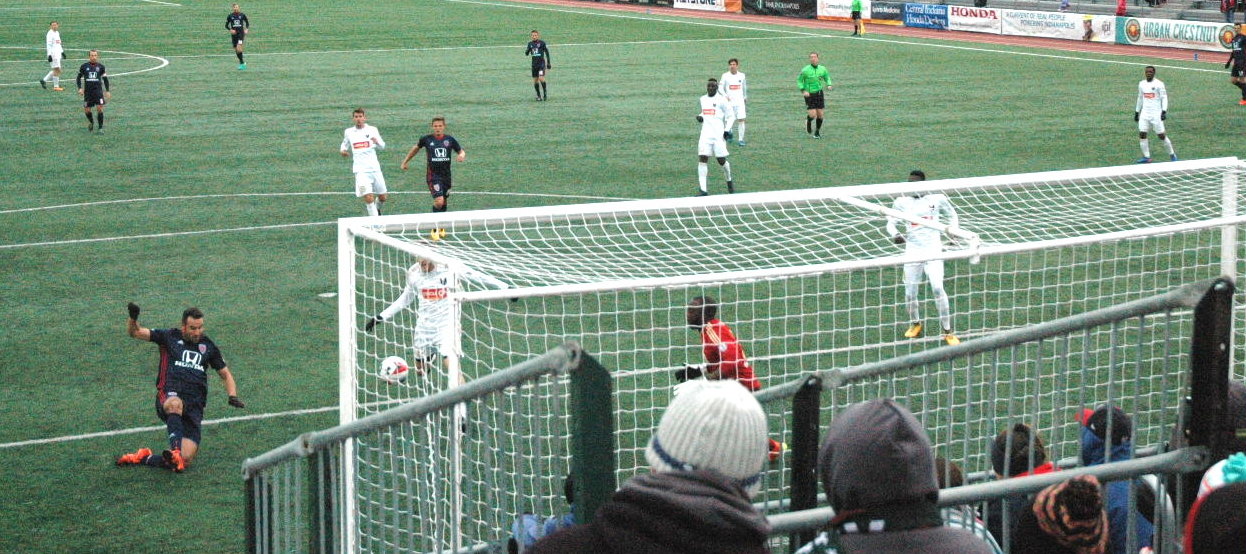
A North Carolina FC defender and David Goldsmith leaving it all out on the field. Note in the background Indy defender Marco Franco (who is in a three-way tie for team goal-assist leader with Ben Speas and Justin Braun). Franco pulled some fancy footwork, faking Carolina defense deep in enemy territory, to set up Goldsmith’s shot opportunity.
Visiting soccer squad North Carolina FC sliced through home team Indy Eleven’s defense, starting from midfield, three minutes and 47 seconds into the last game of the season at Michael Carroll Stadium.
The 40-degree afternoon took on an extra chill as a collective shudder shook the spines of the faithful. How ugly was this match going to get?
Thankfully for the fans: not too ugly or gut wrenching due to the team’s continued, cool-headed pressure. A connecting pass from Gerardo Torrado at the top of Indy’s 18 to David Goldsmith in the midfield, who turned and dished it out immediately to Ben Speas in the left-side channel, set up Speas’ perfect pass, feeding a hungry Zayed, on point for a one-touch equalizer at the far-side of the net. The definition of beautiful penetration.
Striker Eamon Zayed controls Speas’ feed for an inside-of-the-right foot tap into the near-side net, breathing the air possibility back into the game for the home team. The goal marked 26 goals in two seasons for Eamon Zayed, the team’s all-time leading goal scorer.
Indy’s starting 11 worked well together to control several viable North Carolina threats and launch many promising attacks of their own. Don Smart was unlucky to have a first-half shot from inside soar high over the goal. (Delivered with perhaps too much power when a heavy dose of finesse was needed to tame the unruly ball, Smart’s opportunity was enabled by a ricochet off the Carolina keeper, who deflected a Zayed shot well set up by midfielder Tanner Thompson — a standout player from Indiana University.) Indeed, when we look at the whole field, the players deserve credit for playing tough defense as a unit — as well as aggressive on the attack. Everyone was involved in all aspects of the game. And while there certainly were errors, they were overshadowed by positive examples of connective chemistry and organized support.
Zayed captured amid one of several tasty opportunities on goal.
Back-line defenders, for example, coordinated the play that pushed Indy Eleven to a 2-1 advantage 20 minutes into the second half.
Defender Nemanja Vukovic lines up one of his legendary, killer freekicks. This one delivered to the far-side of the box where fellow defender — and Indiana native — Cory Miller met it for a one-touch goal.
The Vukovic/Miller freekick/cross/weakside run/one-touch to far-side netting combination that pushed Indy to a 2-1 lead elated the stands — and illustrated one of the most beautiful aspects of being able to watch the development of professional soccer: an international player from Montenegro (Vuko) connecting with a young man who grew up less than 30 miles from the stadium (Miller) to develop goal-scoring chemistry. Long-paying will be dividends of exposing a local audience to the concepts of international cooperation and the possibilities found by individuals who commit themselves to disciplined training.
Exposing local children to concepts of international cooperation, teamwork and individual commitment to training (where they see local players who work hard achieve success on the field) are some of the ancillary benefits of supporting the development of local professional soccer.
The thrill lasted up until the final minutes of the game. But fate held a consolation prize for the visitors (the No. 3 occupant of the NASL’s eight-seat ranking table while Indy is No. 8), who were able to see a corner kick (perhaps deflected off an Indy player’s attempted head clearance) find the back of the net to equalize.
Minutes later, the ref blew the whistle marking the conclusion of both the match and Indy Eleven’s fourth season on the field.
We don’t know what our roster will look like in 2018 — we’re not even sure about the shape of our league within a shifting landscape at the national level — but we do know we’ve seen some great soccer and have much potential to nourish in the years to come.
What does the future hold?
We know that Gerardo Torrado and Sinisa Ubiparipovic are retiring. But beyond that, this is where the business-side of the operation gets busy sharpening their pencils, negotiating the additions and subtractions to the roster, all while a tremendous amount of uncertainty swirls through the U.S. soccer community in terms of league structure and team development. [The inability of the U.S. Men’s National Team to qualify for the 2018 World Cup and the North American Soccer League’s suit against the U.S. Soccer Federation lead the narrative underscoring unrest and dissatisfaction with the status quo at the men’s pro level.]
We also know that despite insults from outsiders — and those who would judge our local attempts at a professional game as no more than gussied up amateurism — Indiana has seen — and played — some great games. Our future progress may happen in fits and starts; it undoubtedly has been hampered by our politicians’ inability to be early adapters when it comes to enabling the construction of a soccer-specific stadium that will allow Indianapolis to host world-class matches as part of the city’s sports-centered development strategy. But our progress is inevitable.
For four seasons, thousands of fans have continued to pack the stands and support the team, through good times and bad. Typically, we don’t see business ignore the willingness of so many people to pull out their wallets, which provides hope that despite league drama, Indy will persevere.
Plus, local love of the game continues to inspire new generations to become best friends with their soccer balls. Somewhere at this very moment in Indiana, a kid is working on individual footskills, others are juggling in a group, or taking each other on in cocky displays of creativity and speed. This is Indiana soccer at the grassroots, a deep-seeded passion that has driven us for generations and will continue to power us in the years ahead: the willingness to work to be the very best we can be — as individuals and as teammates. This combination leads the Pitch Bitch to posit that future success for Indiana soccer at all levels is pre-ordained, an inevitability that no amount of greed or ego will ever upend.
(Photos by Rebecca Townsend, who apologizes for the exposure and graininess, but hopes her humble equipment captured enough of the game’s spirit to convey the story.)
A final shoutout to my husband and daughter, who have been dedicated Indy Eleven season ticket holders since the beginning, faithfully holding down their seats behind the East-End Goal through blazing heat, bitter cold and driving rain. Thank you guys for supporting local soccer — and indulging the incurable, lifelong need of your wife and mother to be involved the sport. You guys are the best and I love you!
Thanks to the Indy Eleven media team for this Scoring Summary:
NCFC – Billy Schuler (Danny Barrow 4’)
IND – Eamon Zayed (Ben Speas 20’)
IND – Cory Miller (Nemanja Vukovic 65’)
NCFC – Billy Schuler (Lance Laing 89’)
Discipline Summary:
NCFC – Danny Barrow 19’
IND – David Goldsmith 88’
IND bench: Keith Cardona (GK); Kwame Watson-Siriboe, Cory Miller, Christian Lomeli, Adrian Ables
North Carolina FC lineup (4-5-1, L->R): Brian Sylvestre (GK) (Macklin Robinson 32’); Paul Black, Connor Tobin, James Marcelin, Kareem Moses; Austin Da Luz (Lance Laing 79’), Tiyi Shipalane, Bolu Akinyode, Daniel Barrow (Nazmi Albadawi 64’), Marcel Kandziora; Billy Schuler
NCFC bench: Saeed Robinson, Jonathan Glenn, Brad Ruhaak, D.J. Taylor
The Pitch Bitch (aka Rebecca Townsend) welcoming Puerto Rico FC players to Indianapolis ahead of their Oct. 4 match against Indy Eleven, which kicks off at 7 p.m. at Michael Carroll Stadium in Downtown Indianapolis. (From Left: defender Phanuel Kavita of D.R. Congo, attacking midfielder Jordi Quintillà of Spain, Rebecca Townsend and Ramón Soria Alonso, also of Spain. Attendees at the match will have plenty of opportunity to contribute to hurricane relief — and show their support in person as the Puerto Rican team takes to the field.
INDIANAPOLIS — Indiana has a chance to show Puerto Rico that Hoosiers are in solid support of hurricane relief by packing Michael Carroll Stadium at 7 p.m. Wednesday night, Oct. 4, Downtown Indianapolis, when Puerto Rico FC and Indy Eleven face off.
Indy will be passing the bucket — and driving web traffic — to Puerto Rico FC owner Carmelo Anthony‘s hurricane relief fund. In a piece published in the Players’ Tribune, Anthony makes a straight-forward, heartfelt pitch for major assistance — and makes a contribution of his own to get things started:
“The entire island is dark. But even if we can’t hear it, there’s more than 3 million people down there calling out for help. Imagine your house being powerless for just one hour. Just one day. Just one week. Imagine the young kids you have in your life — your son, your daughter, your nephew, your granddaughter — imagine them being scared and hungry for just one day.
“Puerto Ricans are facing the possibility of six months of that kind of struggle. I think about my own family in that situation and I can’t even wrap my mind around it. I can’t grasp it. I know there’s so many different things going on in America and in the world right now that need our attention, but damn … I need your help. I need the help of anybody reading this. We have to help the people of Puerto Rico get the supplies they need to survive day-to-day until their country can be built up again.
“I’ve set up a YouCaring donation page to aid the relief efforts. Any help you can give will get directly into the hands of those who need it — you have my word. I’ve been doing community work on the island for the past 10 years, but this is another level. I’m starting with an immediate $50,000 donation, but I need your help in this fight.”
The night before the match, Indy Eleven hosted a dinner in honor of the visiting team and to help draw attention to relief efforts.
“We’re chatting about their day-to-day situation, their worries with their families,” Indy Eleven captain Colin Falvey said of his discussions with players and team officials. “Right now they’re in a bad, bad situation. For me, the futbol will take care of itself tomorrow night: tonight we’re all about embracing them into our city and showing the support of our club.”
Falvey added that he expects Wednesday’s match “to be a high-tempo, intense fight between two very good teams,” noting that since a coaching change at Puerto Rico he sees their team as “playing a different style of futbol, a more attractive style.”
Local soccer blogger and fan extraordinaire Nipun Chopra, PhD, has been at the forefront of local hurricane relief efforts aimed specifically at helping members of the Puerto Rico FC family effected by the storm. With the help of 133 people over the past 12 days, Chopra’s GoFundMe campaign has, to date, collected $15,923 of the fund’s stated $20,000 goal.
“Tomorrow night we continue our fundraising efforts for Carmelo Anthony’s hurricane relief fund,” said Indy Eleven’s media liaison Scott Stewart, encouraging people to come out to the game. In addition to the online donation options, he added, “There will be a bucket brigade.”
For more information on Puerto Rican relief efforts — and tickets for the Puerto Rico FC/Indy Eleven matchup — can be found at IndyEleven.com.
For more insight into the level of devastation the people of Puerto Rico — and many other Caribbean islands are facing post-Maria, as well — check out this slideshow from NBC news: https://www.nbcnews.com/slideshow/hurricane-maria-lashes-storm-battered-caribbean-n802936.
Indiana’s first National Golden Gloves title holder in 23 years is ready to defend his title.
My interview with Martin is featured in this year’s Indiana Golden Gloves Championship program… It’s a treat to watch talented athletes learn to elevate their game: a solid example for all of us!
Hope friends, media and fun seekers will show up at 7 p.m. tonight, April 6, at Tyndall Armory, 711 N. Pennsylvania St., Downtown Indianapolis, as the championship rounds of Indiana Golden Gloves begin, and again at the same time next Thursday, April 13, to watch Martin get to work in the ring.
National champion exhibits mental, physical toughness in pursuit of boxing dream
Story and Photos By Rebecca Townsend
Frank Martin, winner of the 2016 National Golden Gloves Tournament of Champions in the 141-weight class — the first Indiana representative to win a national Gloves title in 23 years — must defend his state title before he can advance to nationals — and attempt back-to-back national victories — a feat that no one in the elite club of Indiana representatives to win a national title has accomplished except Marvin Johnson. Martin is shown here working out at his local club: Indianapolis Boxing and Grappling in the 2900 block of East Washington Street on Indy’s near-east side.
Going into the Indiana Golden Gloves at this time last year, Frank Martin was hungry — eager to fight his way back to the National Golden Gloves tournament where, in 2015, he was denied a national title in a controversial split decision.
He credits increased mental focus and an uncompromising training regimen as the keys to accomplishing his goal: Martin won the 2016 state title in the 141 weight class, advancing to nationals in Salt Lake City where, after earning victories in five fights in a five-day gauntlet featuring the top amateur fighters in the nation, he carried home the championship belt — the first representative of Indiana Golden Gloves to bring home a national title in 23 years.
The Detroit-born boxer developed his athletic skills as a high schooler in Fort Wayne, Ind., where he played football, wrestled and ran track. The 22-year-old started boxing just before he moved to Indianapolis four years ago, honing his skills at Indianapolis Boxing and Grappling under the tutelage of coaches Pat McPherson, a local police officer, and Ike Boyd, a two-time Indiana Golden Gloves champ. Frank includes his father, also named Frank, as another primary component of his coaching team and he recognizes the importance of the tireless support from his brother, JC.
Though Martin is proud of his accomplishments, he said their full weight has barely registered with him because he continues to focus on the challenges and opportunities that lay ahead. Two weeks prior to his return to the Indiana Golden Gloves ring to defend his title, Martin took some time out to talk about his development as a boxer.
Q: How did it feel heading into that fight for the national championship last year?
A: I was all the way locked and loaded; it was nothing but excitement to show how hard I was working. I was working extra hard at the gym and in conditioning.
Q: Tell us about the fights you experienced to get to the final bout. What stands out?
A: My first fight was a 5-0 decision against a guy from Pennsylvania. He was tough. It was a good fight to get first. Once I got that out of my system, I was ready for anything.
I had five fights. I fought every day. I fought a guy from Cincinnati. That was a good fight — a lot of action. I dropped the guy several times – twice count to 8 counts.
I dropped three of my opponents — knocked three down — including 7-time national champion Virgil Ortiz from Texas. He is now a professional — one of Golden Boy Promotions’ top prospects. I knocked him down in the final.
Q: What was the key to earning that final victory?
A: I was mentally all the way there. I knew I had put in the work, so I knew I was gonna get the fight because I had worked so hard. I had no doubts going in; I didn’t question myself or how hard I’d been training. Nothing like that. I knew I was ready. And getting the knockdown was key. If I wasn’t favored going in, I had to make the judge’s decision as easy as possible.
A loss motivates more than anything. And critics… Any fight I ever lost, I go back and look: What didn’t I do enough? And I fix that the next time out.
Q: What was the key to earning that final victory?
A: I’ve matured in my work ethic. I was honest with myself. I pushed myself to the limit. I could accomplish anything I wanted to, if I pushed. Because I was in the best shape I could be in. That’s where my confidence came in. I was true with myself I didn’t take shortcuts. I was out running — late at night, at 2 in the morning, because it gave me a curve. I knew no one else was doing that. It made me mentally strong knowing that my opponents were not doing that, 9 times out of ten.
Q: How was your national victory announced? What was your reaction?
A: It was 3-2 decision. Fighting out of Indiana, we’re not known, not the favorites. When I heard it was a 3-2, I felt like I pulled it out because I’d knocked him down. The guy was supposed to win the whole thing. He had a good team around him. He was more of a favorite. When that 3-2 came, it was a nail biter because it can be about who are are and where you come from — in amateurs and any boxing. I was glad I was able to pull it off, though I feel it should have been a 4-1 not a 3-2, but the judges scored it like they scored it and I’m thankful that God blessed me to get it.
Without him, a lot wouldn’t possible — me even fighting.
Q: How so?
A: People are put in certain situations. I could be paralyzed and have the dream of boxing, but I’m blessed to be 100% healthy. There are people who want to but the can’t walk or move. He blessed me to be able to do everything I want to do, what I love.
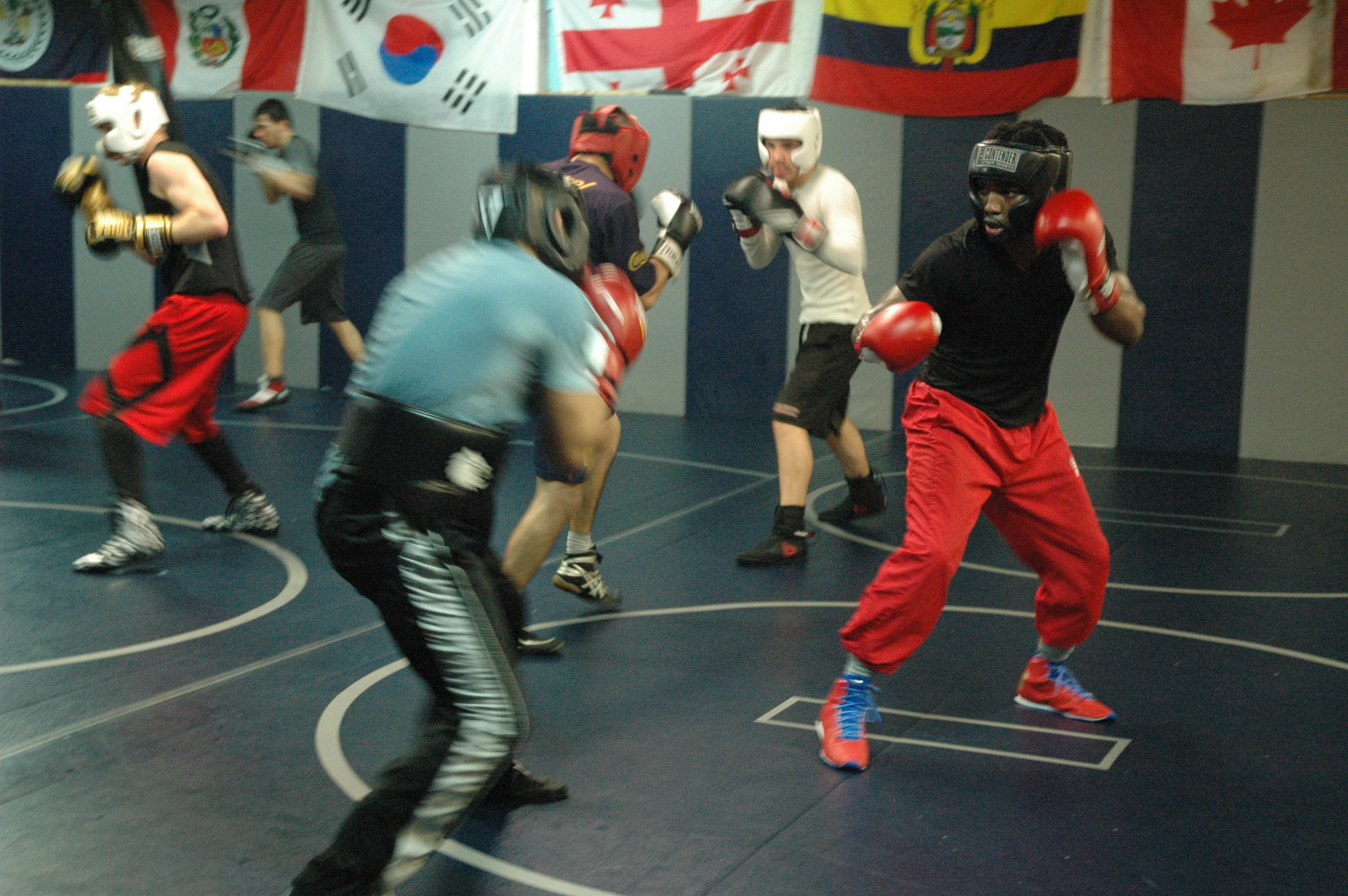
Martin knocks down professional boxer Pablo Sanchez in an April 3 sparring match at IBG. One of his coaches, local Indianapolis police officer Pat McPherson, watches.
Q: How have you developed a knockdown punch?
A: You have to have power, of course. You gotta know how to pinpoint your shots. Power is not everything. Knowing the right time to attack and exactly the right spot.
Q: Do you have anything specific you look for when trying to find that spot?
A: No…
Q: You just know it when you see it open up?
A: Yep, I just know I’ve got that eye.
Q: A lot of young guys will be watching you now. Can you offer them any training tips?
A: To the fighters: Be honest with yourselves about how hard you’re working and working out. Don’t take shortcuts. If you do, when you have to fight, you might have a doubt. Just a little doubt can change a whole game plan. I just feel like a better man will win the fight. You should go into the fight 100 percent ready.
Q: What does it mean to you to be the first fighter in 23 years to bring Indiana a national title?
A: I’m glad and blessed to be the one to break that bar. It really hasn’t hit me. I was excited that I did win, but I just felt that honestly I’d put in so much work that I had to get it. I knew I was 100% all the way in. I’m glad and I’m pretty sure it motivated a lot of other fighters, making them want to do the same thing. I’m glad to be a role model but I still have so much more to do. It hasn’t hit me: I’ve got bigger things in store.
Q: What has happened since winning that title?
A: We won a couple more national championships: Ringside and Title .. and I fought in the USA tournament and got on the USA team. And I’m ranked number two in the country.
It’s like everything is panning out how it’s supposed to.
Q: How have your coaches influenced you?
A: In the beginning, when I first started boxing, I didn’t work to my limit. They were able to get inside my head and help me find my inner self and my work ethic. And now I’m able to motivate myself, pushing myself and my work ethic. They helped me get to that point where I can do my own thing. Like when I’m in the gym by myself, I can get the same intensity as if they were around.
Q: What do they say? Do any of their words stick with you?
A: They say a lot! They would tell me: Don’t get in my own head, or don’t get in my own way. If I’m not in my own way, I can do whatever I want to do.
Q: What’s it been like to be on Team U.S.A.?
A: It’s broadening my perspective. It’s what I need. It’s helping my learning experience. It helps my confidence in learning so many aspects of the boxing game. Boxing is an ongoing learning process as I’ve been on the up and up.
Q: You went to Europe?
A: I fought in Bulgaria against an opponent from Turkey and a guy from Italy, who I knocked out in 15 seconds. Plus, I got to spar with a fighter from Poland.
Frank Martin and Pablo Sanchez spar at IBG.
Q: What’s the relationship between amateur fighting and your professional prospects?
A: I still have a lot to learn, but even though my style is changing, it’s not really suited for amateurs where they award points for the total number of punches landed and not necessarily how effective the punches are. I’m really a slow-paced fighter — I’m more into effective shots. In amateurs, it’s about who is landing more. But I’m more of a power puncher. If he’s hitting with a lot of piddly shots, even if they’re not affecting me, they’ll give it to him because he landed more. In the pros, it’s more about the effective shots. I’m ready for the pros. A lot of these guys I’ve fought have turned pro.
I feel that turning pro would take me to the next level and will motivate me to do things. It will get more serious with us taking trips and getting to work and going to camps.
Q: What is pinnacle of your dream?
A: I want to be more than just a boxer. I do want to be one of the best that laces up their gloves, but that’s not all I want to be. I don’t want people to say, “He’s a good boxer, but that’s about it.”
When somebody asks about me, I tell them a little bit about my story. It’s not to be cocky or show off. I’ve been working so hard. I’m not working this hard to be a nobody. I could be a role model to people without being an athlete and give them stories about how to take a different road. But I’ll have a bigger impact with the story I have now.
I know a lot of people have guidance. Some people don’t. I’ve always had family members tell me things. I’m not one to let things go in one ear and out the other. If someone tells me something, I’ll take it and think about it. You don’t have to go with it. But sit and down and think about it before you don’t agree. And then you choose what you want to do. But always hear a person out. At the end of the day, people will make their own decisions. But I’ve learned a lot by hearing people out. Always listen and give what someone says a chance. And then you decide after you give them chance.
I’m trying to get the word out there on who I am. If I stay under the radar, I won’t get done what I want to get done. I’m humble but you’ve got to speak up to be heard.
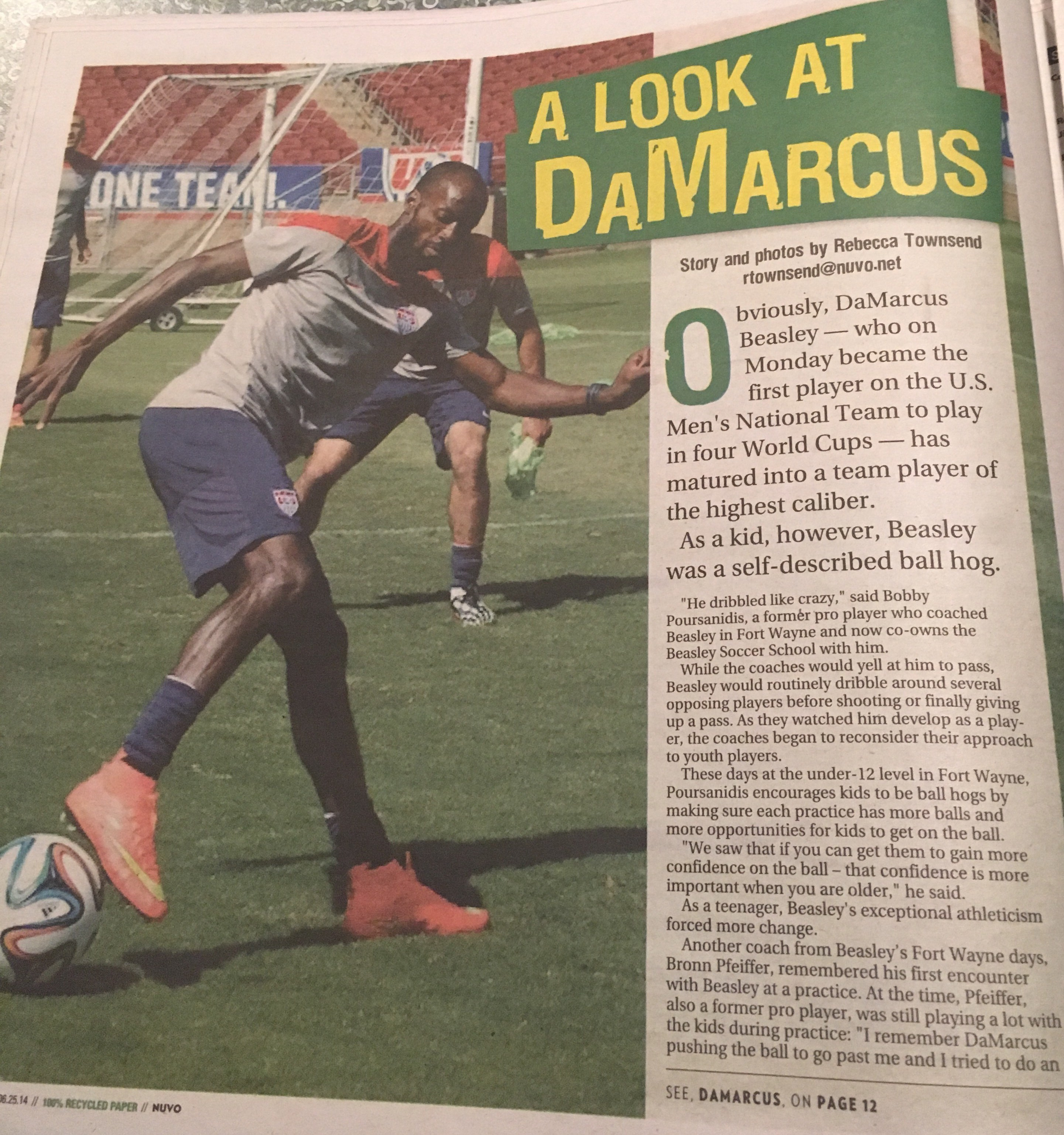
Here we will journey through my life as Rebecca Townsend (aka Coach Willie Mack, aka The Pitch Bitch), an investigative, multimedia journalist and ag specialist, soccer coach/player, massage therapist, mother, wife, friend and sports nut. (My teams include Indy AlleyCats Ultimate Frisbee, Indiana Fever/Pacers, Indy Eleven, the Indianapolis Colts, Indiana University — especially soccer and basketball, Earlham College and Mizzou.) I’m currently writing “Becca’s Balls: A Hoosier reporter goes rogue during Brazil’s 2014 World Cup.”
Hoosier Shangrila represents many levels of experience.
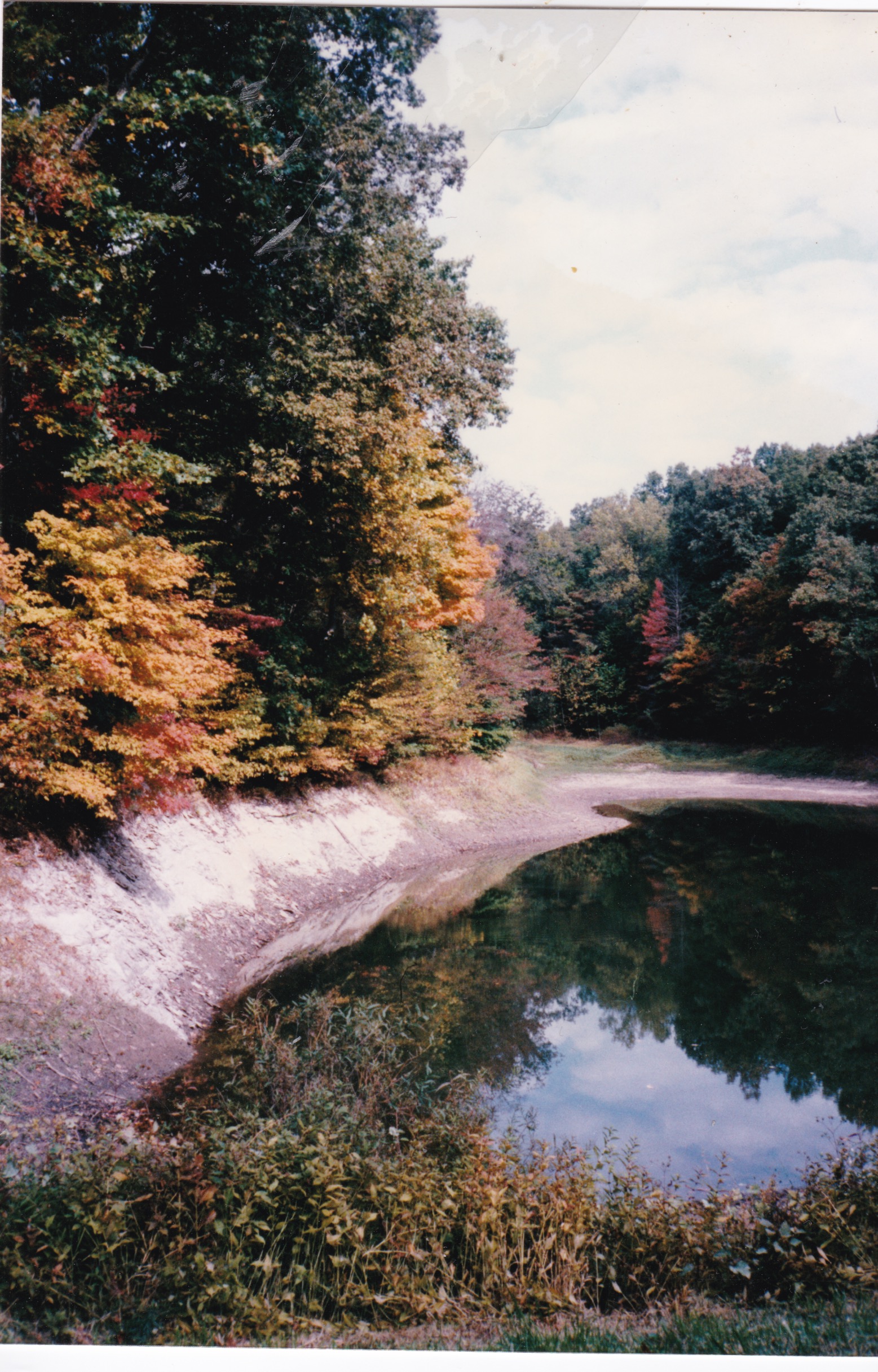
Hoosier Shangrila at the Hash Road Hideaway is a rustic retreat near the Monroe/Brown County line. Magnificent Indiana hardwoods line the hills encircling Lake Alison, a small spring-fed lake. A funky old cabin in which each wing represents a separate era of the property’s history sits at the lake’s edge. I grew up there. It’s not for the faint of heart. But to some, it is paradise.
People seeking solace from the everyday rat race have sought refuge at Hash Road for generations. Folks interested in camping, renting rooms (or the whole place) may email me at hoosierchild at gmail for details. The average rental fee is $100 per person per night.
Hoosier Shangrila also captures the vibe of my massage practice, focused on relaxation, deep tissue, sports massage, trigger point work and stretching to help clients obtain their body work goals and improve their overall quality of life.
Hoosier Shangrila began as a riff on the “Shangrila” literally embedded by the previous owners in a plaque at the property gates of my Midtown Indianapolis estate.
Ultimately, Shangrila represents belief in an idea more wonderful than one can conceive of on one’s own — enlightenment, heaven on earth — a connection to something timeless and eternal. Something I’m looking to achieve here in my home state: Indiana.
The Hustlin’ Hoosiers of the Indiana University Men’s Soccer Team warm up ahead of a Feb. 26, 2016 exhibition match against the North American Soccer League’s Indy Eleven at the John Mellencamp Sport Pavilion in Bloomington, Indiana.
The annual tradition that pits Indy Eleven against Indiana University Men’s Soccer, now in its third year, is an excellent opportunity for a group of pros just beginning to coalesce and find their chemistry at the beginning of their preseason to test their collective skills against the products of one of the nation’s strongest collegiate programs.
But it’s more than just a pro versus the varsity starters exhibition, it’s an opportunity for players new to the state of Indiana to learn what it means to be a Hoosier.
When the pros stepped onto the turf at the John Mellencamp Sports Pavilion last night, they saw the words writ large on the walls behind the goals: “Play Hard … Play Smart … Play Physical…” When the whistle blew to start the game, they learned how it felt to see that philosophy in action. The Hoosiers came out hard.
Indy managed to score the first goal, thanks to the hustle of Brad Ring, an Eleven player who played college ball at IU from 2005-2008. As the team’s Tweeted recap explained:
“33′ GOAL INDY! Ring’s stinger from 30 blocked right into path of Smart, whose far post cross is nodded home by Zayed.”
IU continued its aggressive press, however, and managed to score and equalizer within 5 minutes. The first period concluded without any additional goals. The second period ended scoreless, as well. So the series no stands at 1-1-1, with Indy taking the first win in 2014, IU winning last year and the two settling for a tie on Friday.
What can be learned from the experience and put to use for Indy as the team continues in 2016, working though its preseason toward its home opener against the Ottawa Fury on April 9 at Michael Carroll Stadium in Downtown Indianapolis?
Here’s a word they can meditate upon moving forward: Finesse.
The word came to mind Friday as a solid Indy scoring opportunity sailed high and wide of the Hoosier net, the result of a ball blasted that could have used instead finesse.
The word applied to other instances, namely on a couple occasions where players employed showier techniques when simplicity would have work just as well. For instance, why opt for an outside-of-the-foot pass, flicked over a defender’s head with the hope it would be controlled by a rushing attacker when an simple inside-of-the-foot pass delivered with finesse to feet would have been more effective — and included the benefit of maintaining possession? The hopeful flicking (as well as hopeful blasting from deeper) often resulted in the ball stuffed right back down on Indy’s defense.
In a brief exchange after the game, when asked his thoughts about the frantic pace which Indy exhibited in the opening minutes of the match, the Hoosiers’ head coach, Todd Yeagley, said he thought the long ball blasts spoke well of his team’s aggressive efforts to step up.
Paraphrasing Yeagley here: “Most college teams would hold a compact back, trying to absorb what the [more experienced team] brings. But the Hoosiers are fit, we’ve been working out together for two months, while Indy has been back in training for just a few days. Rather than hold back, we decided to press. I don’t think they were anticipating that much pressure.”
In an interview with Greg Rakestraw’s Soccer Saturday, Indy midfielder Dylan Mares offered his post-game analysis. He noted that the 9v9 indoor format was challenging for his squad, the field smaller dimensions presented a different dynamic with two fewer players on the field.
“It’s definitely fun playing those guys (Indiana) because they work hard, they’re athletic — and it makes it challenging for us,” Mares said. “It’s not necessarily a walk in the park just because they’re a college team. And you can’t go in there thinking that. I don’t think we did.. I don’t think we came off on the right foot. But, again, it’s preseason. We’ve only been at it a week and half, two weeks now. It helps us learn a little more about ourselves going forward.”
First half notes from the sideline:
Opening minutes, Indy pacing seems rushed. They crashed many long balls.
The first scoring opportunity worth noting: an Indy forward stumbled in front of goal, leaving Brad Ring with what seemed like a good scoring opportunity. Alas, it wasn’t to be.
Then came an Indiana onslaught, a couple Hoosiers succeed in working to the far right corner of the field, bringing a mess of Indy defenders with them, they quickly dropped to a teammate rushing the right corner of the 18. As Indy Coach Tim Hankinson is screaming “Step to the ball!” a Hoosier shot forces keeper Jon Busch into action.
Indy counters, but IU is right back on the attack, forcing another Busch save. Then comes another excellent attack in which a player whose name we should know (Help Me Out Here IU Soccer Media), weaves through what seems like three Indy guys and should have scored. Alas.
Then, yet another potent fast attack from IU.
At least one Indy dude begins grumbling and Hankinson encourages him to “stay in the game (and) not loose cool.”
Don Smart enters, Siniša takes a break.
Brad Ring springs an attack from the right and Don Smart and Eamon Zayed finish the kill from the left. Goal!!!
Ring and Smart have been leaders from the team’s inaugural season in 2014. Zayed, the League of Ireland’s 2011 Player of the Year, is new to Indy this year. (Among his attacking accolades are many noted hat tricks.)
IU responds with a immediate counter from the left flank, but the shot flies wide.
Then Indiana’s Phil Fives finds a pocket — sensed by Yeagley, who screams, “There it is!” — as the kid presses from the center, then pulls wide and rips a shot from around the right corner of the 18. Scored equalized within five minutes!
Maybe three minutes later, IU shoots again, only denied the inner net because Busch threw himself in harm’s way. The resulting corner results in IU forcing Busch into action yet again. At the 1-minute-mark, IU unleashed another decent shot that sailed wide of the goal.
The second half brought a whole new starting lineup for Indy. [How many changes did the Hoosiers make? We’ll have to wait for IU to fill in the blank on that one.] The Eleven fielded many familiar Indy faces in the second half, just one new team member, Neil Shaffer.
“Possession!” Hankinson instructs.
“Why let him have it?” the coach asks a player he wished stepped up to shut down an IU possession more quickly in the midfield. “Walk forward and keep him to one side!”
To the team he advised, “Hold the ball up, building deeper and moving forward!” Also on several occasions, “Shape! On your block!”
Assistant Indy Coach Tim Regan informed the frontline, “Don’t always be looking to turn by yourself. Trap it and pass it … if it takes you more than two touches, it’s not good enough!”
Aside from IU forcing one last Busch save, Indy pressed hard enough to cause Coach Yeagley to yell at his defenders not to attempt anything fancy when the Eleven’s frontline were swarming the goal like sharks smelling blood in the water. When the pressure gets dangerous on D, Yeagley said, “it’s up and out, there’s no touch!”
His father, also the father of the IU Soccer program, former head coach Jerry Yeagley watched quietly from the sidelines, a subtle grin of what appeared to be satisfaction often spread across this lips.
Scoring Summary and lineups courtesy of the great John Koluder, Indy Eleven’s communications captain:
INDY – Eamon Zayed (Don Smart) 33’
IU – 38’
Indy Eleven 1st Half IX (3-1-3-1): Jon Busch; Lovel Palmer, Colin Falvey, Nemanja Vukovic; Nicki Paterson; Brad Ring, Sinisa Ubiparipovic (Don Smart 30’), Justin Braun; Eamon Zayed
Indy Eleven 2nd Half IX (3-1-3-1): Keith Cardona; Marco Franco (Don Smart 77’), Cory Miller, Neil Shaffer; Daniel Keller; Dragan Stojkov, Dylan Mares, Duke Lacroix; Wojciech Wojcik (Greg Janicki 67’)
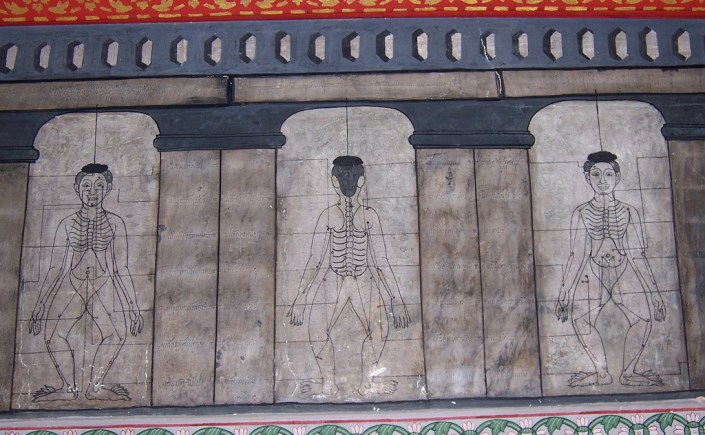
Visit me at Lift and try Shiatsu Stretching, which blends elements of Thai massage with Shiatsu techniques. Or choose Swedish Bliss, which blends classic Swedish technique with trigger point therapy, acupressure and assisted stretching. (Photo “Thai massage” by Pyonko Omeyama via Flickr Creative Commons)
Everyone should visit the fabulous massage studio, Lift Therapeutic Massage, in Downtown Indy’s Fletcher Place, at least once in their lifetimes.
Better yet, get on a monthly or quarterly wellness schedule. It’s high-class, first-rate service. I’m honored to work with a very talented group of people.
Beautiful irony that we still fix bodies in a refurbished auto garage. The acclaimed diner Milktooth occupies 75% of the building we share. Book with me at LiftIndy.com or call us at 317/964-0788.
If you’d prefer in-home massage service, contact me directly.
My technique ranges in pressure depending on a client’s needs and can include acupressure, targeted deep work, trigger point therapy, assisted stretching and sports massage.
And remember this holiday season: You can put me under the tree — with a massage gift certificate. Would monthly massage enrich your life and the lives of the people you love? Yep. Guaranteed.
Hope to see you on my table soon.
— Rebecca Townsend, licensed massage therapist, sports and medical massage






















































 Hoosier Shangrila